Unlock the Potential Of Your Machines With Digital Communication
June 14, 2021

The future of automation starts with IO-Link

Sensors and actuators are the eyes and ears of your equipment. Your machines and processes are limited by what your sensors can tell you. What if you can get more information without increasing cost, engineering time and complexity? What if ifm told you your existing infrastructure could already provide more insight?

Discover the potential of IO-Link and unlock the data that already exists today.

  •    –   Improve the quality of your process control with a 100% digital signal that is more reliable and accurate than an analog signal.
  •    –   Reduce cycle time for recipe changes because bi-directional communication with process instruments makes it easier.
  •    –   Improve instrument calibration verification processes and product quality with predictive information from sensors.
  •    –   Reduce cost by eliminating analog input cards and reducing size of control cabinets.


What is IO-Link?

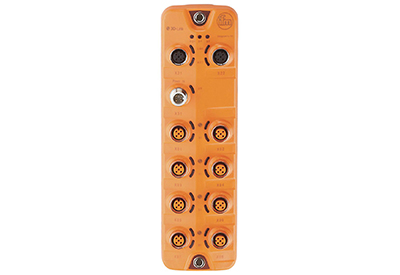
IO-Link is an open standard that is globally supported by sensor and controls companies. The IO-Link master replaces a traditional analog input card and allows for a digital communication path to process sensors. The final result is a 100% digital path to your PLC from the field-mounted sensor.
Source

Related Articles


Editor’s Pick: Featured Article

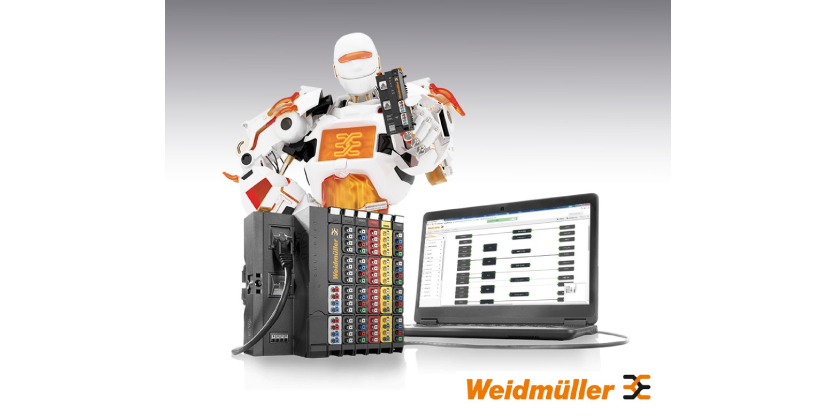
Weidmüller’s u-control 2000: The Automation Controller

Weidmüller’s u-control 2000: The Automation Controller

Weidmüller’s scalable engineering software, u-control 2000, adapts individually to your requirements. And, the u-control is powerful, compact and fully compatible with Weidmüller’s I/O system u-remote. This article looks at what makes u-control the heart of your automation.

Programmable logic controllers (PLCs) are one of the main components of any automated system. A typical control system has inputs, outputs, controllers (i.e., PLCs), and some type of human interaction with the system, a human machine interface (HMI), for example.

Read More


Latest Articles

  • Applications of Physical AI in Canadian Sectors

    June 23, 2026 Physical AI — the convergence of artificial intelligence with robotics and autonomous motion systems — is reshaping how Canadian industries operate. Across sectors from healthcare to mining, AI-enabled machines are performing tasks that were once entirely dependent on human intervention. But deploying Physical AI effectively requires more than sophisticated algorithms: it demands… Read More…

  • Case Study: Optimizing Harmonic Mitigation in Wastewater Treatment

    June 22, 2026 Segment and Application In a municipality, wastewater treatment plants typically stand out as the main consumers of electricity. The operational processes exhibit significant load variations throughout a 24-hour cycle, necessitating the use of AC drives to regulate pumps, blowers, and other motorized equipment in response to fluctuating demand. In one wastewater treatment… Read More…