Canadian Retail Businesses Gain Competitive Edge with AI-Enabled Solutions from Schneider Electric
April 10, 2026
By Krystie Johnston with Hitesh Mistry
Retail businesses across Canada can gain a competitive edge in an uncertain world by leveraging AI-enabled technologies that make their operations more energy efficient.
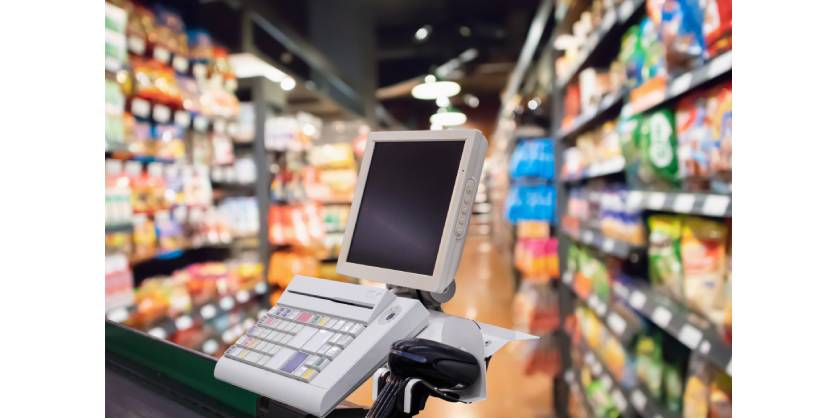
In Canada, small and medium sized enterprises (SMEs) play a critical role in supporting both our economy and our workforce1. Often dubbed “retail businesses,” they span a range of goods and service locations, including warehouses and logistics centres that are a growing part of these operations. What unites them is the need to run energy-intensive systems (HVAC, refrigeration, lighting, power distribution, digital signage, security, point-of-sale reliably, etc.) in their physical operations reliably, safely, and with the ability to scale across many locations over a wide geography to serve their customers.
It is a balancing act
They also face multifaceted challenges that threaten their competitiveness. “Retailers today are operating in a very tight environment. On one side, operating costs continue to rise, such as energy, equipment maintenance, labour, and supply chain costs. On the other hand, consumers are becoming more cautious about spending, which means retailers cannot always pass those costs on through higher prices,” says Hitesh Mistry, National Real Estate and Retail Segment Lead at Schneider Electric Canada. Mistry helps businesses leverage solutions to make the most of their resources.
“Energy alone is a major factor. Many retail environments have significant electrical loads from refrigeration, HVAC systems, lighting, and electronic infrastructure. When energy prices fluctuate, it can have a direct impact on operating margins, especially for businesses running dozens or hundreds of locations,” Hitesh adds. “There is also the issue of equipment reliability. If a refrigeration system fails in a grocery store, or a cooling system fails in the middle of the summer, the cost is not just the repair. It can mean product loss, operational disruption, and poor customer experience.”
Labour is another pressure point. “Many retailers simply do not have the resources for a constant on-site presence to look after building systems across multiple locations,” Mistry says. “That is where digital tools and automation become valuable; they allow facility teams to manage operations more efficiently, without needing more people on the ground.” All these pressures are pushing retailers to look at the building itself as a place where operational efficiency can be improved. But there are ways to maintain a competitive advantage.
Practical solutions from Schneider Electric
Mistry says that many retailers are modernizing their building systems so they can operate more intelligently and with better visibility into energy uses and equipment performance.
Here are some of his top recommendations of AI-enabled technologies:
- Multi-site energy & building automation: EcoStruxure Building Activate (EBA) delivers a simple, cloud-based AI‑assisted way to monitor, control and optimize HVAC, lighting, and WAGES across small and mid‑size stores, with open protocols, low capex and payback typically measured in months. For large or complex sites, EcoStruxure Building Operation (EBO) and Power Monitoring Expert (PME) unify power and building domains.
- Advanced energy metering & power quality: PowerLogic meters feed granular data for portfolio benchmarking, demand management, and power quality remediation — critical for refrigeration, IT/edge loads, and logistics centers.
- AI‑enabled services & predictive maintenance: EcoStruxure Building Advisor, Power Advisor, and Asset Advisor are analytic tools and managed services that provide continuous maintenance checks, discovery of surface faults, prioritization of work orders and reduction of emergency calls. EcoStruxure Foresight, our next‑gen, AI‑powered operations platform, natively converges building automation and electrical systems for faster deployment and higher operational efficiency by normalizing data for AI operations.
Results reveal the true worth of these solutions
Looking at a specific example, Mistry says that one customer with more than 1,000 locations across Canada set a goal to cut greenhouse gas (GHG) emissions 30% by 2030. “By digitalizing and automating HVAC and lighting across their retail portfolio, they centralized operations, gained portfolio-wide visibility, and enabled remote diagnostics and fixes. Addressing ‘low-hanging fruit’ -like aligning HVAC schedules to business hours – delivered 13% energy savings, reduced third-party labour and truck rolls, and improved consistent facility management across all sites.”
Similar results can be seen in a few recent examples that Mistry shares:
- A national discount retailer rolled out EBA across dozens of 10,000 to 30,000 square foot stores. The results: about 10-20% electricity reduction from automated scheduling, setpoint resets, and AI-HVAC optimization; consistent corporate control without headcount.
- A regional grocer integrated EBO + PME with refrigeration analytics. The results: double-digit energy savings, fewer product-loss incidents, and faster diagnosis of power quality issues impacting compressor life.
- A specialty apparel chain used Advisor services to cut unscheduled HVAC maintenance around 15% and reduced after-hour energy waste across a 100-site portfolio.

What do these solutions have in common? Simplicity.
“The biggest impact comes from improving operational efficiency and reducing avoidable costs,” says Mistry. “With intelligent building automation, systems like heating, cooling, and lighting can adjust automatically based on occupancy, weather conditions, and operating hours. That means energy is used more efficiently without sacrificing comfort for staff and customers. This allows staff to focus on the business with the knowledge and confidence that the digital systems will provide optimized conditions.”
Mistry says that energy monitoring tools give operators visibility they have never really had before. “When you can see how energy is being used across dozens – or hundreds of locations, you can identify anomalies, benchmark performance, and make smarter decisions about where to focus energy improvements.” He adds that predictive maintenance also plays a major role.
“When equipment issues are identified early, retailers can schedule repairs at the right time [emphasis added], instead of dealing with emergency failures. That reduces downtime, protects inventory in environments like grocery stores, and extends the life of expensive equipment. Diagnosis starts automatically, and for the majority of the time, is rectified remotely. This also allows for fewer truck rolls, especially useful for remote locations, and results in the reduction of third-party labour.”
Taken together, these technologies allow retailers to control one of the few levers they still have – operational efficiency. They help stabilize costs, improve reliability, and keep stores running smoothly. Ultimately, this benefits both the business and the customer.
More than just solutions
You may be wondering: What makes Schneider Electric your trusted partner in energy technology and sustainability? Schneider Electric has been working in energy management and automation for decades, and that experience is important because it has enabled them to simplify the operations and management of complex building systems. “We bring power and automation together,” Mistry says. “Our open EcoStruxure architecture spans connected products, edge control, and apps/analytics, so electrical, mechanical, and digital come together in one system.”
As energy volatility, tightening regulations, and rising customer expectations converge, store-level operational performance will define the competitive advantage in retail. And Schneider Electric is here to enable and enhance this performance.
Editorial notes:
More Information
Interested in learning more about Schneider Electric and their AI-enabled building technologies? Visit their website today!