POSITAL Kit Encoders Certified for Compliance With BISS Interface Standards
July 30, 2021
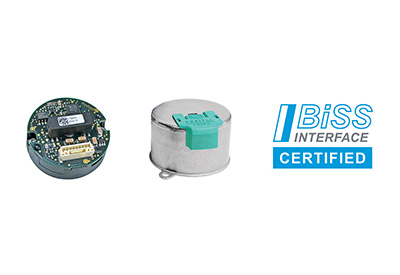
POSITAL has received certificates of compliance for its family of kit encoders that feature BiSS C interfaces. These encoders are designed to be installed in motors or drives, providing the control system with position feedback to over single- or multi-turn operating ranges. “We have been enthusiastic supporters of open source, non-proprietary communications standards like BiSS,” comments Jörg Paulus, head of POSITAL’s European operations and a board member of the BiSS Association. “We are confident that by supporting the BiSS initiative and offering customers products that have been certified to comply with BiSS protocol standards, we will encourage further use of this versatile and cost-effective interface technology.”
The BiSS Association e.V. is a not-for-profit user group that promotes the development and use of the open source BiSS communications protocols suites. It has initiated a certification process for equipment that makes use of this interface technology. “BiSS protocols have gained significant acceptance in the world of machine-to-machine communications,” reports Paulus. “With this growing popularity, it is critically important that implementations of the technology by different manufacturers meet high standards for compatibility and interoperability.” Paulus continues: “The certification process is intended to help manufacturers verify that their products meet these requirements, while assuring customers that the devices they buy will work together seamlessly.”
BiSS, which stands for Bisynchronous Serial, features several sets of communications protocols, including BiSS C for real-time operations and BiSS Line for single-cable implementations. These are designed to enable efficient communications between digital devices, such as servomotors and drives for industrial motion control systems. They are non-proprietary, based on an open source approach. Licenses can be obtained at no cost from the BiSS Association. The new certification process is intended to allow manufacturers flexibility in the way that they implement these protocols, while ensuring that they meet high standards for interoperability. Certification will cover master units (controllers) and slave units (servomotors, sensors, actuators) in control systems. Verification testing will be carried out by Arteson, a Germany-based company that specializes in systems integration and testing. Manufacturers whose equipment passes certification tests will receive certification documents and permission to use a special “BiSS Certified” logo.
For more information, visit www.posital.com.