Seneca Polytechnic Becomes the First Postsecondary Institution in Canada to Issue 1,000 Siemens Mechatronics and Automation Certifications
February 18, 2026
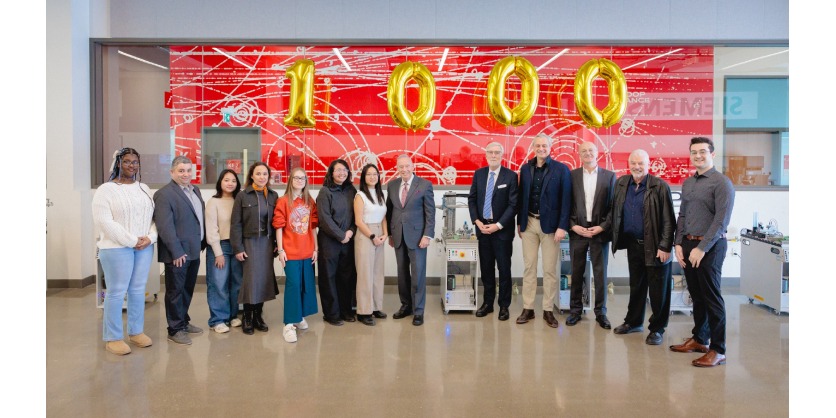
New milestone celebrated in Seneca’s Mechatronics Lab at Newnham Campus
Seneca Polytechnic has reached an impressive milestone, thanks to a longstanding relationship with Siemens and excellence in mechatronics and other facets of engineering.
Seneca recently issued its 1000th Siemens mechatronics and automation certificate, becoming the first postsecondary institution in Canada to do so. This accomplishment highlights the shared commitment of Seneca and Siemens to equipping students with industry‑ready knowledge and in-demand skills.
“Achieving 1,000 Siemens certifications is an extraordinary accomplishment for our students and a proud moment for Seneca,” said David Agnew, President, Seneca Polytechnic. “This milestone reflects our ability to offer education that responds to industry needs and gives students the knowledge to graduate career-ready and world-ready. Our partnership with Siemens continues to create remarkable opportunities for our students and supports Ontario’s advanced manufacturing and technology workforce.”
“We are pleased to celebrate this milestone with Seneca Polytechnic, a leader in developing next generation talent,” said Joris Myny, SVP of Digital Industries Canada, Siemens Canada. “Reaching 1,000 certifications is indicative of Seneca’s dedication to providing industry-relevant education and Siemens values the role we as a technology partner and a manufacturer can play in equipping students with skills they need to contribute to Canada’s industrial sector. We congratulate Seneca and look forward to continued collaboration.”
“Producing highly skilled graduates is critical to protecting Ontario’s economy,” said Nolan Quinn, Minister of Colleges, Universities, Research Excellence and Security (MCURES). “I congratulate Seneca Polytechnic on reaching 1,000 Siemens certifications, a testament to their dedication to ensuring Ontario students graduate ready to thrive in their careers and drive our key industries forward.”
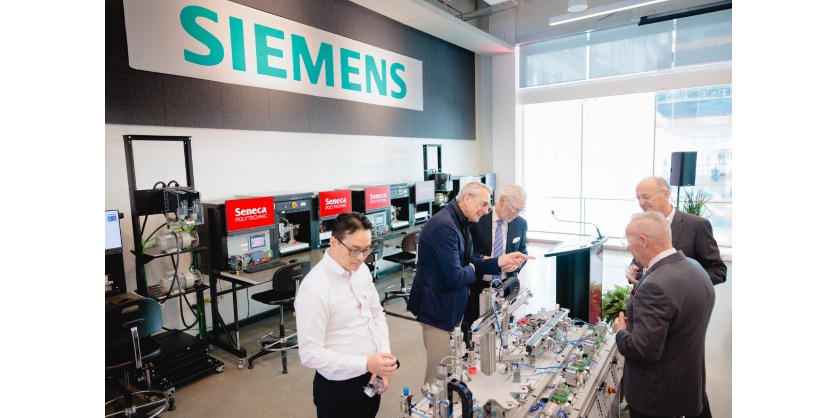
To celebrate the milestone, an event in Seneca’s Mechatronics Lab, powered by Siemens software, brought together students, educators and industry leaders. Representing Minister Quinn at the celebration was Lorne Coe, Parliamentary Assistant to the Minister of MCURES, underscoring the Ontario government’s commitment to strengthening workforce development and advancing the province’s leadership in applied learning, advanced manufacturing and Industry 4.0 skills.
The Siemens globally-recognized mechatronics and automation certifications issued to Seneca students include:
- Basics of PLC Automation
- Totally Integrated Automation
- IIoT – Industrial Internet of Things
- Mechatronics Level I and Level II (comprehensive exams)
Christopher Foschia, a recent graduate of the Electromechanical Engineering Technology – Automation program, earned three different Siemens certifications during his time at Seneca. He says the designations helped him quickly land a placement and demonstrate to employers that he has the vital technical skills required in the engineering field.
“Working towards the Siemens certification was a fun and rewarding challenge for applying my skills and knowledge,” says Mr. Foschia. “Learning the different languages and communication protocols within the Siemens technologies was challenging and pushed me to gain that experience and knowledge to further aid me in this field.”
Seneca and Siemens have a long history of collaboration, beginning in 2015 with the launch of Siemens mechatronic certifications at Seneca. The partnership has since expanded to provide students with access to Siemens automation hardware and software, enhanced hands-on training and specialized academic pathways. These initiatives have strengthened Seneca’s position as a Canadian leader in experiential, industry‑integrated education and a globally-recognized destination for students.
About Seneca Polytechnic:
Seneca Polytechnic provides a great education to prepare our students for great careers. Combining academic rigour with practical, professional and career-focused learning, we offer our students a seamless transition from education to employment. Expert faculty, excellent staff, outstanding campuses, awesome technology, deep connections with industry: This is Seneca Polytechnic.
More Information
Learn more: senecapolytechnic.ca
Related Story
Seneca Polytechnic and Siemens Partnership
Seneca Polytechnic and Siemens have announced the latest chapter in the organizations’ long-term partnership to provide students with industry-standard tools and training. Beginning this academic year, students in Seneca’s Faculty of Applied Science & Engineering Technology will benefit from a Siemens donation of a sophisticated virtual reality (VR) manufacturing simulation kit and 25 seats of industry-leading Tecnomatix® from the Siemens Xcelerator portfolio of industry software.