EU Machinery Regulation from 20 January 2027 – Pilz Insights
July 22, 2026
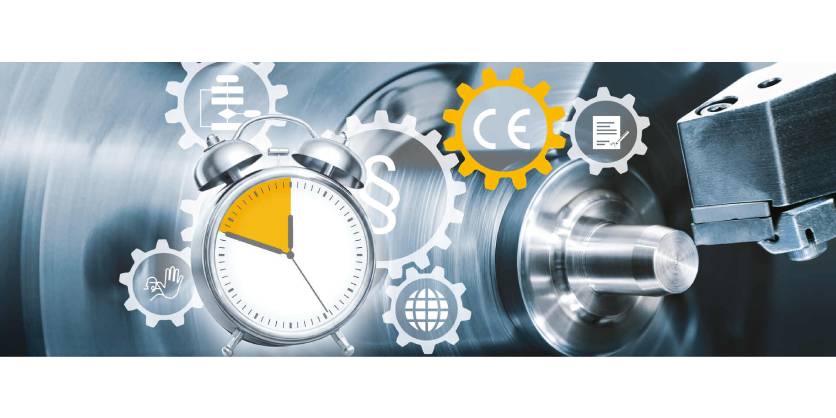
The Machinery Regulation replaces the Machinery Directive. Which requirements apply to machine manufacturers?
Application of the EU Machinery Regulation 2023/1230 is mandatory from 20 January 2027. It came into force in all member states on 19 July 2023, twenty days after it was published in the Official Journal of the European Union. The Machinery Regulation (MR) contains more specific details and provides greater clarity on previously controversial issues. It also contains new aspects such as the growing importance of Industrial Security and digitisation. Machine manufacturers now have time in which to meet the new safety requirements on plant and machinery.
Key changes in the EU Machinery Regulation
- Certain high-risk machinery is subject to mandatory testing by a notified accreditation body.
- Significant modifications mean that operators become manufacturers – with all the obligations that entails.
- Software is now included under safety components.
- Digital technologies such as AI, IoT and robotics are considered as risk factors for the first time.
- Cybersecurity becomes an integral part of machinery safety.
- Operating and compliance documents may be provided digitally
Ready for the next steps towards the MR?
The Machinery Regulation brings many changes – but also opportunities. Manufacturers and operators face new challenges – but at the same time there is also potential for greater safety, transparency and sustainability.
Start now – and make your machinery fit for 2027.
Frequently asked questions about the Machinery Regulation.
What is the correct name of the Machinery Regulation?
The official title of the Machinery Regulation is:
Regulation (EU) 2023/1230 of the European Parliament and of the Council on machinery.
Why do we have the Machinery Regulation?
If you compare today’s technical requirements of automation and engineering with those of 2009, it is clear that the revision of the directive was inevitable.
Digitisation and networking, as well as the new related issues of Industrial Security and Artificial Intelligence (AI), are in the process of significantly changing factory halls and the plant and machinery within them.
To take account of these changes, the provisions have been brought in line with technical developments.
What does the Machinery Regulation say?
The new European Machinery Regulation (EU) 2023/1230 contains comprehensive rules on machinery health and safety, including new technologies such as Artificial Intelligence. Key points are safety requirements, new conformity assessment procedures and stricter market surveillance.
What are the most important changes and new developments in the Machinery Regulation?
- Machines subject to inspection
The list of machines subject to inspection, which was previously in Annex IV of the Machinery Directive 2006/42/EC, has “moved” to Annex I. In Section A it contains a list of high risk machines, for which mandatory inspection and certification through a third party is required. In future, six machine categories will be subject to inspection; application of a harmonised standard does not remove the inspection obligation. This is due to the current developments in Artificial Intelligence. For the six listed product groups, machine manufacturers can no longer self-declare compliance in conjunction with a harmonised standard, as previously. Instead, a named accreditation body must be involved. - Substantial modification
The regulation has been extended to include a definition of a substantial modification of machinery and the legal consequences of such a modification. A conformity assessment procedure is required for Machinery Safety if a machine undergoes major modifications or when changes are made that affect the machine’s compliance with the statutory provisions for CE marking. If a substantial modification has taken place, the operator becomes the manufacturer – with all the obligations that entails. - Safety components
The definition of safety components now includes not only physical, digital and/or mixed-type components, but also software. - Digital technologies
The emergence of new digital technologies such as Artificial Intelligence, the Internet of Things and robotics present new challenges for product safety. - Industrial Security
In a new section entitled “Protection against corruption”, the Machinery Regulation now also establishes requirements for the cybersecurity of machinery. Cybersecurity threats must not be allowed to compromise the machine’s safety functions. So measures to counteract these threats are no longer open to the interpretation of the person placing the machine on the market, but are a mandatory component. Manufacturers must review their existing safety concepts in this regard! - Digital instructions
Manufacturers shall be allowed to supply instructions in digital form. Should the customer request it, the manufacturer must supply the instructions in paper format. The EU Declaration of Conformity can also be provided in digital form. Partly completed machinery can be delivered with digital assembly instructions as well as with a digital Declaration of Incorporation.
What is in force until application of the Machinery Regulation becomes mandatory?
The Machinery Directive (2006/42/EC) is the current and final version of the Machinery Directive. Application has been mandatory in the European Union since 2009 and continues to apply until the Machinery Regulation comes into force.
What is the aim of the Machinery Regulation?
The Machinery Regulation aspires to maintain the high level of safety that was achieved with the implementation of the specifications from the Machinery Directive and to bring it up to date with state-of-the-art technology. The aim is to design safe interaction between human and machine, and to guarantee the standardisation of fundamental and mandatory European Machinery Safety requirements.
To whom does the EU Machinery Regulation apply and what does it cover?
The new regulation continues to cover machinery and related products that are to be operated within the European Union, but safety components now also include software.
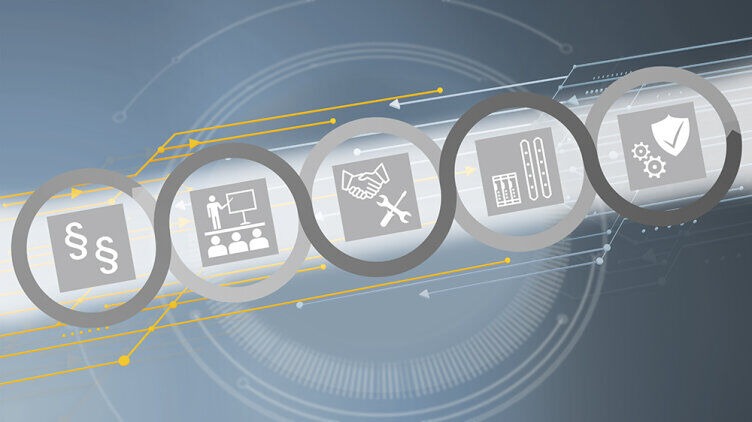
Pilz’s 5-point programme for the timely implementation of the Machinery Regulation.
With Pilz’s 5-point programme, we provide you with structured, practical and holistic support en route towards MR compliance. From initial orientation through to audit-proof documentation, they connect Safety and Industrial Security in a consistent approach.
1. Gain an overview – Understand what the MR means for you specifically
The basis of every successful implementation is knowledge. Pilz provides clarity regarding the content, obligations and deadlines of the new Machinery Regulation.
Your added value:
- Clear overview of the requirements of the MR
- Assessment of the impact on plant, machinery and processes
- Understanding of the interaction between Functional Safety and Industrial Security
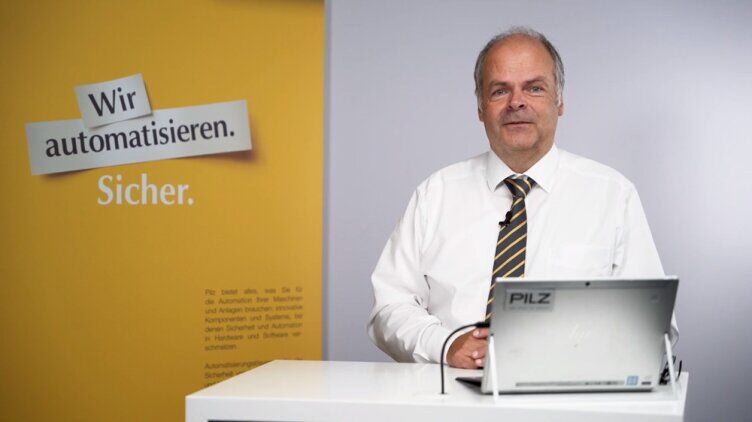
The key changes summarised concisely and explained clearly. By Pilz’s standards expert Matthias Wimmer.
Free webinar: Log in now
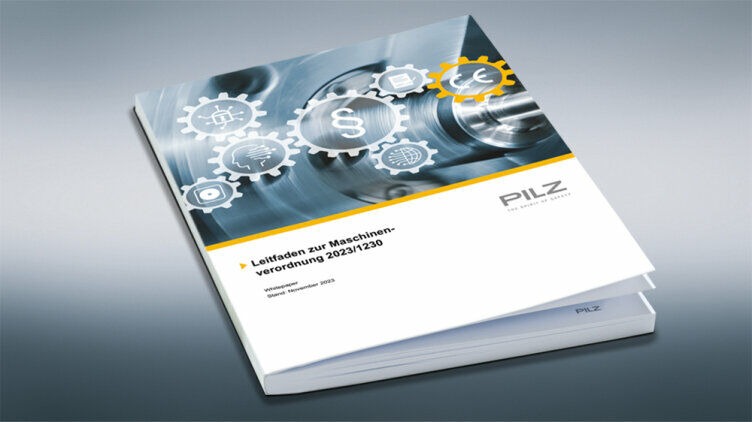
Want a quick read of the key changes? Pilz’s guide to the 2027 MR.
Discover the basics for interaction between Safety & Security: Safety & Security in transformation
2. Get advice – We work with you to analyse your individual implementation needs
Each machine and each company is affected differently. Pilz’s experts will help you recognise where specific action is needed.
Pilz’s consulting services:
- Analysing the status quo of your plant and machinery
- Identifying gaps in relation to MR requirements
- Assessing Safety and Security risks
- Deriving a structured, prioritised action plan

Result:
- Clarity, orientation and a reliable basis for decision-making.
3. Build knowledge – Develop your own skills in a targeted, sustainable way
The MR places new demands on specialists and managers. We make your team fit for practice with customised training courses.
Pilz’s Training portfolio:
- MR training courses for manufacturers and operators
- Training courses on Safety, Industrial Security and CE compliance
- Practical workshops using real machines

Advantage to you:
- Company benefits from sustainable knowledge building and confidence to act.
4. Initiate implementation – Safely carry out the requirements of the MR
Pilz won’t leave you alone with the implementation. Their services support you from analysis to CE compliance.
Pilz will help with:
- Risk and hazard assessments
- Design and implementation of safety functions
- Integration of Safety and Security solutions
- Support with CE compliance process

Pilz’s approach:
- Holistic, standard-compliant and proven in practice.
5. Create documentation – Provide structured and audit-proof evidence of measures
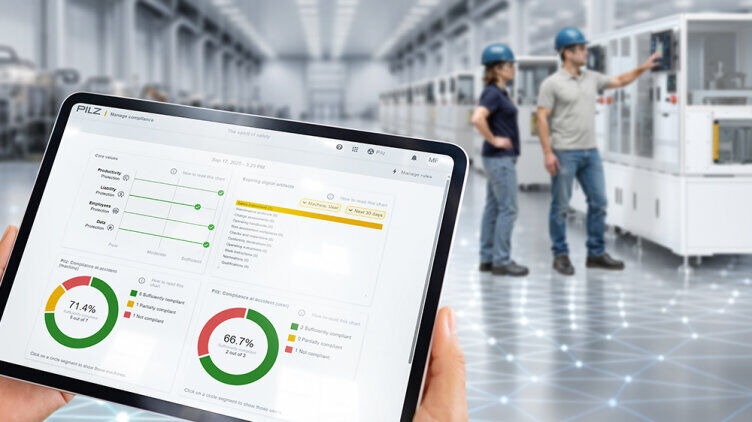
Full documentation is a central component of the MR. With MYZEL, you ensure that all measures are recorded in a way that’s transparent and traceable.
With MYZEL you benefit from:
- Central storage of all safety-related information
- Transparent documentation of assessments, decisions and changes
- Support with audits and regulatory requirements
- Lifecycle documentation for your machinery
Take the next step
The Machinery Regulation is more than an obligation – it is an opportunity. Use our 5-point programme to set up your machinery so that it is safe, compliant and future-proof.
Pilz will accompany you on your journey towards 2027 – and beyond. Contact them today!
Related Story
Interactive Through the MYZEL Lifecycle Platform from Pilz
Discover the MYZEL Lifecycme Platform in an interactive tour. Experience step by step how the platform supports you through the entire machine lifecycle – explore features, understand benefits, discover applications. Intuitive in every step, fully intera