Verification at the Point of Production
July 6, 2026
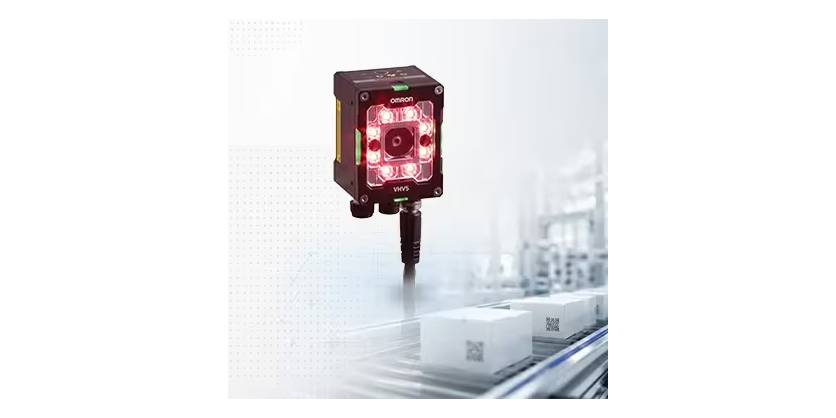
Verify every code directly on the production line to reduce risk, improve traceability, and maintain production speed.
Barcode verification is essential for traceability, compliance, and product quality, but many manufacturers still rely on offline sampling or indirect checks. As a result, barcode issues may not be discovered until after products have already moved through production.
Verification at the point of production brings barcode quality inspection directly onto the line, helping manufacturers confirm code quality in real time as labels, packages, or parts are produced.
No More Offline Sampling
For industries like life sciences, pharmaceutical, food, and commodities, barcode verification is often already part of the quality process. These industries rely on accurate barcodes for traceability, labeling, inventory movement, and recall prevention.
The challenge is that verification is commonly handled through sampling. Teams may check the first and last labels in a run, then assume everything in between meets quality requirements. If barcode quality changes mid-run, manufacturers may miss issues such as low contrast, poor print quality, print degradation, and damaged or unreadable codes.
100% inline verification helps close that gap by inspecting every code directly on the production line. Instead of relying on samples, manufacturers can:
- Identify barcode quality issues immediately
- Reduce the risk of bad barcodes escaping production
- Maintain quality without sending products to a lab
- Improve traceability across every label, package, or product
- Keep production moving without added offline inspection steps
Verify Barcodes Directly on the Part
For industries like automotive, aerospace, and any Direct Part Mark (DPM) application, the challenge is different. Many DPM codes are marked directly onto real parts, including EV batteries, engine components, metal components, and curved or irregular surfaces.
Traditional offline verification tools are often designed for flat labels or flat test surfaces. That can force manufacturers to verify a code on a sample and assume the mark will perform the same way on the actual part.
Inline verification helps manufacturers inspect DPM codes directly on real parts in production conditions. This helps teams:
- Support traceability for complex components
- Reduce assumptions between test samples and actual parts
- Verify codes on curved, irregular, or non-flat surfaces
- Inspect DPM codes where traditional tools may not be practical
- Enable verification on surfaces that were previously difficult or not possible to inspect
Barcode Reading and Verification in One Solution
Barcode reading confirms that a code can be read. Barcode verification measures code quality against recognized standards. Manufacturers need both to protect traceability and reduce downstream risk. A combined reader and verifier helps teams read and verify codes with one device, confirm barcode quality in real time, reduce reliance on offline checks, identify quality issues earlier, and maintain production speed while improving confidence.
Verify Every Code Before It Becomes a Problem
Whether improving an existing label verification process or enabling new DPM verification capabilities, verification at the point of production helps manufacturers reduce risk where it matters most, on the line. OMRON’s VHV5 combines barcode reading and calibrated verification in one device, helping manufacturers move beyond offline sampling and assumption-based checks with 100% inline verification at production speed.
Ready to reduce barcode risk at the point of production?
Explore the VHV5 to see how inline verification can help protect traceability, quality, and production efficiency.
More Information
VHV5-SRV inline barcode verification system
Related Product
Omron Introduces VHV5-SRV Barcode Verification System for 100% Inline Inspection
OMRON Automation has released the VHV5-SRV Barcode Verification System, an inline verification solution designed to monitor barcode quality directly on the production line without slowing production. The VHV5-SRV enables manufacturers to move from beginning- and end-of-run offline sample checks to calibrated, real-time verification during production. Instead of discovering barcode degradation, unreadable codes, or non-compliant marks after a batch, shipment, or customer rejection, quality teams can check each code as it is produced and correct issues earlier.