Designing Resilient Data Center Power with VPI and Cast Resin Technologies
August 25, 2026
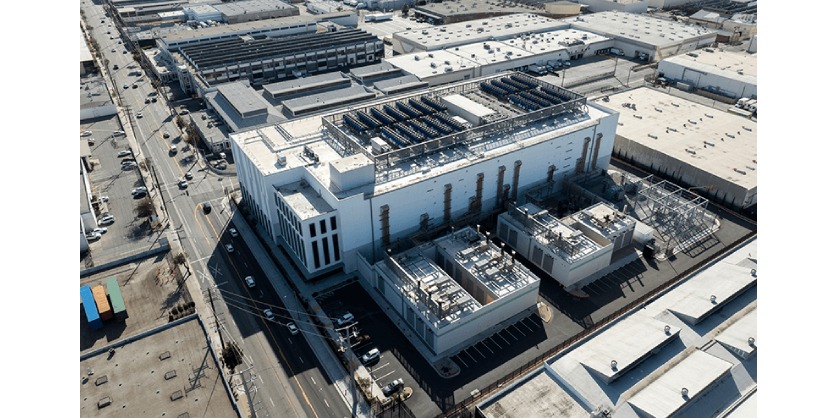
The race to build high-density data centers for AI, machine learning, and cloud computing has put immense pressure on engineering teams to balance two critical priorities: absolute operational uptime and predictable project schedules. In this industry, a slipped commissioning date can mean millions in lost revenue.
When designing electrical infrastructure, it is easy to default to a “one-size-fits-all” specification for dry-type transformers. However, over-specifying heavy-duty equipment where it isn’t needed can introduce unnecessary budget inflation, structural weight challenges, and supply chain bottlenecks into your project.
Both VPI and cast resin transformers are established dry-type technologies. The right selection depends on the installation requirements, environmental controls, physical constraints, service strategy, budget, and project schedule.
The key to resilient, cost-effective data center power distribution isn’t choosing one transformer technology over the other, it’s about deploying the right technology for your application.
Two Proven Dry-Type Technologies
| Operational Dimension | VPI (Vacuum Pressure Impregnated) | Cast Resin (Cast Coil) |
| Primary Strength | Environmental versatility, thermal performance, and manufacturing agility | Complete coil encapsulation for specialized environmental or design requirements |
| Environmental Suitability | Suitable for indoor and outdoor installations when paired with the appropriate enclosure and accessories | Considered where persistent moisture, water-ingress risk, or contamination makes complete encapsulation desirable |
| Physical Attributes | Compact and lightweight, supporting multi-story construction | Heavier, rigid construction with windings encapsulated in solid epoxy resin |
| Cost and Lead Time | Less material-intensive manufacturing supports cost efficiency and predictable production schedules | Encapsulation process may increase cost and production complexity |
| When to Specify | As a versatile foundation across the data center campus, configured for the conditions of each installation | When complete coil encapsulation is required by site conditions, owner standards, or the project specification |
Unlocking the Advantages of VPI Technology for Indoor and Outdoor Applications
VPI transformers are a proven solution for both indoor and outdoor applications. From controlled data center spaces to demanding environments such as mines and offshore platforms, VPI technology delivers the durability and performance required for challenging operating conditions.
The key is to specify the transformer as a complete system. For outdoor or unconditioned locations, a VPI transformer can be paired with a properly engineered enclosure and accessories to help manage moisture, condensation, airborne contaminants, and changing temperatures. When properly specified, VPI transformers are suitable for seismic-rated applications.
This versatility allows VPI transformers to perform across a wide range of environments while retaining their advantages in thermal management, footprint, weight, cost, serviceability, and lead time. In indoor data center spaces, these benefits make VPI a natural fit. In outdoor and more demanding locations, the right enclosure and accessories extend those same advantages beyond the conditioned building envelope.
Cast resin remains an option where complete coil encapsulation is specifically required, but demanding or outdoor conditions do not automatically rule out VPI.
Some distinct advantages of VPI include the following.
1. Environmental Versatility
VPI transformers are well suited to a wide range of indoor, outdoor, and demanding industrial environments. In conditioned data center spaces, their open-wound construction provides efficient cooling and dependable performance. For outdoor or unconditioned installations, a properly engineered enclosure and accessories protect the transformer from moisture, condensation, airborne contaminants, and changing temperatures.
VPI technology has also proven its durability in challenging applications such as mines and offshore platforms. This makes it a versatile solution that can be configured for the specific operating conditions of each installation, rather than being limited to a particular area of the facility.
VPI technology has also proven its durability in challenging applications such as mines and offshore platforms. This makes it a versatile solution that can be configured for the specific operating conditions of each installation, rather than being limited to a particular area of the facility.
The Data Center Benefit: VPI can be specified across indoor and outdoor zones, helping simplify transformer standards while preserving its advantages in thermal performance, serviceability, weight, cost, and lead time.
2. Thermal Performance
VPI and cast resin transformers are both capable of reliable thermal performance when properly specified, loaded, and operated within the temperature limits of their insulation systems. VPI designs can offer flexibility in thermal management, including options for higher service factors and higher ambient temperature ratings. Cast resin designs, with their greater thermal mass, may also help absorb short-duration demand changes in some applications.
The Data Center Benefit: Both technologies can support high-density data center loads when correctly applied. The right choice depends on the required service factor, ambient temperature, load profile, enclosure design, and overall project requirements.
3. Supply Chain and Cost Efficiency
Relying heavily on specialized, high-volume chemical polymers means that cast resin production timelines are inherently tied to global petrochemical market fluctuations. When material resource constraints occur, lead times can extend significantly.
VPI bypasses these polymer bottlenecks entirely. Because VPI transformers require less material and a less complex manufacturing process than fully encapsulated designs, they offer an agile, highly predictable manufacturing cycle.
The Data Center Benefit: Specifying VPI across suitable indoor and outdoor applications helps keep construction schedules predictable while delivering cost savings that scale across large, multi-unit campus deployments.
4. Flexible Expansion
Large-scale data center builds deploy dozens of units, meaning small savings in weight and footprint scale up rapidly. VPI transformers boast a significantly lighter and more compact design than their cast resin counterparts. This makes them easier to maneuver into tight electrical rooms, deploy on upper floors, or incorporate into modular and outdoor electrical infrastructure without requiring unnecessary structural reinforcement.
The Data Center Benefit:The lighter physical footprint simplifies installation and perfectly supports a phased infrastructure approach, aligning seamlessly with modern, modular data center expansion strategies.
When to Deploy Cast Resin in a Data Center
While VPI can be configured for most indoor and outdoor data center applications, cast resin may be appropriate for specific locations where complete coil encapsulation supports a particular design requirement.
For example, cast resin may be considered for transformer installations located near cooling infrastructure where persistent moisture exposure is a concern, or in below-grade electrical rooms where water ingress presents an elevated risk. It may also suit areas exposed to high levels of airborne contaminants or installations where the transformer enclosure cannot provide the desired level of environmental control.
In some data center projects, cast resin may also be selected to satisfy an established owner specification, engineering standard, or requirement for fully encapsulated windings. These considerations may apply to:
- Electrical rooms near cooling towers or evaporative cooling systems
- Areas with persistent moisture or airborne contamination
- Installations where enclosure-based environmental controls are impractical
- Projects that specifically mandate fully encapsulated windings
Cast resin should therefore be viewed as a targeted solution for defined environmental or specification requirements, rather than the automatic choice for every outdoor or unconditioned data center installation. Where site conditions can be effectively managed through the appropriate enclosure and accessories, VPI remains a robust option with advantages in thermal performance, weight, serviceability, cost, and lead time.
The Data Center Benefit: Cast resin gives designers an additional option for locations requiring complete coil encapsulation, while VPI can be deployed more broadly across the data center campus.
The Verdict: Specify for the Application, Not Just the Location
Building a high-performance, supply-chain-resilient data center requires looking beyond the simple distinction between indoor and outdoor installations. VPI transformers can perform across both environments when specified with the appropriate enclosure and accessories, giving data center designers greater flexibility without sacrificing durability or performance.
Deploy VPI Across the Data Center Campus: Use VPI in indoor electrical rooms, gray spaces, upper floors, outdoor electrical infrastructure, and seismic-rated applications. Its thermal performance supports demanding AI loads, while its lighter footprint, serviceability, cost efficiency, and predictable manufacturing cycle make it well suited to phased and large-scale deployments.
Consider Cast Resin for Specific Requirements: Cast resin remains an option for data center locations where complete coil encapsulation is specifically required, such as areas with persistent moisture exposure, elevated water-ingress risk, or owner and engineering specifications that mandate cast windings.
By treating the transformer, enclosure, and accessories as a complete system, engineering teams can confidently deploy VPI across indoor and outdoor applications while reserving cast resin for specialized requirements. The result is a resilient power-distribution strategy optimized for performance, cost, serviceability, and schedule predictability.
More Information
Are you designing a phased data center build or trying to protect your upcoming commissioning timeline? Contact Hammond Power Solutions’ team today to determine the transformer technology, enclosure, and accessories best suited to each area of your facility.
Related Story
Hammond Power Solutions Celebrates 25 Years of Powering Progress
Hammond Power Solutions (HPS), a leading manufacturer of dry-type transformers and power quality solutions, is celebrating its 25th anniversary as an independent public company, marking a quarter-century of growth, innovation, and customer partnership.
Twenty-five years ago, HPS began a new chapter in the 100-year legacy of the Hammond name. Established as an independent public company in 2001, the organization set out with a clear focus: working side-by-side with customers to solve increasingly complex power challenges and helping shape how electrical systems are designed, built, and delivered.