Canada’s Retail Reset: Flip the Switch and Make AI Work for Your Business with Schneider Electric
August 12, 2026

By Krystie Johnston
Richard Henzie is Senior Director of Digital Energy Division at Schneider Electric Canada. Henzie leads their Digital Energy business, where their focus is on helping customers operate buildings, such as retail, that are smarter, more efficient, and sustainable. His team works with building owners, operators, and retailers to modernize the critical systems that keep facilities running, encompassing power distribution, HVAC, lighting, building controls, metering, software, and digital services.
“At Schneider Electric, we bring these technologies together through our EcoStruxure™ platform, an open and interoperable architecture that connects energy management, building automation, and digital services into a single outcome,” he says. For retail customers, solutions like EcoStruxure Building and EcoStruxure Building Activate provide centralized visibility across multiple locations, enabling operators to monitor performance, benchmark sites, manage assets remotely, and move from reactive to more predictive maintenance strategies.
Energy and digital infrastructure as strategic
Henzie says that these strategies help retailers reduce their energy and operating costs, improve resilience, and create more consistent experiences for both their customers and their employees. But some are missing the lever and not yet reaping the full benefits of these digital technologies. “Across Canada, we are seeing a clear shift: retailers are treating energy and digital infrastructure as strategic – not just operational. Stores are no longer simply places to transact; they are part of a more connected retail ecosystem that links online, mobile, and in-store experiences.”
This shift is putting new pressure on buildings to support higher electrical loads, denser connectivity, better energy visibility, and increasing data-driven operations. Henzie says these underlying pressures are similar across Canada, but the demands on buildings varies across regions. “In Ontario, especially in Toronto and other urban corridors, mixed-sue and retail spaces are absorbing quickly, but aging building stock is creating challenges around rising energy demand, modern controls, and retrofit work that cannot disrupt daily operations.”
“In British Columbia, electrification is a major theme, from EV charging to heat pumps. And operators are prioritizing buildings that can support these loads while maintaining reliability,” Henzie adds. “In Alberta, renewed investor interest is evident, but cost-conscious operators are looking for modernization projects with fast, demonstrable ROL, such as smarter controls and better metering and analytics – rather than full-scale rebuilds. And in Quebec, particularly around Montreal, the retail rebound is strong, but fragmented building systems can make it harder to scale AI-driven or data-centric operations across portfolios. Integrating legacy systems into a unified, data-centric platform is a major theme.”
The common thread is that many retail buildings are carrying a form of technical debt. Retailers have invested heavily in the front-of-house experience (store design, digital signage, mobile tools, and customer-facing technology), while the electrical room and building systems are often less visible investment priorities. Now, these back-of-house systems need to function as dynamic, connected, and intelligent assets. But they are not yet ready to perform.
“This is why scalable infrastructure matters,” Henzie says. “A single pilot or one-off device is not enough. Retailers need a digital foundation that can work across a portfolio, integrate with existing systems, and help prioritize the next best action – whether that is correcting off-hours energy use, addressing a comfort issue, planning EV charging, or preparing for broader electrification.”
Changing retail competitiveness
Henzie says EV charging is a good example of how quickly the conversation is changing. “For many retail owners, charging is moving for a customer perk to a core site utility tied to fleet electrification, decarbonization, and customer dwell time. The opportunity is significant, but it requires planning for the electrical backbone, load management, and future expansion rather than treating chargers as standalone additions.” Many of these businesses are only partially committed – and may not even realize it or are hesitant to take that next step. But this ambivalence may affect their bottom line.
How are technologies like AI and digitalization affecting the competitiveness of retail businesses? What exactly is on the table? Henzie says that AI and digitalization are changing retail competitiveness because they make invisible operational issues visible. And you cannot measure what you cannot see. “A retailer may know that utility costs are rising, but digital tools can show which sites are driving the increase – whether energy is being used outside business hours, which equipment is underperforming, an where maintenance should be prioritized.”
That matters because retail margins are tight and consumer expectations are high. “If HVAC, lighting, refrigeration, power quality, or controls are not performing well, the impact can show up as higher costs, comfort complaints, equipment failures, product loss, or downtime,” Henzie says. “Digital platforms help teams move from a reactive model to one based on visibility, benchmarking, and predictive action.” This matters because the challenge is that AI is only as useful as the data foundation behind it.
Many retail portfolios include buildings of different ages, legacy systems, multiple vendors, and inconsistent data. Retailers may have rich information about customer behaviour, inventory, and digital commerce, but many still lack the same level of visibility about energy use, equipment health, and building performance. Henzie says this is where IT/OT integration becomes a competitiveness issue.
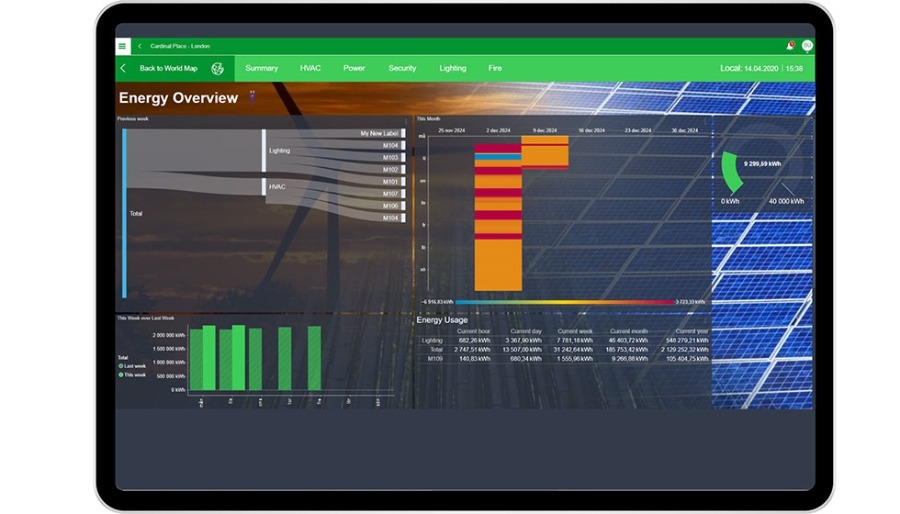
“AI will not live only in the customer-facing layer of retail; it will increasingly depend on the building’s ability to provide reliable operational data and act on it. Without connected systems, AI may identify a problem, but the organization may not be able to respond quickly, or consistently, across a portfolio,” Henzie explains. “That is why Scheider Electric focuses on integrated architecture: connecting the right assets, standardizing the data, protecting systems from a cybersecurity perspective, and making the insights actionable for facility, operations, and sustainability teams.”
How Schneider Electric can help
The goal for Schneider Electric is to help retailers connect customer experience, cost control, and sustainability in one operational view. Henzie works towards this goal every day, and admits that some sites are ready, but many are only partially ready. “A single connected device, such as a smart camera or sensor, is usually not the issue on its own,” he says. “The bigger issue is cumulative load and complexity across a portfolio. Add more connected devices, mode edge equipment, EV charging, electrified heating, tighter comfort expectations, and more data traffic, and the operating environment changes quickly.”
Henzie says that “readiness challenge” usually shows up in one of three ways. The first is the connectivity gap: HVAC, lighting, power, and other building syste3ms often operate in silos, which limits the ability to automate, optimize, or manage them as one connected environment. The second is a capacity gap: older electrical infrastructure was not designed for the combined demands of EV charging, electrified heating, edge computing, and connected in-store technology. And the third is a visibility gap: many operators cannot see, in real time, where energy is being used, where peak demand is building, or where reliability risks are emerging.
“So, the question is not simply whether one more connected device will overwhelm a store’s network or the grid. The more important question is whether the building has the electrical capacity, power quality, secure connectivity, system integration, and operational visibility needed to support technology at scale,” Henzie says. And he has seen a lot of different answers to this question first-hand. But even the worst scenario is not hopeless.
“That does not mean that every building needs to be rebuilt. It means owners need a digital-first and electric-ready roadmap: assess to existing electrical and building-management foundation, identify constraints, add monitoring where visibility is missing, and modernize in phases so the building can support future technology without unnecessary disruption.” There is a middle ground where adopting technologies bears the fruit of this labour and pays off.
Henzie says that smart technology should not simply add complexity; it should help reduce waste and improve performance. “The largest opportunities are often in major building loads such as HVAC, lighting, and refrigeration, as well as in avoiding unnecessary maintenance interventions and unplanned downtime. For example, a multi-site retailer can use digital controls and analytics to identify stores where lighting or HVAC is running outside of scheduled hours, compare similar sites, detect equipment anomalies earlier and remotely adjust setpoints or schedules.”
These are practical changes that can reduce energy consumption while improving consistency across the customer experience. “For retail owners, this is also where onsite resilience becomes part of the business case. Energy efficiency reduces waste, but better visibility can also help manage demand peaks, plan for battery storage, or microgrid-ready configurations where appropriate, and support continuity during grid disruptions or local constraints.” In this sense, modernization is not about adding technology for its own sake; the balance comes from integration.
A trusted partner in energy technology
Schneider Electric has been helping people make the most of their resources for nearly two hundred years. They are experts in connecting systems to make devices more efficient, flexible, and resilient, while simultaneously generating and contextualizing the data necessary to optimize them. Henzie says that for buildings, they are usually called in when a retailer, landlord, or facility team knows that the building needs to perform better, but the path forward is not obvious.
“They may be dealing with aging systems, high energy costs, limited staffing, uneven performance across sites, or pressure to support sustainability goals,” Henzie says. “Schneider Electric can help at multiple stages, starting with a digital and electrical readiness assessment. From there, we can help customers build a modernization roadmap that prioritizes the investments likely to have the greatest impact – whether that is building management, energy management, smarter controls, metering, remote monitoring, power and energy visibility, or services that support more predictive maintenance.”
Practical solutions include EcoStruxure Building for building management and control; EcoStruxure Building Activate for multi-site facility management; power and energy monitoring to make consumption, demand, and reliability more visible; and EcoCare and other digital services that support condition-based maintenance and remote expertise. The immediate value is often visibility: understanding what is happening across a site or portfolio so teams can compare locations, identify issues earlier, and focus capital where it will deliver the strongest operational return.
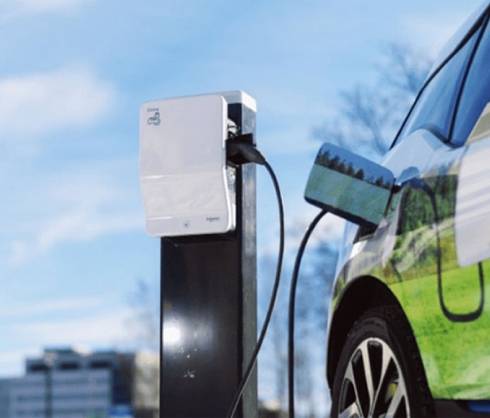
For sites planning EV charging or other electrification loads, the key is to design for scale. Installing a small number of chargers may solve an immediate need, but designing the electrical backbone and load-management strategy for future growth helps avoid rework and supports a more resilient long-term plan. Henzie says each solution is unique, much like the regional difference he noted above.
“In Canada, we are seeing strong interest from retail and commercial real estate operators in solutions that are straightforward to deploy, scalable across diverse sites and able to work within a mixed-vendor environment. At a recent ConnexFM Canada event in Toronto, for example, our team demonstrated EcoStruxure Building Activate to facility management professionals as a practical way to show how data-driven building operations can address real pain points such as visibility, energy waste, and maintenance prioritization.”
How does Schneider demonstrate results for their customers? Henzie says they start with the business outcome. For a retailer, that might mean reducing energy consumption, lowering maintenance costs, improving up time, supporting sustainability targets, or creating a more consistent in-store experience. Once the outcome is clear, they define the KPIs and establish a baseline.
“That baseline is critical,” Henzie says. “Digital platforms can help measure energy use, demand peaks, alarms, schedules, equipment performance, comfort conditions, and maintenance activity before and after improvements are made. This gives customers a clearer view of whether the solution is delivering: fewer off-hours consumption issues, fewer comfort complaints, better response times, reduced truck rolls, improved equipment performance, or lower energy intensity across comparable sites.”
Henzie adds that for retailers and landlords, it is also important to measure demand, not just consumption. “Peak-demand management can materially affect the business case, especially as electrification, EV charging, and other new loads are added. With better data, owners can reduce waste, control peaks, plan upgrades before capacity becomes a constraint, and make more informed capital-planning decisions.”
Where owners and tenants share sustainability goals, that same data can support more transparent conversations around green leases, retrofit priorities, and emissions reporting. The more granular the building data is, the easier it becomes to connect operational improvements to business outcomes.
“So, ROI is not only a spreadsheet exercise. The hard benefits are important — energy savings, avoided downtime, reduced maintenance spending, and better asset utilization. But the broader value is that retailers gain more resilient operations, better planning data, stronger sustainability reporting, and a building portfolio that is more prepared for the next phase of electrification and digital retail.”
What makes Schneider Electric Canda a trusted partner? The most obvious answer is that Schneider Electric is an energy technology company, which is important because retail competitiveness increasingly depends on both energy and digital performance. They bring together electrical distribution, building automation, software, analytics and services in a way that helps customers modernize without starting from scratch.
“Our EcoStruxure architecture is open and interoperable, which is essential in retail because no two portfolios are identical. Buildings may have different ages, systems, vendors and operating models. The goal is not to rip and replace everything; it is to connect what matters, modernize where it creates value and give teams the visibility to make better decisions.”
That matters because the retail reset is not a single-technology problem. It is a whole-building and portfolio challenge that touches power distribution, building controls, energy management, software, services and future load planning. “Our EcoStruxure architecture is open and interoperable, which is essential in retail because no two portfolios are identical. Buildings may have different ages, systems, vendors and operating models. The goal is not to rip and replace everything; it is to connect what matters, modernize where it creates value and give teams the visibility to make better decisions,” Henzie says.
“We also bring a practical Canadian presence through our local teams, partners and EcoXpert network. That matters for customers who need support beyond the technology itself. Retailers are looking for partners who understand operational realities, can support phased modernization and can help translate sustainability and digital ambitions into measurable outcomes.”
Summary
Ultimately, Schneider Electric Canada helps retailers prepare their buildings for what comes next. Buildings that cannot provide energy intelligence, operational transparency or electrification readiness may become harder to operate, lease, and modernize. Buildings with data and energy intelligence are better positioned to remain efficient, resilient, and competitive in the next phase of retail.
More Information
Related Story
Schneider Electric Named World’s Most Sustainable Company for the Third Consecutive Year by TIME Magazine and Statista
Schneider Electric, a global energy technology leader, has been named the “World’s Most Sustainable Company 2026” by TIME Magazine and Statista for the third consecutive year. The recognition, drawn from a ranking of 5,000 of the world’s largest and most influential companies, reflects their long-standing commitment to making sustainability an integral part of its business strategy, governance, and performance.
Driven by its vision of advancing energy technology to power progress for all, Schneider Electric leverages its leadership in electrification, efficiency, and digitalization to deliver impact at scale.