SCHUNK and 3M Can Show You How to Start Automating Material Removal Processes
June 3, 2021

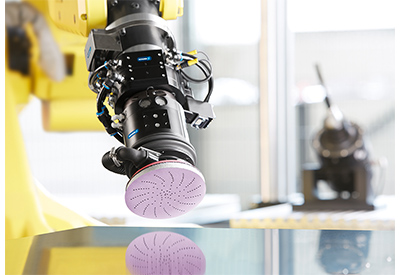
Robotic material removal offers some advantages towards manual machining. It is less expensive, more precise, reproducible, and can be implemented unmanned around the clock. But how can the process be successfully changed over? To which factors do users have to pay attention when automating their sanding processes, and how must they interact to achieve the highest possible degree of productivity?

SCHUNK, a specialist for gripping systems and clamping technology and 3M, a major manufacturer of industrial abrasives, will answers such questions in a free online seminar on June 15, and June 16, 2021 . They will show several case studies demonstrating how to get started with robotic material removal, highlight best practices for success, and illustrate how common challenges can be streamlined with the right abrasives and tools. The online seminar is aimed at beginners and people with limited experience with robots, system integrators and users. In addition to theoretical principles and practical applications, this interactive online format also offers the opportunity to discuss specific issues and to exchange ideas with other participants.

Register HERE.
Source

Related Articles


Editor’s Pick: Featured Article

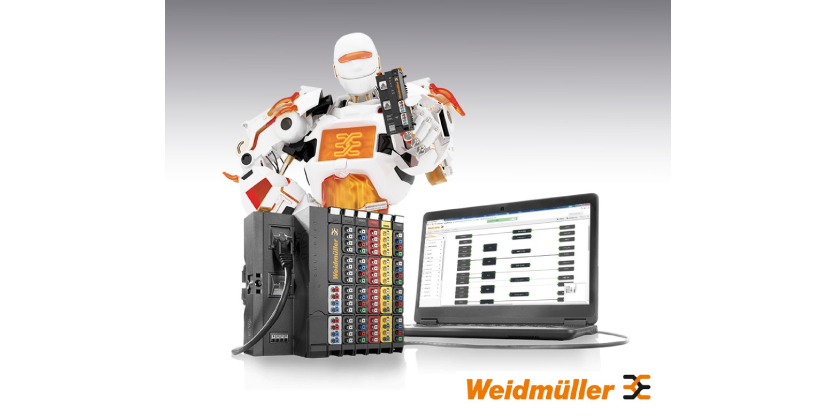
Weidmüller’s u-control 2000: The Automation Controller

Weidmüller’s u-control 2000: The Automation Controller

Weidmüller’s scalable engineering software, u-control 2000, adapts individually to your requirements. And, the u-control is powerful, compact and fully compatible with Weidmüller’s I/O system u-remote. This article looks at what makes u-control the heart of your automation.

Programmable logic controllers (PLCs) are one of the main components of any automated system. A typical control system has inputs, outputs, controllers (i.e., PLCs), and some type of human interaction with the system, a human machine interface (HMI), for example.

Read More


Latest Articles

  • Applications of Physical AI in Canadian Sectors

    June 23, 2026 Physical AI — the convergence of artificial intelligence with robotics and autonomous motion systems — is reshaping how Canadian industries operate. Across sectors from healthcare to mining, AI-enabled machines are performing tasks that were once entirely dependent on human intervention. But deploying Physical AI effectively requires more than sophisticated algorithms: it demands… Read More…

  • Case Study: Optimizing Harmonic Mitigation in Wastewater Treatment

    June 22, 2026 Segment and Application In a municipality, wastewater treatment plants typically stand out as the main consumers of electricity. The operational processes exhibit significant load variations throughout a 24-hour cycle, necessitating the use of AC drives to regulate pumps, blowers, and other motorized equipment in response to fluctuating demand. In one wastewater treatment… Read More…