WAGO Introduces Compact Controller 100 Secure to Strengthen Industrial Cybersecurity
October 15, 2026
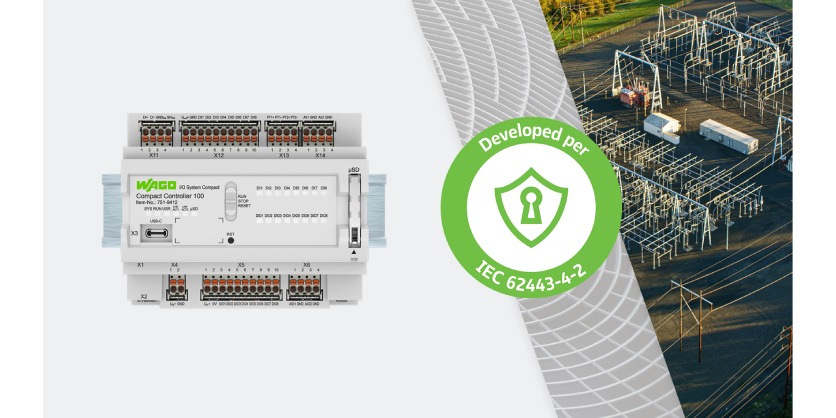
New controller combines advanced security features, flexible connectivity and reliable performance for industrial automation and energy applications.
As industrial systems become increasingly connected, cybersecurity has become a critical consideration for manufacturers, machine builders and energy operators. Greater connectivity enables more efficient operations, remote monitoring and data exchange, but it also introduces new security challenges. To help address these evolving demands, WAGO has introduced the Compact Controller 100 Secure, combining advanced cybersecurity capabilities with flexible control functionality in a compact design.
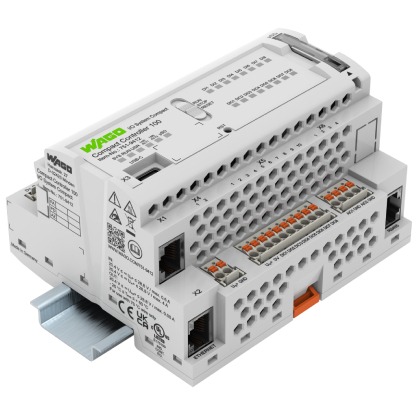
Building on the established Compact Controller 100 family, the new controller incorporates security features designed to protect industrial networks, prevent unauthorized access and support secure communication between connected devices. Cyber Resilience Act (CRA) ready and developed in accordance with IEC 62443-4-2 requirements, the Compact Controller 100 Secure integrates SSH and SSL/TLS encryption, a built-in firewall, VPN capabilities, Secure Boot and TPM 2.0 support. Together, these features help reduce exposure to cyber threats while supporting reliable operation in demanding industrial environments.
Beyond cybersecurity, the Compact Controller 100 Secure provides the flexibility needed for a wide range of automation applications. The controller features eight digital inputs and eight configurable digital channels that can function as either inputs or outputs, allowing users to adapt I/O configurations to specific application requirements. Dual isolated RS-485 ports also enable communication with energy meters and field devices using Modbus RTU, simplifying integration into existing systems.
For distributed energy and microgrid applications, the controller supports IEEE 2030.5, IEEE 1547 and SunSpec Modbus 700, providing communication capabilities for increasingly interconnected energy systems. Its support for industrial communication protocols, including OPC UA, Modbus TCP and MQTT, also enables data exchange between automation equipment, supervisory systems and connected applications.
Engineering and programming are supported through CODESYS 3.5 software, available at no additional charge. With support for IEC 61131-3 programming languages and HTML5-based visualizations through its integrated web server, the controller enables users to develop control applications and monitor system performance without requiring additional visualization software.
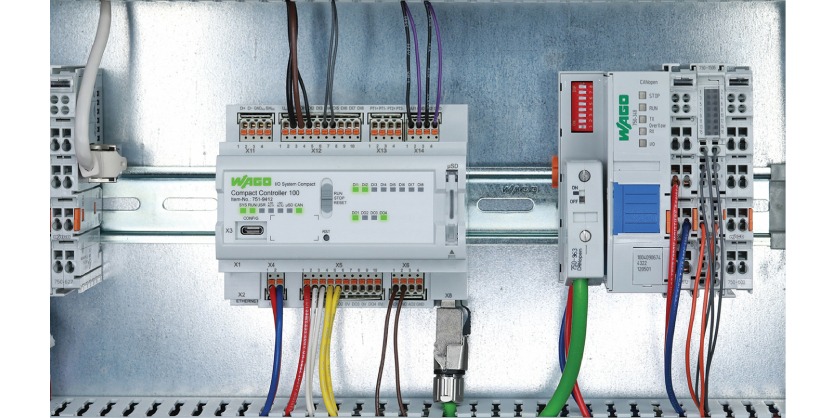
By combining cybersecurity, connectivity and flexible control capabilities, the Compact Controller 100 Secure offers machine builders, OEMs, industrial facilities and energy operators a solution for developing more secure and connected automation systems. Its integrated security features help organizations strengthen their industrial infrastructure while supporting the growing demand for digitalization and remote connectivity.
About WAGO:
For 75 years, WAGO has been driving innovation in electrical interconnection, interface electronics and automation technology. From its pioneering CAGE CLAMP® spring pressure connection technology to its extensive range of Interconnect, Interface and Automation solutions, including the fieldbus-independent WAGO-I/O-SYSTEM, WAGO has built a reputation for quality, performance and reliability. Today, customers around the world rely on WAGO solutions to support the safe and efficient operation of their systems.
More Information
For additional information, visit CC-100 Overview | WAGO . Contact WAGO at 1-888-WAGO-221 (9246-221) or customerservice.ca@wago.com.
For more information about the Compact Controller 100 Secure, visit https://www.wago.com/ca-en/ca-cc100
Related Story
WAGO Makes Renewable Energy Easier to Connect to the Electrical Grid
As utilities connect more renewable energy systems and distributed energy resources, ensuring a balance between energy generation and consumption, enabling equipment from different manufacturers to communicate reliably has become one of the grid’s biggest modernisation challenges.