Building the Backbone of a Multi-Energy Future: How Gasunie is Eolving its Grid Operations
August18, 2026
Europe’s energy infrastructure is evolving rapidly as the transition to lower-carbon energy accelerates. It is no longer focused solely on transporting natural gas. Grid operators are preparing for hydrogen, CO₂, and renewable gases to play larger roles. These energy carriers will complement existing energy networks.
For Gasunie, one of Europe’s leading energy infrastructure companies, that future is already taking shape.
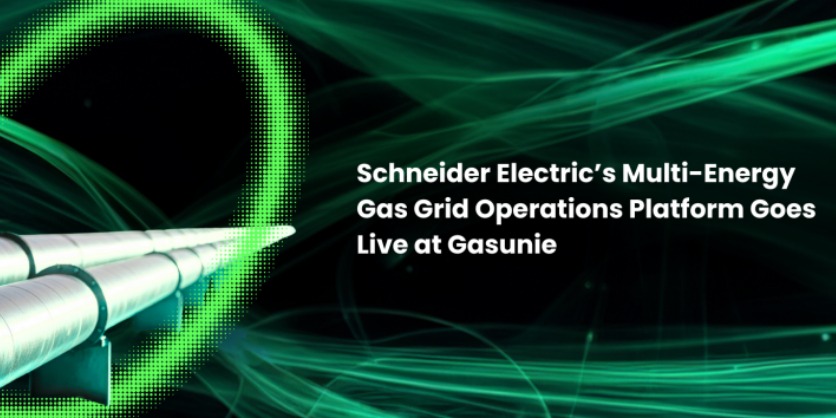
In May 2026, Gasunie went live with Schneider Electric’s EcoStruxure™ Advanced Gas Management System (AGMS). The system created a centralized platform for managing multiple energy carriers across its network. It provides a single operational view of natural gas today. It also lays the foundation for future hydrogen, CO₂, biogas, and heat transport.
Why multi-energy operations matter
The energy transition isn’t replacing one energy source with another. It’s creating a more diverse energy ecosystem.
Across the Netherlands and Europe, investments are accelerating in hydrogen infrastructure, carbon capture and storage, district heating, and renewable energy integration. As these systems grow, operators need a way to manage them efficiently without creating separate control environments for every energy carrier.
That’s the challenge Gasunie set out to solve.
The company’s 16,000-kilometer pipeline network, supported by more than 1,500 stations and related energy infrastructure assets, already plays a critical role in Europe’s energy supply. In fact, Gasunie transports nearly a quarter of all gas consumed across the European Union. But as new energy carriers enter the mix, Gasunie recognized the need for a modern platform that could bring operations together while maintaining the reliability and safety standards expected of mission-critical infrastructure.
One platform, multiple energy carriers
At the heart of the transformation is Schneider Electric’s EcoStruxure AGMS Grid Operations Platform.
The solution combines traditional SCADA capabilities with advanced online and offline simulation tools. This creates a digital representation of the network that operators can use to monitor, analyze, and plan operations across multiple energy types.
Rather than managing separate systems for natural gas, hydrogen, CO₂, or heat, operators work from a common platform. The platform provides shared workflows, visualization tools, and operational insights. It supports hydrogen transmission, carbon transport and storage, district heating operations, and multi-energy corridor management. All are managed within a single operational environment.
The system’s digital twin capabilities provide both real-time and predictive visibility into operations while supporting simulations across multiple energy carriers. This allows operators to manage critical attributes such as energy balance, linepack, pressure and other physical conditions (hydrogen purity, calorific value, Wobbe Index) while proactively identifying potential operational risks before they impact service.
According to Jeroen Zanting, Business Line Director Methane Transport at Gasunie, the new system represents a significant milestone:
“With the launch of the new system AGMS 3.0, we are truly taking the step to control not only natural gas and green gas, but also hydrogen, CO₂ and heat. In this way, Gasunie connects existing energy with new energy.”
Supporting the energy projects of tomorrow
The platform arrives at a pivotal time for Gasunie as several major energy transition initiatives move forward.
Among them is the Porthos project, which is expected to begin operations in 2026 and will store approximately 2.5 million tons of CO₂ annually from Rotterdam’s industrial sector in depleted gas fields beneath the North Sea. The project represents the European Union’s first large-scale CO₂ storage initiative and demonstrates how new forms of energy infrastructure are becoming essential to decarbonization.
Gasunie is also helping develop a national hydrogen network through Hynetwork, a wholly owned Gasunie subsidiary. The project aims to establish approximately 1,200 kilometers of hydrogen pipelines, connecting industrial clusters, import terminals, storage facilities, and neighboring countries to support the emerging hydrogen economy.
Hynetwork is also participating in the Delta Rhine Corridor project. This cross-border infrastructure will transport hydrogen and CO₂ between the Netherlands and Germany. The project will help industrial organizations reduce emissions. It will also strengthen energy cooperation between the two countries.
Meanwhile, projects like WarmtelinQ are expanding district heating across Zuid-Holland. They transport residual industrial heat to homes and businesses. This creates more efficient use of existing energy resources.
These initiatives showcase key multi-energy use cases supported by the platform.Gasunie is preparing for a future with multiple energy carriers. These include hydrogen transport, cross-border hydrogen and CO₂ corridors, carbon capture and storage, and district heating. The goal is to operate them together within a unified environment.
Each of these projects introduces new operational requirements, making a centralized, future-ready control platform increasingly valuable.
A decade of collaboration
The project is the result of nearly ten years of collaboration between Gasunie and Schneider Electric.
Throughout that time, Gasunie contributed deep operational expertise and an understanding of evolving energy infrastructure requirements, while Schneider Electric provided software engineering and digital grid management capabilities.
The result is a platform that helps break down operational silos, creates a common source of truth across departments, and provides a scalable foundation for future energy networks. The platform enables multiple energy-focused departments to operate within a shared operational environment while maintaining dedicated visibility into their respective energy carriers.
As new technologies continue to emerge, the platform will continue evolving alongside them.
Achievements
Using a new multi-energy transmission system built on Schneider Electric EcoStruxure AGMS, Gasunie is able to enhance existing operational use cases as well as develop new ones, including:
- Monitoring and controlling the multi-energy system. Combined and separate visualization of the geographically spread grid state, both in real time and with predictive lookahead, supported by centralized alarming and anomaly detection when transporting hydrogen, CO₂, and heat alongside natural gas. This optimizes resource utilization and enhances operational efficiency and reliability.
- Proactive management of all critical energy attributes. Detailed insight into real-time and predicted values of physical conditions across the entire network – enabled by automated and simultaneous estimation computations (hydraulic simulations) for each supported energy. This empowers users to mitigate operational risks proactively before they materialize.
- Automatic multi-energy network model management. Dedicated quality assurance system for network model creation and updates, supported by standard GIS import interface, data validation, and model conversion rules for automatic hydraulic scenario modeling for each energy. This eliminates the need to manage and maintain multiple configurations and models for different energies.
- Standardized integrations across multi-energy departments. Real-time integration with new field devices needed by new energy types using standard interfaces, and enterprise-level integration using AGMS’s open platform for centralized, orchestrated information exchange with external systems in a secure and controlled manner. This minimizes integration complexity and reduces integrated solution maintenance costs.
Gasunie and Schneider Electric continue to enhance the platform, with additional technologies expected to be integrated in the coming years.
Looking ahead
The energy transition is often discussed in terms of generation technologies, renewable energy targets, or emissions reductions. But behind all of those ambitions is infrastructure—the systems that move energy safely, reliably, and efficiently from where it’s produced to where it’s needed.
By creating a unified platform capable of supporting natural gas, green gas, hydrogen, CO₂, and heat within a single operational environment, Gasunie is taking an important step toward that future.
Beyond supporting today’s operations, the platform is helping enable some of the energy sector’s most important emerging use cases. These cases include hydrogen transportation, carbon capture and storage, district heating, and cross-border multi-energy corridors. Together, these initiatives illustrate how energy infrastructure is evolving from managing a single commodity to orchestrating an increasingly interconnected ecosystem of energy carriers.
And as Europe’s energy landscape continues to diversify, the ability to manage multiple energy carriers together may become just as important as the energy sources themselves.
Related Story
Schneider Electric Named World’s Most Sustainable Company for the Third Consecutive Year by TIME Magazine and Statista
Schneider Electric, a global energy technology leader, has been named the “World’s Most Sustainable Company 2026” by TIME Magazine and Statista for the third consecutive year. The recognition, drawn from a ranking of 5,000 of the world’s largest and most influential companies, reflects their long-standing commitment to making sustainability an integral part of its business strategy, governance, and performance.