Why Are More Organizations Standardizing on Wall-Mount Server Cabinets?
June 10, 2026
For decades, the traditional server room was the center of an organization’s IT infrastructure. Servers, networking equipment, and telecommunications hardware were all housed in large floor-standing cabinets within dedicated spaces.
Today, that model is changing.
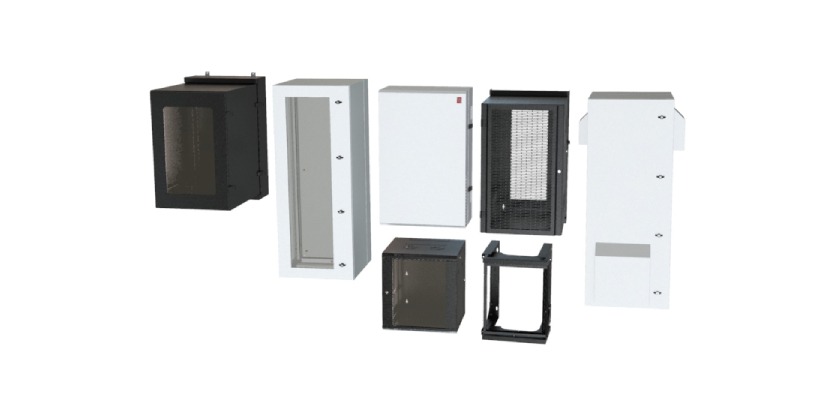
As networks become more distributed and organizations deploy equipment closer to users, applications, and connected devices, wall-mount server cabinets are becoming a preferred infrastructure solution.
From branch offices and retail locations to schools, healthcare facilities, and industrial environments, more organizations are standardizing on wall-mount cabinets as part of their IT strategy.
So what’s driving the shift?
The Rise of Distributed IT
Modern networks no longer live in a single location.
Organizations increasingly support infrastructure across:
- Branch offices
- Retail stores
- Healthcare facilities
- Manufacturing environments
- Educational campuses
- Remote facilities
Rather than backhauling every service to a centralized server room, many organizations are deploying networking and computing resources closer to where they are needed.
This approach improves performance, reduces latency, and supports growing edge computing requirements.
The challenge is finding a secure and organized way to house equipment in spaces that were never designed to function as data centers.
That’s where wall-mount cabinets excel.
Making Better Use of Limited Space
One of the biggest advantages of wall-mount cabinets is their ability to maximize available floor space.
Many IT deployments are located in:
- Telecommunications closets
- Utility rooms
- Small offices
- Shared-use spaces
In these environments, every square foot matters.
By mounting equipment on the wall, organizations can secure networking equipment while preserving valuable floor space for other operational needs.
For facilities managers and IT teams alike, this can be a significant advantage.
Security Without a Dedicated Server Room
Not every deployment has access to a secure IT room.
Wall-mount cabinets provide:
- Locking front doors
- Secure equipment storage
- Controlled access
- Protection from accidental contact
This makes them an excellent choice for schools, healthcare facilities, retail environments, and public-facing locations where equipment must remain protected.
Supporting Modern Network Equipment
Today’s networking infrastructure is increasingly compact.
Many deployments consist primarily of:
- Ethernet switches
- Patch panels
- Fiber termination hardware
- Edge computing devices
- Security equipment
These systems often don’t require a full floor-standing cabinet.
A properly sized wall-mount cabinet can provide all the rack space needed while reducing installation costs and conserving valuable space.
Easier Deployment and Expansion
Wall-mount cabinets simplify installation in locations where floor-standing solutions may be impractical.
Benefits include:
- Faster installation
- Reduced footprint
- Simplified cable routing
- Easier expansion of distributed networks
As organizations add remote locations or expand existing facilities, wall-mount cabinets provide a scalable approach that can be replicated across multiple sites.
Don’t Forget Cable Management
As wall-mount deployments grow, cable management becomes increasingly important.
Proper cable management helps:
- Maintain airflow
- Improve serviceability
- Reduce installation time
- Support future expansion
That’s why Hammond has made cable management a dedicated product category, ensuring customers have the tools they need to build organized and scalable installations.
A wall-mount cabinet is only as effective as the infrastructure surrounding it.
When Is a Wall-Mount Cabinet the Right Choice?
Wall-mount cabinets are often the best choice when:
- Floor space is limited
- Equipment loads are moderate
- Security is required
- Infrastructure is distributed across multiple locations
- Organizations are deploying edge computing resources
For many modern IT environments, these conditions are becoming the norm rather than the exception.
Final Thoughts
As organizations continue to embrace distributed networks and edge infrastructure, wall-mount cabinets are playing a larger role in IT deployments.
They provide a practical combination of:
- Space efficiency
- Security
- Scalability
- Accessibility
While large data centers often receive the most attention, the reality is that many critical networks operate from telecommunications closets, branch offices, and edge locations.
That’s why Hammond continues to invest in wall-mount cabinet solutions designed around the needs of real-world IT deployments.
Because for many organizations, the future of infrastructure isn’t bigger. It’s smarter, more distributed, and closer to where it’s needed most.
More Information
Related Story
Why Hammond Continues to Invest in Traditional Rack Infrastructure
Why Hammond continues to invest in traditional rack infrastructure: Over the past several years, the data center industry has experienced a dramatic shift. Conversations that once centered around servers, networking, storage, and enterprise IT have increasingly become dominated by artificial intelligence, hyperscale computing, and next-generation data center architectures.