| | | |

Reaction Dynamics | Revolutionizing Hybrid Propulsion Technology

February 29, 2024

“Our goal in five years – be in a position to push everyone in the industry to rethink launch in a way that can be more sustainable. We can’t just keep launching without factoring in the carbon footprint.” – Bachar Elzein, CEO Reaction Dynamics.

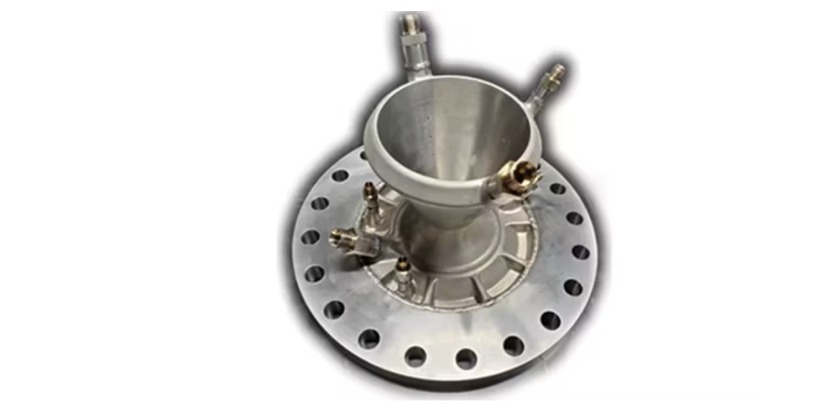
Reaction Dynamics is a leading company that specializes in developing groundbreaking hybrid propulsion technology. Their propulsion systems offer longer burn times and highly efficient combustion, making them ideal for launch and in-space propulsion

The company utilizes NX and Simcenter solutions to tackle a 90-year-old challenge in hybrid rocket propulsion, ensuring peak efficiency for extended durations. Their novel engine architecture, optimized through additive manufacturing and Siemens software, not only reduces costs significantly but also positions them to provide a cost-effective alternative for small satellite operators entering space.

Source

More Information

Case Study: Preparing to Deliver More Cost-Effective and Timely Small Satellite Launches
Reaction Dynamics | Revolutionizing Hybrid Propulsion Technology

Reaction Dynamics was founded in 2017 to develop a breakthrough hybrid propulsion launch technology. This technology will allow the company to offer highly cost-effective, reliable and eco-friendly launches. Reaction Dynamics will be launching a suborbital rocket in 2023 and offering small satellite launch services with its Aurora vehicle starting in 2024.
Related Articles


Editor’s Pick: Featured Article

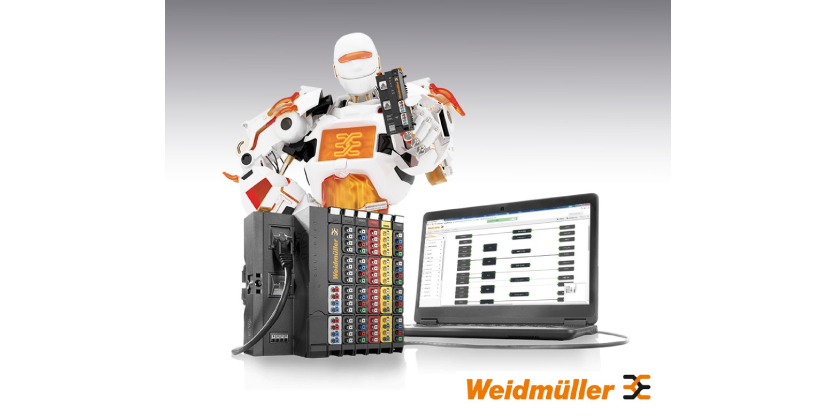
Weidmüller’s u-control 2000: The Automation Controller

Weidmüller’s u-control 2000: The Automation Controller

Weidmüller’s scalable engineering software, u-control 2000, adapts individually to your requirements. And, the u-control is powerful, compact and fully compatible with Weidmüller’s I/O system u-remote. This article looks at what makes u-control the heart of your automation.

Programmable logic controllers (PLCs) are one of the main components of any automated system. A typical control system has inputs, outputs, controllers (i.e., PLCs), and some type of human interaction with the system, a human machine interface (HMI), for example.

Read More


Latest Articles

  • Applications of Physical AI in Canadian Sectors

    June 23, 2026 Physical AI — the convergence of artificial intelligence with robotics and autonomous motion systems — is reshaping how Canadian industries operate. Across sectors from healthcare to mining, AI-enabled machines are performing tasks that were once entirely dependent on human intervention. But deploying Physical AI effectively requires more than sophisticated algorithms: it demands… Read More…

  • Case Study: Optimizing Harmonic Mitigation in Wastewater Treatment

    June 22, 2026 Segment and Application In a municipality, wastewater treatment plants typically stand out as the main consumers of electricity. The operational processes exhibit significant load variations throughout a 24-hour cycle, necessitating the use of AC drives to regulate pumps, blowers, and other motorized equipment in response to fluctuating demand. In one wastewater treatment… Read More…