Cable Management Isn’t an Accessory. It’s Part of the Network.
July 17, 2026
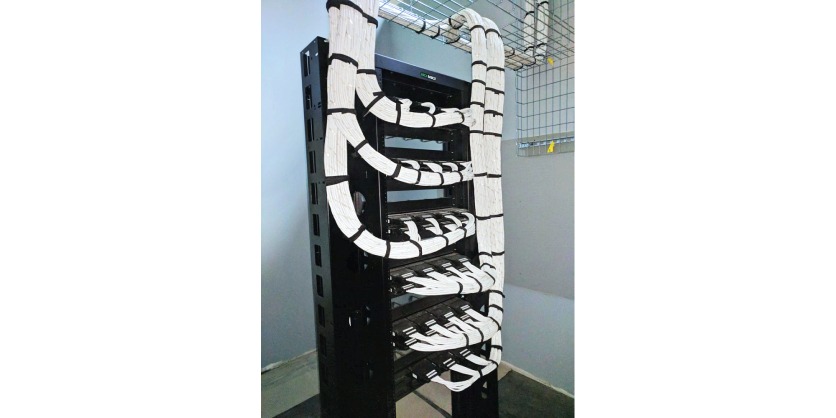
Cable management has a habit of becoming tomorrow’s problem.
The rack gets installed, the switches are mounted, the patch panels are terminated, and before long the network is live. Everyone is focused on getting systems online and moving to the next job. The cables? They’ll get cleaned up later. Except “later” almost never comes. Once everything is connected, nobody wants to start pulling patch cords just to make the rack look better. So the installation gets signed off, the doors close, and that tangled bundle of cables becomes someone else’s problem. Usually the next technician. Sometimes it’s you.
A Rack Doesn’t Have to Be Pretty. It Has to Be Serviceable.
People sometimes think cable management is about appearances. It isn’t. It’s about opening a rack two years from now and immediately knowing what’s going on. When cables are routed with some thought behind them, replacing a switch takes minutes instead of an hour. Tracing a connection doesn’t involve following a bundle through a maze of patch cords. You aren’t wondering whether moving one cable is going to knock three other systems offline. Anyone who’s worked in IT has opened a rack and quietly thought, I really hope I don’t have to touch anything in here. That feeling usually has nothing to do with the equipment. It’s the cables.
Networks Never Stay the Same
The day a rack is installed is the cleanest it will ever be. After that, things start getting added. Another switch because the business grew. A few new fiber runs. Security cameras. Wireless upgrades. Maybe a new UPS because someone finally approved the budget. None of those additions seem like a big deal on their own. The problem is they rarely happen all at once. They happen over months or years, often by different people. Without a plan, every change leaves the rack a little harder to work on than it was before. Eventually, routine maintenance becomes an exercise in patience.
Build for the Person Who Opens the Rack Next
One idea has stuck with Hammond Manufacturing over the years: don’t build the rack for today, build it for whoever opens it next. Maybe that’s you in six months or maybe it’s someone who’s never seen the installation before. Leave some room instead of filling every rack unit. Give cables a path instead of asking them to find one. Separate power from data where it makes sense. Label cables while everything is still fresh in your mind, because it won’t be fresh forever. Most of that work adds minutes to an installation and it can save hours over the life of the rack.
Why Hammond Made Cable Management Its Own Category
At Hammond, they have been building rack infrastructure for a long time, and they have noticed something. The installations people remember aren’t the ones with the newest switches or the biggest servers. They’re the ones that are still easy to work on years later. That’s why they stopped thinking of cable management as just another accessory. It’s part of the infrastructure!
Done well, it protects airflow, makes troubleshooting easier, speeds up upgrades, and gives the next technician a chance to work without undoing years of shortcuts. That’s why cable management now has its own place in the Hammond product lineup. Because if it’s important enough to affect every service call you’ll ever make, it’s important enough to plan from the very beginning.
More Information
Explore Hammond’s complete cable management solutions and build a cleaner, more serviceable rack from the start.
https://www.hammfg.com/dci/products/cable-management
Related Story
Why Hammond Continues to Invest in Traditional Rack Infrastructure
Why Hammond continues to invest in traditional rack infrastructure: Over the past several years, the data center industry has experienced a dramatic shift. Conversations that once centered around servers, networking, storage, and enterprise IT have increasingly become dominated by artificial intelligence, hyperscale computing, and next-generation data center architectures.