

|

Sustane Intro Video

December 15, 2025

Sustane Technologies is a Nova Scotia-based Cleantech company that has developed and is now deploying disruptive technologies that deliver near complete separation and recycling of municipal solid waste (MSW). The company produces biomass pellets, synthetic diesel, circular plastic feedstocks and recyclables (metals, plastics). With the Sustane process, your community can reduce greenhouse gas (GHG) emissions by between 2 to 3 tonnes for every tonne of garbage (MSW) diverted from landfilling.

More Information

Sustane Technologies Inc.

Related Story

Sustainable Solutions: Sustane Gives Plastic Waste a Second Life
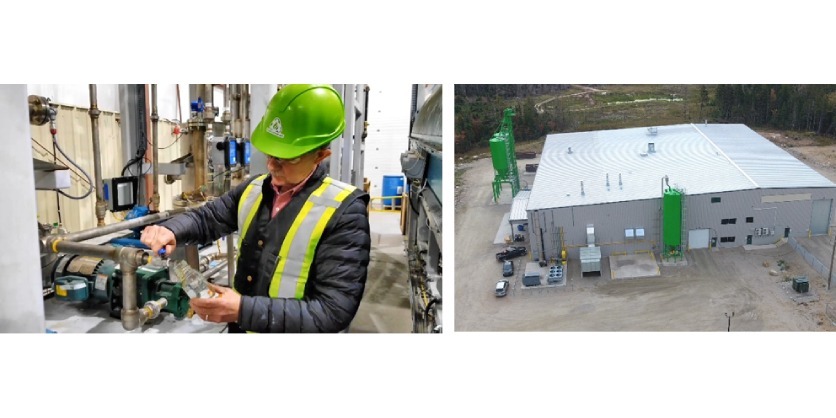
Sustane Intro Video

Cleantech company Sustane Technologies Inc. develops alternative fuel for export market

Shifting away from fossil fuels lowers greenhouse gas emissions and fosters innovation and economic growth. Minimizing plastic waste helps preserve our ecosystems and reduces the burden on landfills. The Government of Canada is investing in a company that is doing both at the same time: repurposing plastic waste to make cleaner, greener alternative fuel.
Related Articles


Editor’s Pick: Featured Article

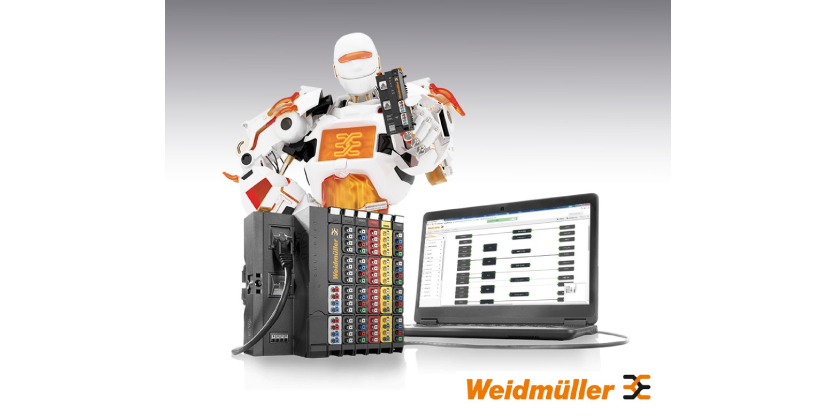
Weidmüller’s u-control 2000: The Automation Controller

Weidmüller’s u-control 2000: The Automation Controller

Weidmüller’s scalable engineering software, u-control 2000, adapts individually to your requirements. And, the u-control is powerful, compact and fully compatible with Weidmüller’s I/O system u-remote. This article looks at what makes u-control the heart of your automation.

Programmable logic controllers (PLCs) are one of the main components of any automated system. A typical control system has inputs, outputs, controllers (i.e., PLCs), and some type of human interaction with the system, a human machine interface (HMI), for example.

Read More


Latest Articles

  • Applications of Physical AI in Canadian Sectors

    June 23, 2026 Physical AI — the convergence of artificial intelligence with robotics and autonomous motion systems — is reshaping how Canadian industries operate. Across sectors from healthcare to mining, AI-enabled machines are performing tasks that were once entirely dependent on human intervention. But deploying Physical AI effectively requires more than sophisticated algorithms: it demands… Read More…

  • Case Study: Optimizing Harmonic Mitigation in Wastewater Treatment

    June 22, 2026 Segment and Application In a municipality, wastewater treatment plants typically stand out as the main consumers of electricity. The operational processes exhibit significant load variations throughout a 24-hour cycle, necessitating the use of AC drives to regulate pumps, blowers, and other motorized equipment in response to fluctuating demand. In one wastewater treatment… Read More…