Universal Robots Offers New Low-Level Torque Interface to Empower Research and Innovation
May 22, 205
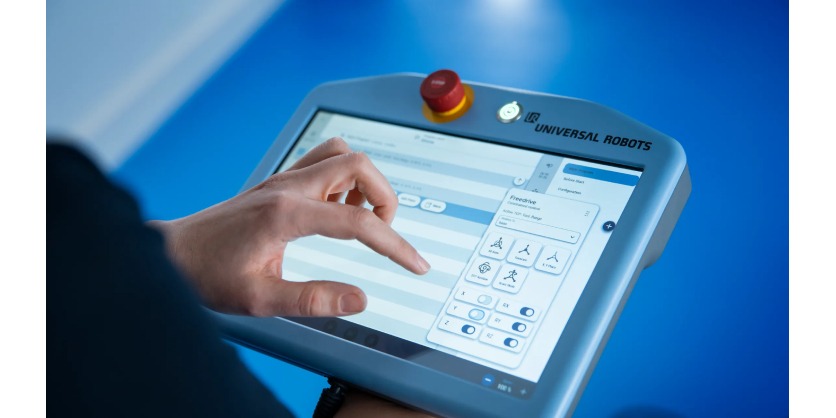
The Direct Torque Control interface is available in an early access version now
Having the ability to directly control the torque of all the cobot joints opens vast opportunities for cobots to carry out demanding tasks. But even for experienced cobot users and researchers, building your own software stack to enable this is both time consuming and challenging.
That’s why Universal Robots (UR) has developed a new low-level torque interface that gives access to control the target torque for all the joints of the UR cobot at 500Hz.
“These capabilities are becoming increasingly sought after within research and education, especially for AI,” Anders Billesø Beck, VP Technology for Universal Robots, said. “With our new interface, we’re making it much easier for researchers and partners to work with direct torque control. Instead of spending a long time implementing alternative solutions, they can now focus immediately on their research or on developing new, innovative applications using the capabilities already incorporated into our PolyScope software.”
Anders Billesø Beck sees particular potential for direct torque control in applications such as assembly and screw driving, where precise force and delicate touch can make all the difference.
NVIDIA Robotics has had access to a beta version of the new interface to build an industry use case for gear assembly, showcasing how the torque control interface enables sim-to-real transfer. Read more about that here.
UR’s Direct Torque Control interface applies to all of UR’s cobots – e-Series and UR Series – and is supported by both PolyScope 5 and PolyScope X.
It is free and available here: https://ur.centercode.com/key/PolyScope5Beta
Related Story
Universal Robots Introduces its Fastest Ever Cobot to Enable Unprecedented Performance in Collaborative Automation
Universal Robots (UR), a world leading collaborative robot (cobot) company, has presented the newest addition to its portfolio, the UR15, at Automate in Detroit for the first time on May 12. The new cobot is available for orders now with shipping to begin in June.
With unparalleled motion capability and a maximum TCP speed of 5 m/s, UR15 is the fastest ever UR cobot, enabling reduced cycle times, increased productivity and reduced costs across applications and industries. For pick-and-place applications, the UR15 delivers up to 30% cycle time improvements compared to other UR models. All the while retaining the unique UR trademarks of lightweight design and small footprint to deliver unmatched flexibility for integration in tight workspaces.