Siemens Introduces First Industrial Control Cabinets Made Entirely from Green Steel
August 27, 2024
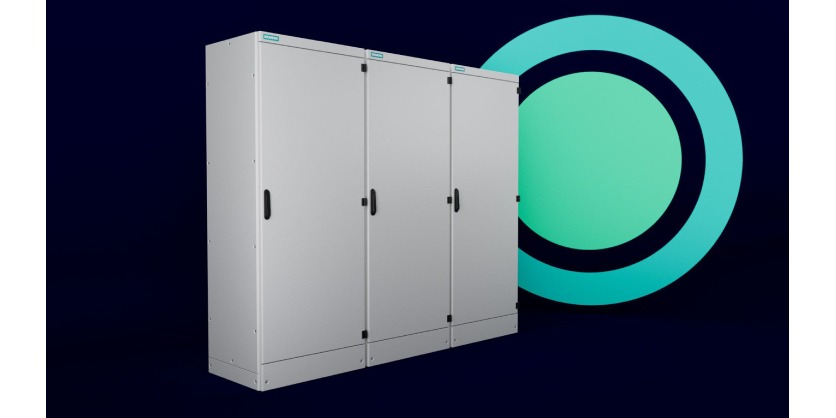
- Siemens subsidiary Alpha Verteilertechnik in Cham, Germany, offers green SIVACON 8MF1 control cabinet series
- Green steel enclosures are made of scrap metal, produced with renewable energy from wind power
- Results in 70 percent lower CO₂ emissions compared to conventional steel
- New enclosure supports Siemens’ sustainability targets
Siemens Smart Infrastructure, through its German subsidiary Alpha Verteilertechnik, has launched the latest addition to its line of sustainable electrical products. Now, besides conventional control cabinets, customers globally can purchase its SIVACON 8MF1 industrial control cabinet series, made with 100 percent scrap metal sourced from reputable suppliers in Europe and manufactured using wind power. The move supports Siemens’ sustainability goals in the areas of decarbonization and resource efficiency, outlined within its DEGREE framework, with the company following a 1.5°C science-based decarbonization target.
The production process for the SIVACON 8MF1 control cabinets slashes CO₂ emissions by 70 percent when compared to conventional steel, typically produced in a blast furnace using iron ore and coal. The 70 percent reduction translates into savings of 308 kilograms of CO₂ per enclosure unit. Currently, steel production is responsible for eight percent of emissions globally. As demand for steel continues to rise, it is essential to decarbonize its production.
The offering has the same technical properties and functionality as cabinets produced with conventional steel. It enables larger industrial customers to reduce their CO₂ emissions and get closer to achieving their sustainability goals.
Related Story
New Siemens EcoTech Label Creates Industry-Leading Sustainability Transparency
Siemens has announced the launch of its sustainability product label approach – Siemens EcoTech – setting a new standard for transparency in the industry. EcoTech gives customers a comprehensive insight into product performance across selected environmental criteria. At launch, the EcoTech label covers a range of products from across the Siemens portfolio for infrastructure and industrial applications. The label will be gradually extended to cover additional, relevant product families, which meet the stringent criteria.