Nexans Joins RE100

December 15, 2020

Nexans has recently joined the Climate Group’s RE100 initiative and is committed to achieving 100% renewable electricity by 2030. 

RE100 is a global initiative bringing together the world’s most influential companies leading the transition to 100% renewable electricity.

In line with the Paris agreements (COP21), which set a limit of 1.5°C warming by 2030, Nexans has unveiled its roadmap towards carbon neutrality. As part of this plan, the Group is aiming for an average annual reduction of 4.2% in its greenhouse gas emissions (in particular on scopes 1 and 21) and plans, among other things, to use renewable energy through local production or the purchase of decarbonated energy for all sites, and that 100% of R&D projects will be dedicated to energy transition and energy efficiency. 

Our ambition is to contribute to the energy transition by being a player in the sustainable electrification of the world,” says Christopher Guérin, CEO of Nexans. “More than a strategic axis, renewable energy is part of our purpose: “Electrify the future“. Joining the RE100 demonstrates Nexans’ commitment to bring a sustainable future for all.

I am delighted to welcome Nexans to RE100. By committing to 100% renewable electricity by 2030, Nexans is joining a growing number of companies committed to driving market change. This sends a powerful message that renewable electricity makes good business sense, and we encourage others to follow,” says Sam Kimmins, Head of RE100, the Climate Group.

Important_Links_Bar.jpg

www.nexans.com


Related Articles


Editor’s Pick: Featured Article

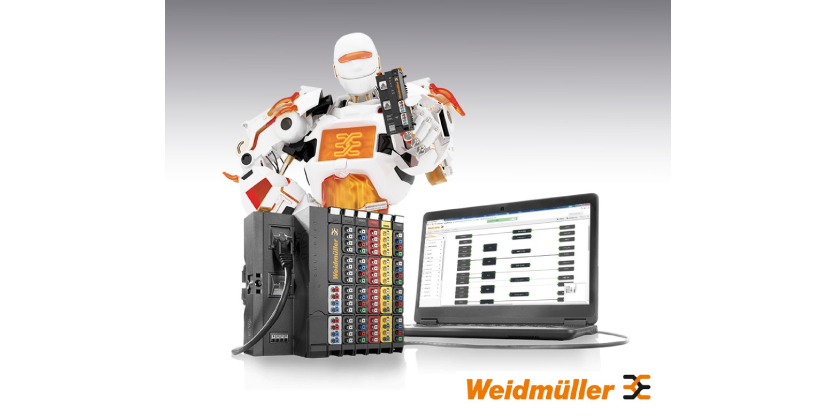
Weidmüller’s u-control 2000: The Automation Controller

Weidmüller’s u-control 2000: The Automation Controller

Weidmüller’s scalable engineering software, u-control 2000, adapts individually to your requirements. And, the u-control is powerful, compact and fully compatible with Weidmüller’s I/O system u-remote. This article looks at what makes u-control the heart of your automation.

Programmable logic controllers (PLCs) are one of the main components of any automated system. A typical control system has inputs, outputs, controllers (i.e., PLCs), and some type of human interaction with the system, a human machine interface (HMI), for example.

Read More


Latest Articles

  • Teaching Machines to See: Why Sensor Fusion Demands a System-Level Approach

    March 16, 2026 By David Doria, Director of Engineering, Automated Driving, Magna Electronics, March 16, 2026 For years, progress in advanced driver assistance systems (ADAS) were driven by improving individual sensors. Higher resolution cameras. Longer-range radars. More precise lidars. Each step delivered incremental gains. But optimizing sensors in isolation only goes so far. As ADAS Read More…

  • Vention Raises the Bar for Automating Automation with New Funding and Solutions

    March 9, 2026 By Krystie Johnston Vention accelerates democratization of automation with new funding and GRIIPTM, sets sites on Enterprise clients, reaches more industries and geographies Vention is on a journey to democratize automation, and they are picking up speed. Already, in Q1 of 2026, they have made two announcements that will accelerate their trajectory Read More…