FLIR A310 – IR TEMPERATURE SENSORS FOR CRITICAL EQUIPMENT MONITORING
December 16, 2019
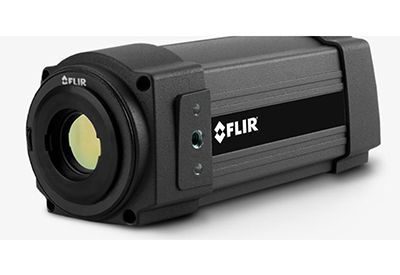
The FLIR A310 is a fixed-mounted thermal imaging cameras that can be installed almost anywhere to monitor your critical equipment and other valuable assets. The camera can safeguard your plant and measure temperature differences to assess the criticality of a given situation. This allows you to see problems before they become costly failures, preventing downtime and enhancing worker safety.
-
EXCELLENT IMAGE QUALITY
The FLIR A310 features a 320 x 240 pixel vanadium oxide (VOx) microbolometer that detects temperature differences as small as 50 mK.
-
INDUSTRIAL PROTOCOLS
Ethernet/IP, Modbus TCP compliant for sharing analysis and alarm results to a PLC; digital inputs/outputs are available for alarms, external equipment control.
-
BUILT-IN ANALYSIS & ALARM
The A310 offers spot, area, and difference temperature measurement, and can alarm as a function of analysis, internal temperature, or digital input.
The FLIR A310 produces high quality, 76,800 pixel infrared images with embedded temperature readings, so you can measure any point within the scene. And with up to 8x digital zoom, you can pinpoint and monitor your exact target object or process.
OVERVIEW
- – Accuracy: ±2°C (±3.6°F) or ±2% of reading
- – Alarm Functions: 6 automatic alarms on any selected measurement function, Digital In, Camera temperature, timer
- – Alarm Output: Digital Out, log, store image, file sending (ftp), email (SMTP), notification
- – Base Mounting: 2 × M4 thread mounting holes (on three sides)
- – Detector Type: Focal Plane Array (FPA), uncooled microbolometer
- – Difference Temperature: Delta temperature between measurement functions or reference temperature
- – Field of view (FOV): 25° × 18.8°
- – Focal Length: 18 mm (0.7 in.)
- – Housing material: Aluminum
- – IR Resolution: 320 × 240 pixels
- – Object Temperature Range: –20 to +120°C (–4 to +248°F) 0 to +350°C (+32 to +662°F)
- – Size: (L x W x H) 170 × 70 × 70 mm (6.7 × 2.8 × 2.8 in.)
- – Thermal Sensitivity/NETD: < 0.05°C @ +30°C (+86°F) / 50 mK
- – Weight: 0.7 kg (1.54 lb.)
- – Zoom: 1–8× continuous, digital, interpolating zooming on images
- – Contents: Cardboard box, Infrared camera with lens, Ethernet cable, FLIR Tools download card, Mains cable, Power cable – pig-tailed, Power supply, Printed documentation, User documentation CD-ROM, Utility CD-ROM