New K7TM Heater Condition Monitor from Omron Reduces Downtime and Product Waste by Detecting Early Deterioration in Heaters
October 11, 2022
Manufacturers seeking to avoid downtime and work-in-progress due to heater failure in industrial ovens, kilns, and metal heat treatment applications can gain peace of mind from a new Omron solution that monitors heater condition with high accuracy on a 24/7 basis.
Industry leading automation solution provider Omron Automation Americas recently launched a new heater condition monitor that supports predictive maintenance by preventing heater failure. It allows engineers and maintenance managers monitor heater condition and reduce unplanned downtime in automotive, food and commodity, semiconductor, and electronic industries.
Heaters fail through a variety of methods like contamination, thermal fatigue/heat cycling and improper power input and wattage for application. When heater deterioration goes unnoticed, it can lead to excess product waste and costly machine downtime.
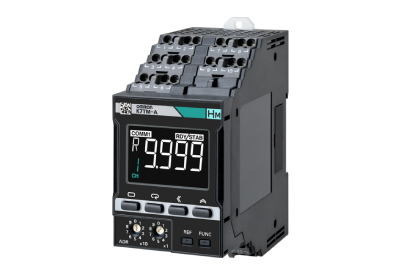
What if you could be alerted to the early stages of deterioration when there is still plenty of time to get a replacement? Omron’s K7TM Heater Condition Monitor makes this possible by measuring resistance values while a heater is active (as opposed to manual inspections, in which the heater must be turned off). Resistance values are calculated by measuring the voltage at both ends of the heater in addition to its current.
The latest in Omron’s predictive maintenance product line, the K7TM works with any resistance-type heater, including sheathed, cartridge, band, cast, silicon carbide, and ceramic heaters. It is equipped with a local alarm bar, transistor output, and two RS-485 communication ports. Each unit monitors two heaters and can be easily retrofitted onto existing equipment.
Manual inspections often do not detect likely failures, particularly because they require the heater to be turned off for safety reasons. This makes data collection less accurate and less likely to reveal a change in condition during trend analysis.
The strategy underlying Omron’s predictive maintenance solutions — an umbrella that includes the K7TM and other condition monitoring devices — is using real-time data to identify component failures early, thereby reducing unplanned downtime and avoiding costly repairs.
Industrial professionals can learn more about the K7TM, including its Push-In Plus termination, clear LCD display, and easy-to-retrofit design.
Learn more about the K7TM Heater Condition Monitor by clicking here