Fluke: ThermoView TV40 Thermal Imager
December 16, 2019
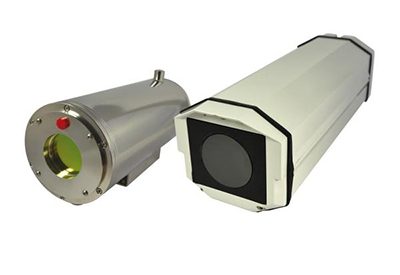
ThermoView TV40 is a high performance industrial infrared camera designed by the brand you trust, backed by 150 years of industrial application experience. Designed for the most challenging environmental conditions and supported by an intuitive and powerful analysis software, ThermoView TV40 provides the performance and personalization to meet the needs of process monitoring and control. If the need is for laboratory analysis and research that allows MATLAB and LabVIEW software plug-ins, consider the Fluke RSE300 and RSE600 Infrared Cameras; click to compare solutions.
This system, consisting of ThermoView software and TV40 thermal imager, provides fully integrated thermal imaging solution for thermal profiling, temperature control, monitoring and archiving capabilities to ensure process traceability and product quality.
The standard ThermoView TV40 thermal imager is offered with an “on-board” lens, which means that there are no external moving parts. This infrared camera is housed in an IP67 enclosure using industrial sealed connectors. The GigE interface allows for high-speed data transfer at 60 frames per second and Power over Ethernet (PoE) option. ThermoView TV40 thermal imager offers two sighting options — simultaneous thermal and visible sighting for easy alignment.
Included with this thermal imaging camera is the ThermoView software, which interfaces to process control equipment receiving synchronization inputs and providing pass/fail logic outputs, performing product inspections, and process temperature monitoring, alarming and archiving. Several temperature analysis and tools are available to provide trending and product troubleshooting, I/O alarming for over and under heating conditions.
This system can be used in applications where multiple infrared cameras need to be displayed and stitched together.
ThermoView Software
ThermoView Software offers a wide variety of analysis and process monitoring tools in a single package for thermal profiling. Its features include continuous or intermittent inspection of temperature events, independent emissivity for each Area of Interest (AOI), user configurable setup up of temperature conditions to trigger events or alarms, which can interface to discrete I/O.
In addition, it provides following analysis:
- – Histograms & isotherms
- – Multiple file export capabilities
- – Area and point trend data collection and display
- – Trend data recording of AOI’s
- – Simultaneous view of off-line images while system continues to operate in automation mode
ThermoView Lite Software
ThermoView lite software package provides a user with a startup software package to get familiar with the features and benefits of using the ThermoView TV40 thermal imager. Benefits of this software version include:
- – Display thermal images from your ThermoView TV40 thermal imager
- – Load Off-line images/sequences
- – Copy images to clipboard
Accessories
The ThermoView TV40 thermal imagers are shipped with manual, calibration certification, quick reference guide and safety sheet.