| | | |

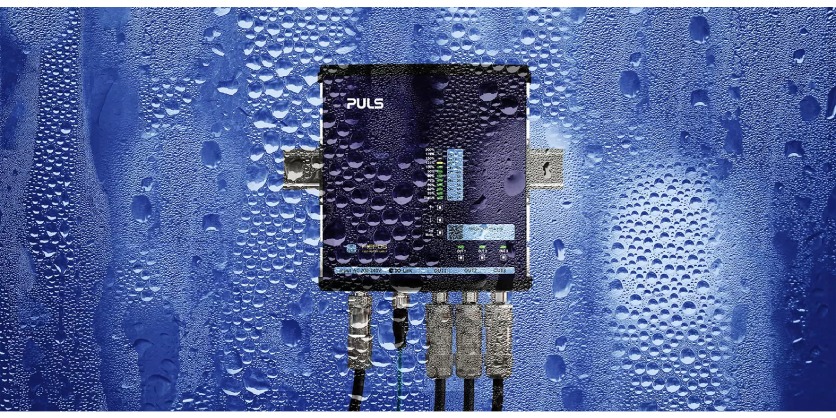
FIEPOS Field Power Supplies with IP54, IP65 and IP67 | Unlimited Opportunities for Decentralization

December 4, 2025

In this video PULS shows you the benefits of its FIEPOS Field Power Supplies for decentralized applications.

  • Future-proof technology
  • Space-saving design
  • Flexible mounting options
  • High protection classes
  • Eco-friendly and highly efficient design
  • Various connector options
  • Smart communication features

More Information

Learn more about FIEPOS

Related Story

What Is the Meaning of the IP Ratings for Power Supplies? PULS Explains
FIEPOS Field Power Supplies with IP54, IP65 and IP67 | Unlimited Opportunities for Decentralization

The IP rating indicates to what extent an electrical device is protected against the penetration of foreign objects and moisture. In this blog post, you can find out which IP codes there are, what the differences are between them and what you need to pay attention to when choosing a power supply.

Environmental influences such as dust or moisture can prevent the electrical components in a power supply from functioning correctly. In addition, the interior of the power supply may need to be protected from penetration by foreign objects, such as tools, screws and wires, and from accidental contact by the user. It is important to pay attention to the IP code (international protection code), particularly when power supplies are installed outside a cabinet. The power supply can only be used safely, and costly downtime can only be avoided if the IP rating is suitable for the conditions.
Related Articles


Editor’s Pick: Featured Article

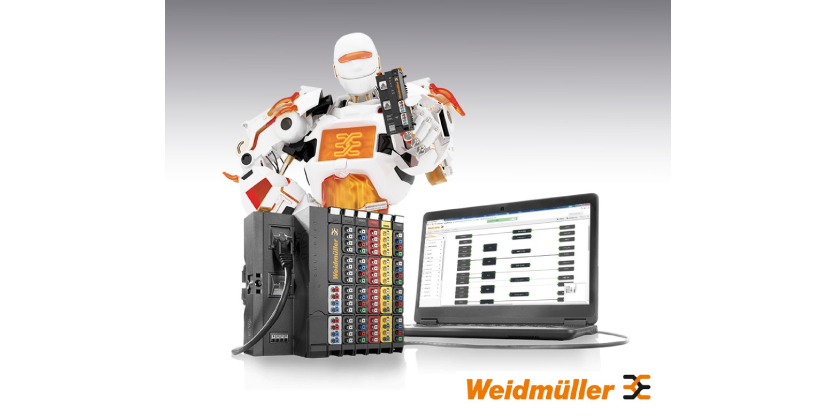
Weidmüller’s u-control 2000: The Automation Controller

Weidmüller’s u-control 2000: The Automation Controller

Weidmüller’s scalable engineering software, u-control 2000, adapts individually to your requirements. And, the u-control is powerful, compact and fully compatible with Weidmüller’s I/O system u-remote. This article looks at what makes u-control the heart of your automation.

Programmable logic controllers (PLCs) are one of the main components of any automated system. A typical control system has inputs, outputs, controllers (i.e., PLCs), and some type of human interaction with the system, a human machine interface (HMI), for example.

Read More


Latest Articles

  • UL Certification Requirements for OEMs: Essential Guide for Renewable Energy Projects

    May 5, 2026 In today’s fast-evolving energy and manufacturing landscapes, product safety, performance, and reliability are under greater scrutiny than ever before. For OEMs (Original Equipment Manufacturers) and players in the renewable energy sector, one certification has emerged as a gold standard—UL certification.  Although not legally mandatory in all regions of North America, UL (Underwriters Laboratories) certification is Read More…

  • Case Study: Improving Transformer Reliability for Underground Mining Power Systems

    May 5, 2026 Segment and Application The customer is a regional provider of engineered electrical solutions for mining and industrial applications in Mexico. They design and integrate customized power distribution equipment and electrical systems for harsh environments, including underground mining operations. As part of this work, they required compact power solutions for underground mining skids Read More…