Emerson’s New Motorized Actuator and Shutoff Valve Solution Improves Safety and Reliability in Combustion Systems
April 22, 2024
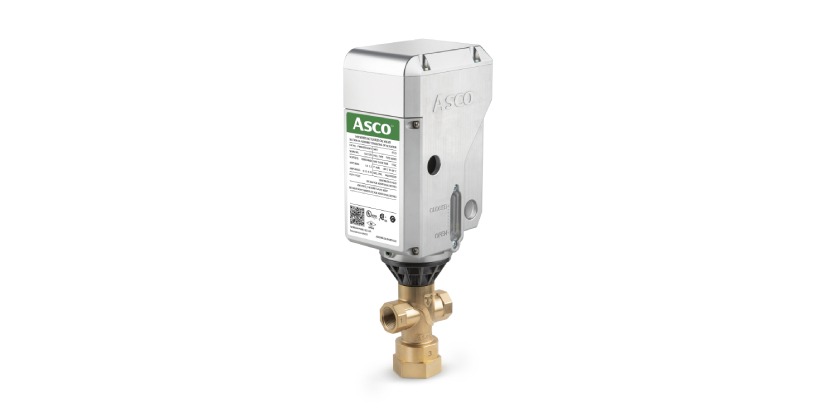
Emerson’s ASCO Series 148/149 provides safety shutoff service in less than one second for industrial fuel burners, even under extreme conditions
Emerson has introduced the new ASCO™ Series 148/149 safety valve and motorized actuator designed for industrial fuel oil burner recirculation and safety shutoff applications. The new solution provides a reliable, versatile tool for industrial users to prevent overpressure, leaks, and system malfunctions that can lead to health and safety incidents, with one configuration suited to a wide range of combustion system applications.
The valve and actuator are designed to be used together in one system for fuel oil recirculation as a safety shutoff. The combination is a compact two- and three-way system with a motorized actuator that achieves rapid, reliable fuel line shutoff from an open to closed position in less than one second.
The system features a high-flow and high-pressure design that enhances heat output and meets approvals from UL (Underwriter Laboratories), FM (Factory Mutual) and CSA (Canadian Standards Association) certifications, improving fuel oil combustion system performance through higher pressure and media temperature tolerance. It is engineered for robust and reliable operation in harsh outside environments, supporting an operating range from -40 degrees to 150 degrees Fahrenheit (-40 degrees to 66 degrees Celsius). The valve’s high-pressure design makes it a versatile option for use across multiple fuel oil burner applications.
“The ASCO Series 148/149 valve and actuator combination includes features that align with industry best practices such as redundancy, leak testing ports and overpressure protection,” said Ali Sarwar, global director of marketing, discrete automation, Emerson. “Safety being the highest priority, our new design strengthens the reliability of a critical piece of equipment found in burners and combustion systems throughout the manufacturing industry.”
More Information
Related Story
Emerson’s New ASCO Series Aluminum Filter Regulators Enhance Process Efficiency and Streamline Supply Chains
Emerson has launched its new ASCO™ Series 641, 642 and 643 Aluminum Filter Regulators, which maximize process efficiency and reduce unplanned downtime in a broad range of process applications. This line of durable, aluminum filter regulators can handle the highest flow rates of any regulators in their class and provides precise pressure regulation to downstream instruments.