Emerson’s New Pressure-Reducing Regulator Improves Hydrogen Fuel Cell System Performance in Commercial Vehicles
December 5, 2022
The TESCOM HV-3500 Onboard Regulator provides consistent pressure and continuous hydrogen supply, maximizing fuel efficiency
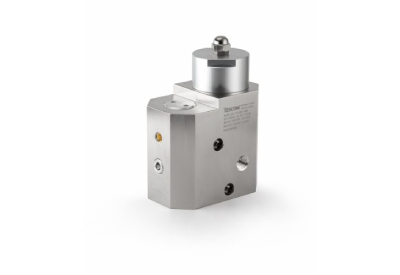
Emerson has launched a pressure-reducing regulator specially designed for use onboard commercial hydrogen fuel cell vehicles. The dual stage and patented active seal design of the TESCOM™ HV-3500 Hydrogen Onboard Regulator delivers steady pressure and constant hydrogen fuel supply to fuel cells in the full range of vehicle operating conditions, including acceleration, deceleration, stopping and idling. Stable pressure aids in extending fuel cell life and maximizing fuel usage. The reliable fuel pressure provided by the HV-3500 allows operators to drive farther without refueling and decreases the risk of over pressurization downstream, resulting in leakage, wasted fuel and possible emissions. The HV-3500 has been designed, engineered and independently tested to ensure compliance with EC79 requirements for pressure regulators used in hydrogen vehicles.
By boosting fuel cell efficiency and maximizing overall energy efficiency, the stable pressure the HV-3500 provides also reduces maintenance frequency. The regulator delivers positive high-pressure fuel shutoff of hydrogen in vehicles across varying road and operating conditions, increasing fuel cell durability.
“To improve environmental sustainability in the commercial transportation industry, hydrogen fuel cell systems need to accurately meet fluctuating fuel demand and pressure needs while ensuring safety, regardless of distance driven,” said Robert Lindquist, director of global marketing for Emerson’s precision and fluid control business. “With its patented tied valve and active seal design, the HV-3500 reaches new levels of reliability and consistent pressure delivery that help keep commercial hydrogen-powered vehicles on the road where they’re needed.”
The HV-3500 also helps original equipment manufacturers (OEMs) increase profitability by reducing manufacturing time and costs. Its dual-stage design eliminates the need for extra fittings and simplifies installation while its square shape allows OEMs to secure it to existing panels and frames in the fuel cell system. This specially designed shape and mounting holes make the lightweight HV-3500 quicker and easier to install than other pressure regulation technologies. The reduced assembly time lowers installation costs.
“The HV-3500 showcases Emerson’s commitment to developing renewable energy technology that helps manufacturers and end users overcome the challenges they face as they build a more sustainable world,” said Zhang Yingchun, engineering manager for Emerson’s precision and fluid control business. “That’s why our technology project team took the full life of the fuel cell system into careful consideration when designing it. The thoughtful design lowers manufacturing and installation costs for OEMs, and its advanced performance lowers fuel and maintenance costs for end users.”
The EC79-compliant HV-3500 is backed by Emerson’s local support. While some OEMs struggle to scale up production and shorten their time to market, the personalized support that Emerson provides helps OEMs get their vehicles on the road quickly with reliable operations throughout the vehicle’s life cycle.
For more information, click here