Emerson Introduces Advanced Redundant Control System (ARCS) for Increased Operational Certainty in Emergency Shut Down Situations
January 20, 2021
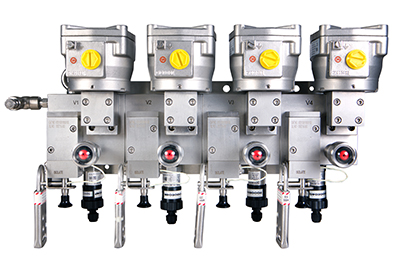
Emerson has recently released its ASCO 141 Series Advanced Redundant Control System (ARCS) to provide a redundant solution for a variety of emergency shutdown valve applications, such as those found in the chemical, power, oil and gas industries. Available globally, it includes various redundant solenoid configurations to enhance the reliability of the process and meet specific safety or reliability requirements in automation processes. The single inlet/single outlet design provides a streamlined installation process compared to traditional bypass systems, while almost eliminating potential failure points.
The ASCO 141 series ARCS is designed for use as a component in safety instrumented systems. Utilizing 1oo2, 2oo2 or 2oo3 voting solenoids to enhance the reliability of the circuit, it functions as a redundant pneumatics tripping device to control the pilot air signal to a process valve actuator. The ARCS features either two or four electrically actuated solenoid valves, visual indicators and a manually controlled bypass or isolation valve. The unique control functionality allows for maintenance of the solenoid valves without having to shut down the process valve. In fact, the use of the maintenance bypass or isolation valve is not required for functional testing of the ARCS unit — a downtime-reducing feature not possible with common bypass functions.
“By addressing the concerns common with typical bypass systems — particularly those in critical or emergency shutdown applications — our ASCO 141 series ARCS provides a reliable, time-saving alternative,” said vice president of global marketing for Emerson’s industrial automation business, Erik VanLaningham. “Although the use of a common bypass is a typical solution, the end-user doesn’t know if they’ll be able to shut down on demand in the event of an emergency because their redundant system is in bypass mode. This is where our unique ARCS value proposition comes in. The ARCS individual valve isolation option provides increased safety and operational availability during online maintenance to help customers achieve their required SIL rating.”
With just a single part number, the ASCO 141 series ARCS features several advances that simplify specification, installation and operation. Supplied as a fully integrated, comprehensive solution using a manifold instead of individual valves, ARCS comes pre-tested from the factory and ready to install. The direct valve-to-valve design eliminates pipework and fittings between the solenoid valves and minimizes leak points for increased reliability and a lower total cost of ownership. A status indicator with feedback helps facilitate preventive maintenance while providing online fault detection. It provides digital input feedback (via pressure switches or Emerson-exclusive GO Switch options) to the control room. And for additional peace of mind, the ASCO 327 series 3/2-way direct acting solenoid valves included on the ARCS manifold are certified to SIL 3 capable (exida) standards.
A direct-acting platform with advanced diagnostic capability and online maintenance features, ARCS is suitable for a wide variety of valve piloting applications to meet both safety and operational availability requirements.