B&R Automation: Cost-effective safety function
September 3, 2019

Virtual sensor reads safe speed

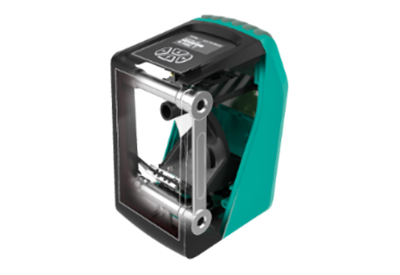
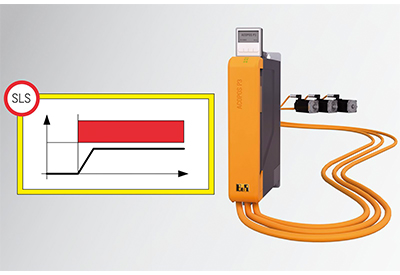
B&R has developed a virtual sensor for its ACOPOS P3 servo drive: the Safe Speed Observer. It determines speed in accordance with SIL 2 / PL d / CAT 3 requirements, reducing the cost of implementing the Safely Limited Speed safety function by eliminating the need for a safe encoder.

From the electrical variables of a permanent magnet synchronous motor, the Safe Speed Observer calculates two redundant models of the motor – achieving a high safety level for the calculated speed. The virtual sensor can be used for both linear and rotary synchronous motors.

Easy configuration

The Safe Speed Observer is easy to configure in the Automation Studio engineering environment via the respective encoder interface. The user can implement the safety functions available for the safe axis from the safety library. This new solution is made possible by the drive-integrated safety technology of SafeMOTION.

Source

Related Articles


Editor’s Pick: Featured Article

Weidmüller’s u-control 2000: The Automation Controller

Weidmüller’s u-control 2000: The Automation Controller

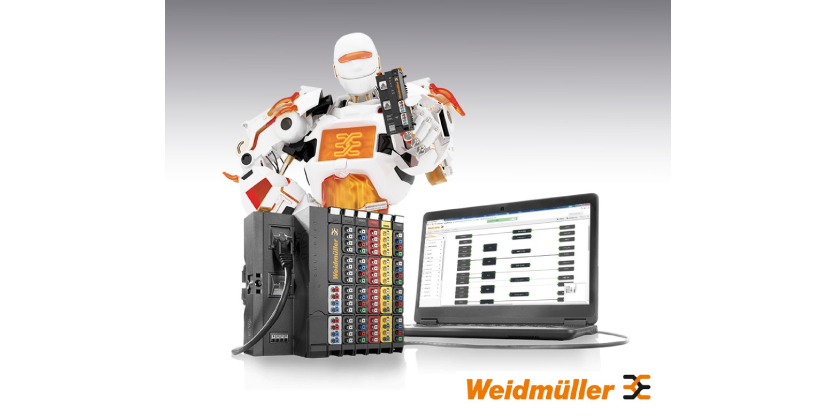
Weidmüller’s scalable engineering software, u-control 2000, adapts individually to your requirements. And, the u-control is powerful, compact and fully compatible with Weidmüller’s I/O system u-remote. This article looks at what makes u-control the heart of your automation.

Programmable logic controllers (PLCs) are one of the main components of any automated system. A typical control system has inputs, outputs, controllers (i.e., PLCs), and some type of human interaction with the system, a human machine interface (HMI), for example.

Read More


Latest Articles

  • Applications of Physical AI in Canadian Sectors

    June 23, 2026 Physical AI — the convergence of artificial intelligence with robotics and autonomous motion systems — is reshaping how Canadian industries operate. Across sectors from healthcare to mining, AI-enabled machines are performing tasks that were once entirely dependent on human intervention. But deploying Physical AI effectively requires more than sophisticated algorithms: it demands… Read More…

  • Case Study: Optimizing Harmonic Mitigation in Wastewater Treatment

    June 22, 2026 Segment and Application In a municipality, wastewater treatment plants typically stand out as the main consumers of electricity. The operational processes exhibit significant load variations throughout a 24-hour cycle, necessitating the use of AC drives to regulate pumps, blowers, and other motorized equipment in response to fluctuating demand. In one wastewater treatment… Read More…