ABB Ability™ Smart Sensor for Motors

ABB


July 3, 2018

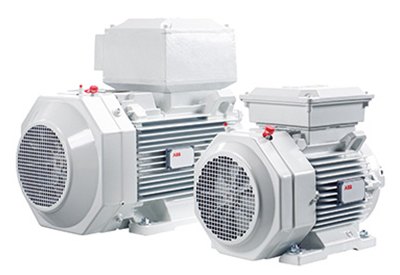
The ABB Ability™ Smart Sensor converts traditional motors into smart, wirelessly connected devices. It is attached to the frame of low voltage induction motors. No wiring or machining is needed. Using algorithms, based on ABB’s decades of motor expertise, the ABB Ability™ Smart Sensor relays information about the motor’s operation and health via a Bluetooth-gateway or smartphone to a secure server.”

The ABB Ability™ Smart Sensor picks up data on vibration, temperature and other parameters that can be used to gain meaningful information on the condition and performance of the motor, enabling users to identify inefficiencies within their system and to reduce risks related to operation and maintenance. Maintenance can now be planned according to actual needs rather than based on generic schedules. This extends equipment lifetime, cuts maintenance costs and reduces or prevents unplanned downtime due to breakdowns. ABB Ability™ Smart Sensor for motors can help you to

– Identify inefficiencies within the system

– Uncover potential for energy savings

– Reduce risks related to operation and maintenance

– Prevent unexpected breakdowns

– Extend equipment lifetime

Product highlights

– Simple to install and use

– No wiring or machining is needed

– Data transfer via built-in wireless Bluetooth® Low Energy

– Data communications use industry standard encryption protocols

– All data is securely stored in the cloud

For more information HERE
Related Articles


Editor’s Pick: Featured Article

Weidmüller’s u-control 2000: The Automation Controller

Weidmüller’s u-control 2000: The Automation Controller

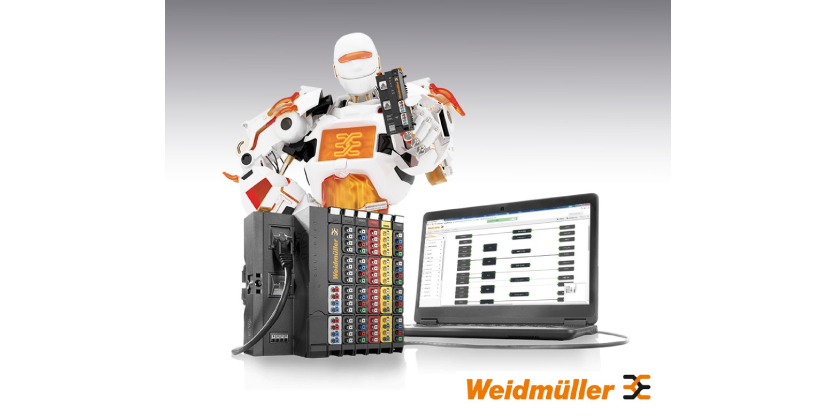
Weidmüller’s scalable engineering software, u-control 2000, adapts individually to your requirements. And, the u-control is powerful, compact and fully compatible with Weidmüller’s I/O system u-remote. This article looks at what makes u-control the heart of your automation.

Programmable logic controllers (PLCs) are one of the main components of any automated system. A typical control system has inputs, outputs, controllers (i.e., PLCs), and some type of human interaction with the system, a human machine interface (HMI), for example.

Read More


Latest Articles

  • Canada’s AI Strategy with Schneider Electric

    June 24, 2026 Answers provided by James See, National Sales Director of Systems at Schneider Electric Canada, Questions developed by Krystie Johnston, Managing Editor at Kerrwil Media Ltd. The future of Canada’s artificial intelligence (AI) continues to be discussed as adoption progresses across the country. Conversations around energy, infrastructure, and the grid are making headlines,… Read More…

  • Applications of Physical AI in Canadian Sectors

    June 23, 2026 Physical AI — the convergence of artificial intelligence with robotics and autonomous motion systems — is reshaping how Canadian industries operate. Across sectors from healthcare to mining, AI-enabled machines are performing tasks that were once entirely dependent on human intervention. But deploying Physical AI effectively requires more than sophisticated algorithms: it demands… Read More…