Universal Robots Appoints Jean-Pierre Hathout as New President
May 6, 2025
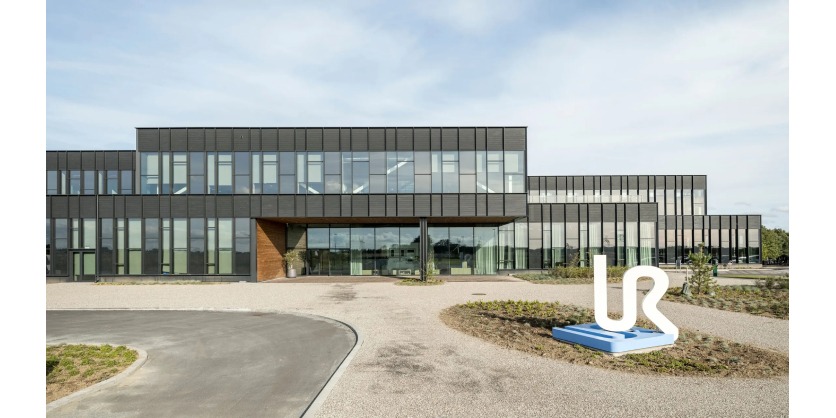
Universal Robots has announced that Jean-Pierre Hathout has been appointed as President, effective May 6. Hathout succeeds Kim Povlsen, who is pursuing an external career opportunity after four transformative years leading the company.
During Povlsen’s tenure, Universal Robots launched a new generation of collaborative robots and AI-ready software, delivered advanced automation solutions and enhanced services to customers, and strengthened its world-leading ecosystem through strategic partnerships. His leadership helped solidify Universal Robots’ position as the global leader in collaborative automation.
“As we mark this transition, I want to thank Kim for his outstanding leadership and the pivotal role he has played in advancing Universal Robots’ mission and strengthening its position in the market,” said Ujjwal Kumar, Group President, Teradyne Robotics. “Looking ahead, we are excited to welcome Jean-Pierre Hathout as the new President. His deep industry knowledge, global leadership experience, and commitment to innovation make him the right person to lead Universal Robots into its next phase of growth and technological advancement.”

Jean-Pierre Hathout
Jean-Pierre Hathout joins Universal Robots after two years as President of Mobile Industrial Robots (MiR), where he strengthened the company’s global position and product portfolio. Prior to MiR, Hathout served as President of SIT Controls USA and spent 17 years at Bosch, where he held several international management roles. He holds a doctoral degree in mechanical engineering from the Massachusetts Institute of Technology (MIT).
Universal Robots
They believe that collaborative robotic technology can be used to benefit all aspects of task-based businesses – no matter what their size.
They believe that the latest collaborative robot technology should be available to all businesses. The nominal investment cost is quickly recovered as their robotic arms have an average payback period of just six months.
Related Story
Universal Robots Announces the Nation’s Largest Cobot Conference and Tradeshow: Collaborate North America 2025
Collaborative robots (cobots) are the fastest-growing segment of industrial automation with the global market forecasted a skyrocketing 20%+ growth through 2028. As the market leader and pioneer of collaborative robotics, Universal Robots (UR) is at the forefront of transforming the way cobots work, helping businesses unlock new levels of productivity, efficiency, and innovation, including artificial intelligence (AI) applications.