Emerson Helps Refiner Safely and Successfully Deliver Megaproject
November 15, 2018
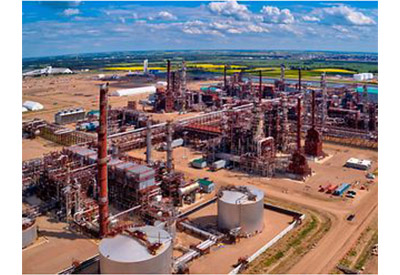
Emerson has recently completed a $73 million contract for automation systems and cloud engineering services, helping North West Redwater Partnership design, execute and complete its first-of-a-kind Sturgeon Refinery. The Alberta, Canada refinery uses innovative technology designed to produce ultra-low sulfur diesel for local consumption as well as for export to markets that demand low sulfur fuel.
Using key elements of Emerson’s Project Certainty methodology, North West Redwater Partnership reduced global automation engineering complexity and completed the instrumentation and control scope for refinery automation. Emerson completed its entire scope of work with zero safety incidents.
The project team selected Emerson’s automation technologies and petrochemical project expertise to manage the refinery’s process control and safety system scope and help it safely begin producing diesel from synthetic crude oil in late 2017. The Sturgeon Refinery relies on an innovative, one-step process that, when fully operational, will convert diluted bitumen feedstock directly into ultra-low sulfur diesel while capturing carbon dioxide emissions.
“The unique nature of this refinery makes it important for us to manage all of the project components to minimize complexity,” said Jim Quinn, vice president of engineering for North West Redwater Partnership. “Emerson did an excellent job as the main automation contractor and continues to offer us exceptional support for the systems and services they delivered.”
As main automation contractor responsible for the entire instrumentation and control scope, Emerson provided integrated project management to reduce complexity and support North West Redwater Partnership with the alignment of multiple contractors. Cloud engineering using Emerson’s Remote Virtual Office technology enabled rapid mobilization of resources and collaborative engineering, ensuring on-time automation delivery from experts around the globe.
“We’ve built world-class project execution and automation delivery capabilities throughout Emerson, and this truly unique project demonstrates the results of that vision,” said Jim Nyquist, group president for Emerson’s Systems and Solutions business. “Combining Emerson’s cloud engineering technology and Project Certainty methodologies helped support North West Redwater Partnership in delivering innovation to the entire oil and gas industry.”
The Sturgeon Refinery uses Emerson automation software and technologies including DeltaV™ control and safety systems and AMS asset management software, as well as Rosemount™ instrumentation and Fisher™ control valves. The project team also leveraged DeltaV Operator Training Solutions and hands-on training to ensure operator readiness from the first moments of commissioning and start-up.
The refinery will process 79,000 barrels per day of diluted bitumen, while simultaneously capturing an estimated 1.2 million annual tons of carbon dioxide, which will act as a valuable feedstock to assist in enhanced oil recovery of up to a billion barrels of light oil that would otherwise have been unreachable.
For more information, visit Emerson.com/Project-Certainty.