Canada’s AI Strategy with Schneider Electric
June 24, 2026

Answers provided by James See, National Sales Director of Systems at Schneider Electric Canada, Questions developed by Krystie Johnston, Managing Editor at Kerrwil Media Ltd.
The future of Canada’s artificial intelligence (AI) continues to be discussed as adoption progresses across the country. Conversations around energy, infrastructure, and the grid are making headlines, along with concerns about demand, the environment, and sustainability. I asked James See, National Sales Director of Systems at Schneider Electric Canada, about our nation’s AI strategy: the growing power demands of AI and data centres, what this means for energy and infrastructure, and if Canada’s grid is prepared for a surge of AI-driven growth. I also asked what businesses should be doing now to prepare for increased electrification and digitalization, and the role of public and private collaboration to support long-term growth and resiliency. Here are the answers See shared:
Who is Schneider Electric Canada? What do you do at the company? And how is that related to artificial intelligence?
Schneider Electric helps organizations make the most of their energy and resources through electrification, automation, and digitalization. In Canada, we work with customers across industries ranging from manufacturing and healthcare to utilities, commercial buildings and data centres.
As National Sales Director at Schneider Electric Canada, I focus on the infrastructure that keeps critical operations running. That includes data centres, power management systems, cooling technologies, and digital tools that help ensure reliability and efficiency.
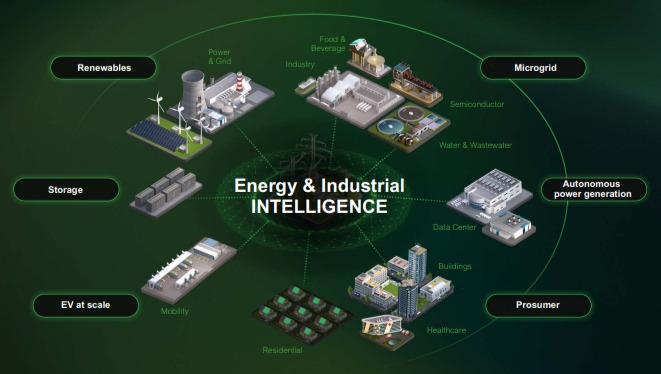
Schneider Electric sits at the intersection of energy and digital infrastructure, and AI is accelerating the convergence of those two worlds.
AI may feel like a software story, but behind every AI model is physical infrastructure. Training and running AI applications require enormous computing power, resilient electrical systems and sophisticated cooling. Our role is helping customers build and operate that infrastructure efficiently, sustainably and at scale.
What does Canada’s AI strategy mean from an infrastructure and energy perspective?
Canada has an opportunity to be a global AI leader, but leadership in AI requires leadership in infrastructure.
The conversation often focuses on talent, innovation and investment, which are all important. What receives less attention is the physical foundation needed to support AI growth. Every AI workload depends on reliable electricity, modern data centres, digital infrastructure, and resilient supply chains.
As AI adoption accelerates, we will see increased pressure on power systems, transmission networks and data centre capacity. Canada’s advantage is that we already have a relatively clean electricity mix and strong technology ecosystem. The challenge now is ensuring infrastructure development keeps pace with demand.
The countries that lead in AI will ultimately be the ones that can deliver power, capacity, and infrastructure at the speed of demand.
How do you describe the growing demands of AI and data centers? Why are they getting so much media attention these days?
The scale of change is unlike anything we’ve seen in recent years.
Traditional computing workloads have already driven steady growth in data centre capacity. AI has significantly accelerated that trend because AI applications require far more computational power than many conventional workloads. That means higher energy consumption, denser server environments and more sophisticated cooling requirements.
What’s changed is that data centres are no longer invisible -they are directly competing with other sectors for power and infrastructure. Communities, utilities, governments and businesses are all asking important questions about power availability, grid capacity, sustainability, and economic impact.
Data centres are no longer simply technology assets. They are becoming strategic infrastructure that underpins economic growth, innovation and competitiveness.
Is Canada’s grid prepared for the next wave of AI-driven growth? Why or why not?
Canada has many strengths, but preparation varies by region.
Some jurisdictions are already investing in grid modernization, transmission upgrades, and renewable energy integration. Others are facing growing challenges related to aging infrastructure, permitting timelines, and increasing electricity demand from multiple sectors.
The good news is that this is not solely an AI issue. Investments that strengthen the grid for AI also support electrification, industrial growth and broader economic development.
The bigger challenge is not whether Canada can generate enough interest in AI adoption, but whether infrastructure development can keep pace with the speed at which demand is emerging. The issue isn’t whether we can build capacity; it’s whether we can build it fast enough and in the right locations. Success will depend on aligning long-term planning across the energy, technology and infrastructure sectors so that capacity is available where and when it is needed.
What should businesses be doing now to prepare for increased electrification and digitalization? What are some of the dangers they could face if they do not act now?
The first step is understanding their energy and infrastructure readiness.
Many organizations are embracing digital transformation without fully assessing whether their electrical systems, facilities, and operational processes can support future growth. Businesses should be evaluating energy usage, identifying efficiency opportunities, strengthening resiliency plans, and exploring digital tools that provide greater visibility into operations.
Those that delay risk facing higher operating costs, capacity constraints, and increased exposure to outages or disruptions. They may also struggle to adopt emerging technologies because the underlying infrastructure is not prepared.
The organizations that succeed in the next decade will be the ones treating infrastructure as a strategic investment rather than a back-office function.
How can energy efficiency, resiliency, and modernization help support Canada’s AI ambitions?
These three priorities are essential because simply adding more capacity is not enough.
Energy efficiency helps organizations accomplish more with existing resources. Resiliency ensures critical systems remain available despite disruptions. Modernization creates the visibility and flexibility needed to manage increasingly complex energy and digital environments.
When combined, these capabilities allow organizations to scale AI adoption without creating unnecessary strain on infrastructure.
Canada’s AI ambitions will be supported not only by how much energy we generate, but by how intelligently we use it. Efficiency and modernization can often unlock capacity faster and more cost-effectively than building entirely new infrastructure. In many cases, the fastest way to support AI growth is not building new infrastructure but unlocking capacity in what already exists.
Where does Schneider Electric Canada fit in? How can they support the adoption of AI-enabled technologies and ancillary data centres? As well as the increased demands on infrastructure, energy systems, and the grid as adoption becomes more widespread?
Schneider Electric operates at the intersection of energy and digital technology.
We help customers design, build and operate data centres, industrial facilities and critical infrastructure that are efficient, resilient and sustainable. Our solutions span power distribution, backup power, cooling, building management, software, and digital services.
As AI adoption grows, organizations need infrastructure that can support higher-density computing while managing energy use and operational complexity. We help customers address those challenges through integrated solutions that improve visibility, optimize performance, and support long-term scalability.
Ultimately, our goal is to help organizations adopt AI confidently while maintaining reliability, efficiency, and sustainability. One of our key differentiators is our ability to connect the energy layer with the digital layer. As infrastructure becomes more complex, it’s no longer enough to optimize individual components. Customers need visibility and control across the entire system, from grid connection through to IT loads and that’s where Schneider Electric brings unique value through integrated hardware, software and services.
What do you think the role of public-private collaboration is to build the infrastructure needed to support long-term AI growth? Any thoughts on who is responsible for its development and management?
This is not a challenge any single organization can solve alone.
Governments establish policy frameworks and long-term priorities. Utilities manage critical energy infrastructure. Technology providers contribute innovation and expertise. Businesses make investment decisions that shape demand.
Long-term success depends on all of these groups working together with a shared understanding of future infrastructure needs.
Public-private collaboration can help accelerate grid modernization, streamline project development, encourage innovation, and create greater certainty for investment. The most successful AI ecosystems globally are those where public and private stakeholders align around a common vision and execute together. The speed of collaboration will ultimately determine the speed of AI deployment.
Any ideas about where AI and data centres are heading in the future? Are we going in the right direction? And how do we know for sure?
AI infrastructure will continue to evolve, becoming more distributed, more efficient, and more tightly integrated with energy systems. But what’s important to recognize is that this shift is not happening in isolation — it’s being driven by how AI is already being used in day-to-day operations across critical industries.
In manufacturing, for example, AI is being applied to predictive maintenance, quality inspection and production optimization, helping reduce downtime and improve efficiency in real time. In financial services, AI is now embedded in core workflows such as fraud detection, compliance monitoring and customer engagement, enabling faster and more informed decision-making. In healthcare, AI is supporting clinicians by analyzing medical imaging, assisting with diagnoses, and helping personalize treatment plans, which is improving both patient outcomes and operational efficiency.

What we are seeing across all of these sectors is a shift from experimentation to operational dependence. AI is no longer a future concept — it is becoming part of how businesses operate every day. That shift is what is driving the rapid increase in demand for data centres, energy capacity, and digital infrastructure.
At the same time, there is an increasing focus on sustainability and efficiency, but the conversation is becoming more nuanced. Organizations are not deprioritizing sustainability, but they are balancing it against other critical factors such as speed to deployment, cost pressures, grid availability, and overall infrastructure readiness. The direction is still clearly toward more efficient, lower-impact systems, but the path to achieving that is becoming more dynamic and dependent on regional and operational realities.
This is where smarter energy management becomes essential. It allows organizations to make meaningful progress on sustainability while continuing to scale and innovate. In many cases, improving efficiency and optimizing existing infrastructure can unlock capacity faster and more cost-effectively than building entirely new systems.
Ultimately, the measure of success will not simply be how quickly we can scale AI, but how responsibly we do it. The organizations and countries that lead will be the ones that can balance performance, resilience and sustainability while operating within real-world constraints.
More Information
Related Stories
Schneider Electric’s Sustainability Leadership Receives Prestigious Awards, Again
Schneider Electric’s commitment to sustainability has been awarded again by leading global environmental, social, and governance (ESG) ratings in 2025, highlighting the company’s dedication to decarbonization, circularity, and helping their customers reduce emissions. Frederick Morency, Vice President of Sustainability, Strategic Initiatives & Innovation at Schneider Electric Canada, sits at the intersection of sustainability strategy, innovation, and business performance. Here, he shares how Schneider helps connect big ideas to real world, local impact.
Canada and Net-Zero: Walking the Talk and Talking the Walk with Schneider Electric’s Emily Heitman
It is one thing to set a goal; it is another to achieve it. While many Canadian businesses and organizations have set net-zero goals for 2030 and 2050, recent evidence indicates that these ambitions may fall short if steps are not taken to reduce emissions right now. Emily Heitman, President of Schneider Electric Canada, focuses on building smarter, more sustainable homes, cities, and industries, while delivering measurable outcomes. In this article, Heitman talks about how Schnieder Electric helps companies achieve their net zero goals, maintain integrity, and demonstrates how their own actions prove it can be done.
Schneider Electric Canada’s Agentic AI Ecosystem to Redefine Sustainability and Energy Management
As pressure mounts on companies to meet net-zero targets and provide transparent sustainability reporting, the need for intelligent, adaptive solutions has never been greater. In response, Schneider Electric Canada is introducing their agentic AI ecosystem – a transformative approach to driving sustainability and operational efficiency through autonomous, context-aware technology. In this article, Hugo Lafontaine, Vice President of Automation, Energy, Digitalization, and IoT at Schneider Electric Canada shares insights on this initiative.