Google Partners with University of Waterloo to Shape the Future of Work and Learning

October 8, 2025
$1 million initiative to establish Research Chair and enhance student AI tool experimentation
On October 1, University of Waterloo and Google announced a research collaboration that will examine the impact of artificial intelligence on education and career readiness. The partnership includes a $1 million research agreement to create the Google Chair in the Future of Work and Learning. The Chair is situated within a broader initiative, the Future of Work Institute, which is supported by a $450,000 grant from the University of Waterloo’s Global Futures Fund. The partnership will enable a number of research and education initiatives at the intersection of technology design and pedagogical innovation, including hands-on learning labs for students to envision technologies for the future of work and learning through prototyping.
“Waterloo is at its best when we are thinking differently about the role of technology in society, acting with purpose to create hands-on learning opportunities for students and working together across disciplines and sectors to shape a future where people and communities thrive,” said Dr. Vivek Goel, president and vice-chancellor of Waterloo. “The Google Chair in the Future of Work and Learning embodies this vision. It connects mathematics and computer science with the social sciences and humanities, and links academia with industry and government.”
Google chose the University of Waterloo for this shared initiative because of the university’s emphasis on experiential learning through its largest-in-Canada co-operative education program, its track record of cutting-edge AI research and the university’s close alumni ties to the company. “As a proud University of Waterloo alumnus, I experienced firsthand the value of hands-on, experiential learning through the co-op program,” said Mira Lane, Google’s vice-president, Envisioning Studio, Technology and Society. “Our new partnership builds on this foundation, allowing us to co-create AI-powered learning prototypes alongside students, who are best positioned to envision the future of learning in the AI era.”
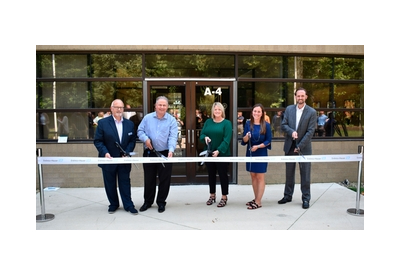
At today’s event held on the university’s campus, representatives from Waterloo and Google joined local, provincial, and federal government representatives to celebrate the announcement.
“Ontario is proudly home to world-class researchers whose ground-breaking discoveries drive our economy and critical industries,” said Nolan Quinn, Minister of Colleges, Universities, Research Excellence and Security. “This partnership with Google will further solidify the University of Waterloo as a cutting-edge research powerhouse that provides students with the hands-on skills they need to advance Ontario’s AI sector for decades to come.”

The new research chair will be held by Dr. Edith Law, professor of computer science in the Faculty of Mathematics and executive director of the Future of Work Institute. Law is an expert on Human-AI interaction and the design of technology for fostering human values in learning, healthcare and collaborative work contexts. “I am honoured to have the opportunity to work with Google to explore how we can best design tools and environments for learning, taking full advantage of AI’s potential while being cognizant of its risks,” Law said.
The Institute’s first initiative, the Futures Lab: An AI + UX Prototyping Workshop, begins October 6. Students will work in interdisciplinary teams, alongside Waterloo faculty and Google mentors, to experiment with AI-powered tools and critically engage with AI’s role in education and society. The workshop follows a three-day listening tour conducted in early September during which Google researchers met with students, faculty and staff to hear about how AI was already affecting their academic and professional lives.
“We are thrilled to partner with Google as we imagine the future of work,” said Dr. Jochen Koenemann, dean of Waterloo’s Faculty of Mathematics. “I would like to extend a special congratulations to Dr. Edith Law for receiving this named research chair. AI is already changing the world rapidly and Waterloo is poised not only to respond to that changing world but to shape it. This partnership will strengthen the relationship between the university and industry and empower us to prepare our students for the workplace of tomorrow.”
More Information
To learn more about the Future of Work Institute, visit their website.
Related Story
Waterloo Wins Backing for Training in 2D Materials
Recently, a key puzzle piece fell into place with the announcement of $1.65 million in federal funding for a joint training program involving the University of Waterloo and partners in Germany. Support from the Natural Sciences and Engineering Research Council of Canada (NSERC) gives the green light to a nine-year initiative to train dozens of graduate students and help bring promising new two-dimensional materials out of the laboratory and into the marketplace.