EXOR: Control Engineering Webcast – Overcoming the Limitations of Human-Machine Interfaces
September 14, 2021

Event: Control Engineering and EXOR webcast

When: Wednesday, September 22 at 11 am PT / 1 pm CT / 2 pm ET

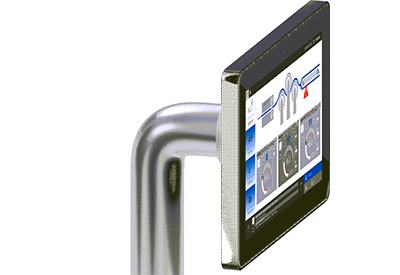
Human-machine interface (HMI) displays have long suffered from a variety of design limitations, from bulky, immobile enclosures to tangled cables and connectivity challenges.

Yet despite the frustration and inefficiencies these restrictions cause every day, they’ve traditionally been accepted as necessary evils by equipment manufacturers and end users.

It’s no longer necessary to settle for the limitations of traditional HMI displays, even or harsh or demanding environments.

A variety of cost-effective innovations now make it possible for HMI displays to overcome limits in ways that save considerable time, cost, and frustration for original equipment manufacturers (OEMs) and end users alike.

Learning Objectives:

  •    –   Learn how to eliminate the need for bulky enclosures, simplify physical connections and enable Wi-Fi connectivity
  •    –   How to eliminate common frustrations and enable efficient workflows
  •    –   Explore how to reduce HMI equipment footprint and total cost of ownership


Register Here

Source

Related Articles


Editor’s Pick: Featured Article

Weidmüller’s u-control 2000: The Automation Controller

Weidmüller’s u-control 2000: The Automation Controller

Weidmüller’s scalable engineering software, u-control 2000, adapts individually to your requirements. And, the u-control is powerful, compact and fully compatible with Weidmüller’s I/O system u-remote. This article looks at what makes u-control the heart of your automation.

Programmable logic controllers (PLCs) are one of the main components of any automated system. A typical control system has inputs, outputs, controllers (i.e., PLCs), and some type of human interaction with the system, a human machine interface (HMI), for example.

Read More


Latest Articles

  • Applications of Physical AI in Canadian Sectors

    June 23, 2026 Physical AI — the convergence of artificial intelligence with robotics and autonomous motion systems — is reshaping how Canadian industries operate. Across sectors from healthcare to mining, AI-enabled machines are performing tasks that were once entirely dependent on human intervention. But deploying Physical AI effectively requires more than sophisticated algorithms: it demands… Read More…

  • Case Study: Optimizing Harmonic Mitigation in Wastewater Treatment

    June 22, 2026 Segment and Application In a municipality, wastewater treatment plants typically stand out as the main consumers of electricity. The operational processes exhibit significant load variations throughout a 24-hour cycle, necessitating the use of AC drives to regulate pumps, blowers, and other motorized equipment in response to fluctuating demand. In one wastewater treatment… Read More…