ABB Startup Challenge Winners Use AI to support the Energy Transition
May 10, 2024
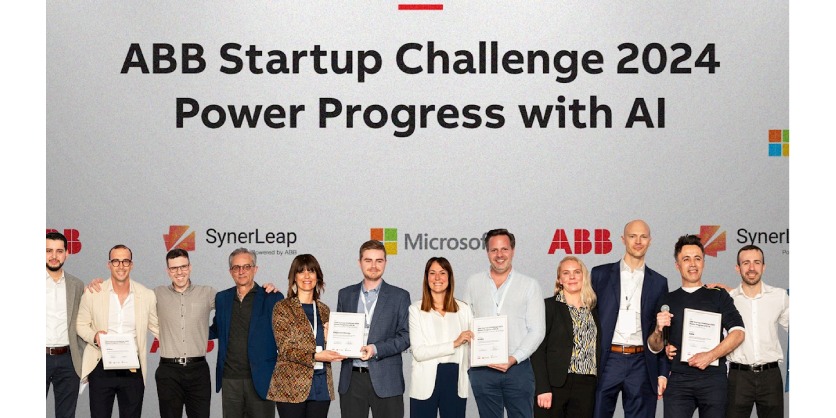
• ABB announces winners of 2024 ABB Startup Challenge
• Entrepreneurs challenged to use AI to further energy transition
• Four winners each win a $30,000 collaboration project with ABB to bring new solutions to market
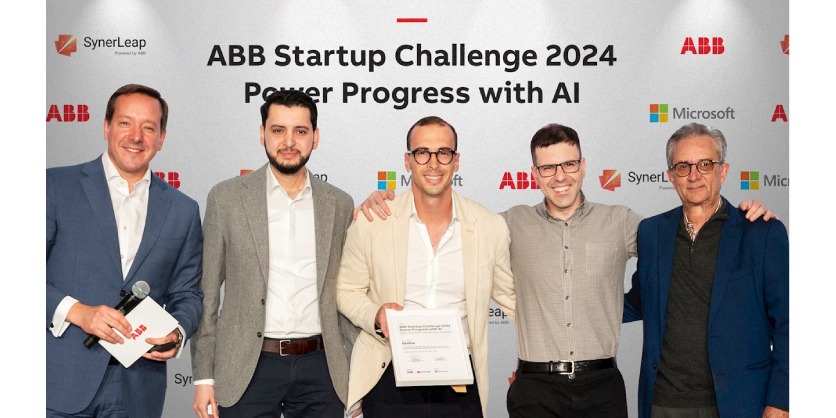
Some of the most innovative startups were recognized at this year’s ABB Startup Challenge in the Sophia Antipolis technology park near Nice, France. The competition invited startups to explore how AI could be incorporated into existing energy industry platforms and systems supporting the energy transition and a low-carbon future.
Now in its fifth year, the 2024 challenge had 164 applicants from more than 36 countries, with four winners selected from 12 finalists. Winners are awarded a collaboration project with ABB worth US$30,000 to develop a Minimum Viable Product (MVP) and the opportunity to launch a common solution for ABB’s customers. Winners receive mentoring from Microsoft and Synerleap’s startup advisors, and a six-month membership to SynerLeap, ABB’s startup accelerator.
Anton Kotov, Head of Corporate Strategy and M&A at ABB, said: “The ABB startup challenge is all about enabling collaboration – from sharing insights to building on each other’s strengths. Our aim is to create long-term relationships with talented entrepreneurs. The judges were hugely impressed by the caliber of entrants and the solutions they brought to this year’s contest. All the entries showcased how AI could enable the energy transition and demonstrated the fresh new thinking that is needed to help tackle the issues facing the energy sector.”
The winners included:
Enline from Portugal successfully pitched a software solution that enables dynamic grid management to better understand the status of the grid. Using AI and digital twins, Enline aims to make energy monitoring and optimization a simpler task for asset managers, while avoiding the installation of new sensors.
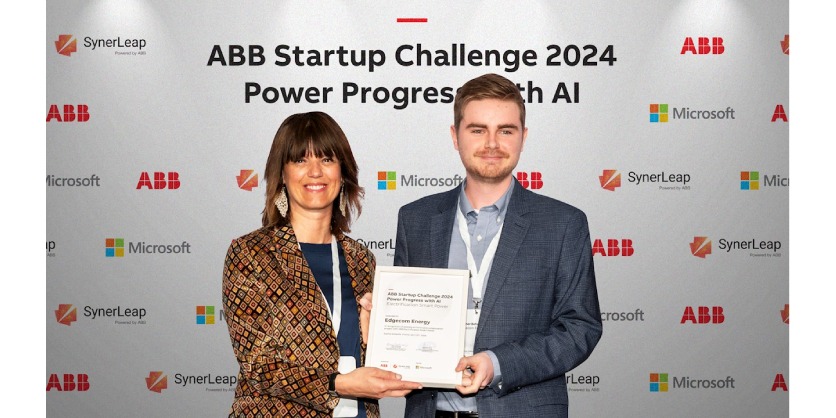
Toronto-based Edgecom Energy successfully created an AI-based digital optimization engine for energy management, designed to optimize energy usage in industrial and commercial buildings. Edgecom Energy’s virtual energy manager operates round-the-clock. It gathers and assesses real-time data from facilities, along with external factors like weather conditions and energy costs, as well as the technical limitations of the equipment and facility. It then generates the best possible 24-hour schedule for managing loads and other energy-related tasks within the facility.
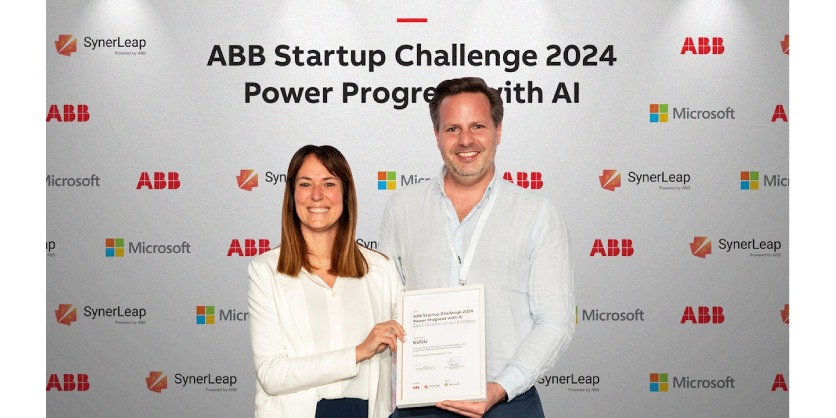
KUGU Home GmbH won the challenge for an AI-driven automation solution for improved energy optimization in smart buildings. Based in Germany, KUGU is a real-time decarbonization platform that enables real estate companies to meet their energy cost and emissions targets. Kugu’s patented solution, which offers energy savings of up to 30%, optimizes the operation of all energy assets in buildings and enables early detection of defects and malfunctions of energy systems.
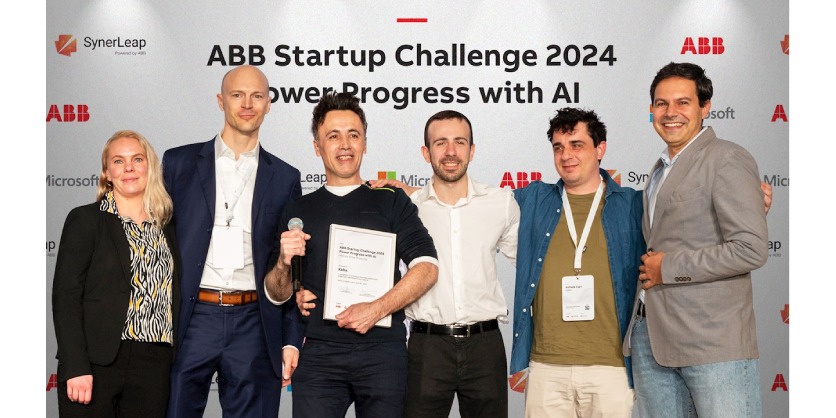
Canada-based Xaba Inc. developed an AI-based machine builder solution. It’s generative AI solution creates multiple optimized machine configurations, considering factors such as cost, component compatibility, lead time, and performance. This eliminates the need for extensive part catalog browsing and drastically reduces the engineering hours currently required to configure machines or automation equipment.
Each winning project has the potential to become a market-ready Minimum Viable Product (MVP) within six months. More than 20 MVPs have already been delivered since the annual challenges started and ABB is still collaborating with several winners and finalists from previous years, helping them to secure lucrative commercial contracts.
More Information
You can find out more about the ABB Startup Challenge here.
Related Story
ABB Co-Launches Interoperability Initiative to Unlock Industrial IoT Insights for More Efficient and Sustainable Industry
At the Hannover Messe on April 23, 2024, founding members ABB (including B&R), Capgemini, Microsoft, Rockwell Automation, Schneider Electric (including AVEVA) and Siemens announced collaboration on a new initiative to deliver interoperability for Industrial IoT ecosystems.