TeleCANesis 1.1 Simplifies Connectivity Design with Reusable Blueprint Components
June 22, 2026
New workflow enhancements reduce repetitive configuration work and accelerate blueprint development
TeleCANesis announced version 1.1 of its connectivity middleware platform for embedded systems on June 18, 2026. Driven largely by user feedback, the latest release introduces workflow enhancements that make it easier to reuse connectivity definitions across various projects, helping developers reduce repetitive configuration work, and simplify blueprint creation and maintenance.
TeleCANesis helps developers integrate connectivity across complex embedded environments by automating code generation, simplifying protocol bridging, and supporting technologies ranging from CAN, I2C and Ethernet to MQTT, Modbus and J1939, as well as HMI frameworks such as Qt, Unity, GL Studio, Slint and Storyboard. The platform enables engineering teams developing products for industrial automation, robotics, healthcare, transportation and other connected systems to design and deploy distributed embedded architectures more quickly, reducing development effort and accelerating time to market.
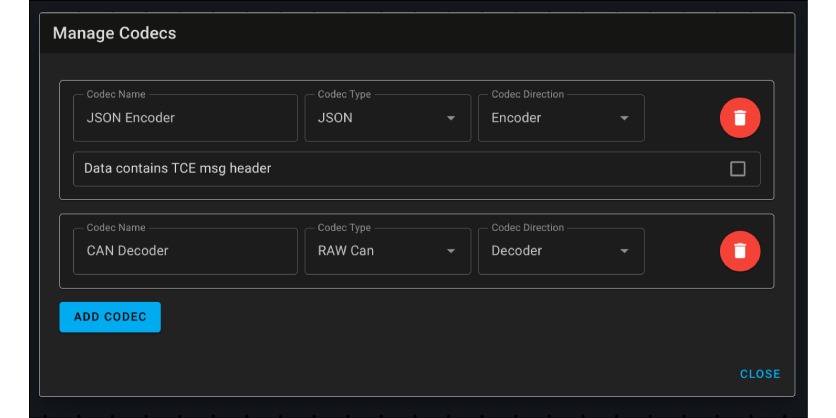
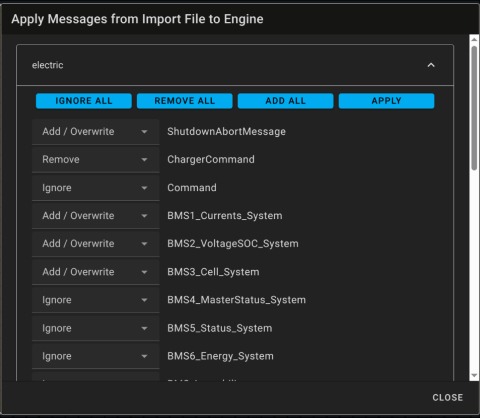
A major enhancement in TeleCANesis 1.1 changes how codecs and imported message definitions are managed within blueprints. Previously, messages imported from files such as DBCs were tied to a specific codec within a specific capsule. As a result, developers often needed to recreate codecs and re-import the same files when working across multiple capsules, creating unnecessary repetition.
With version 1.1, codecs and imported message definitions are stored at the blueprint level, making them available throughout the design. Developers can simply enable the required components within individual capsules rather than recreating them, significantly streamlining blueprint development and ongoing maintenance.
In addition to these workflow improvements, TeleCANesis 1.1 introduces a new CANOpen Codec plug-in and expands platform support with new Scarthgap builds for NXP i.MX8MP and i.MX95 processors. The release also includes user interface enhancements, updated documentation, bug fixes and general usability improvements.
Rodney Dowdall, Vice President of R&D at TeleCANesis, commented:
“One piece of feedback we heard frequently was that developers didn’t want to recreate the same connectivity definitions across multiple capsules. TeleCANesis 1.1 addresses that by moving codecs and imported message definitions to the blueprint level, making them available wherever they’re needed. The result is less repetitive work, faster blueprint creation and simpler maintenance. This allows engineering teams to focus more of their time on developing applications rather than managing connectivity infrastructure.”
TeleCANesis 1.1 is available immediately. Visit the TeleCANesis website at https://telecanesis.com/ to get started or to discover more about the company.
About TeleCANesis:
Canada-based TeleCANesis develops software tools that simplify and accelerate the creation of smart, connected industrial products. Founded by application developers for application developers, its eponymous flagship environment, TeleCANesis, enables engineering teams to interconnect system nodes quickly and reliably using a wide range of standardized buses, protocols, and HMI frameworks. By automating code generation and streamlining integration, TeleCANesis helps reduce software bring-up costs by up to 70% while cutting time to market dramatically. TeleCANesis empowers design engineers to focus on innovation rather than repetitive integration tasks.
More Information
More info at: www.telecanesis.com/
Related Story
TeleCANesis Returns to Embedded World 2026 with Expanded Plug-in Ecosystem
TeleCANesis will exhibit at Embedded World 2026 in Nuremberg, marking its second participation at the event and showcasing continued progress of its lean connectivity middleware for embedded systems. The company will highlight an expanding plug-in ecosystem, ongoing work on the upcoming TeleCANesis 1.1 release, and growing commercial adoption.