Beckhoff Facilitates Physical AI
April 23, 2026
Taking automation to the next level with natural language
Merging artificial intelligence and classic machine control as the basis for physical AI is a key topic for Beckhoff at Hannover Messe 2026. The automation specialist will be demonstrating how large language models (LLMs) directly influence real motion sequences via standardized interfaces. The accompanying exhibit will showcase this technology’s potential in a fun, entertaining way.
The integration of physical AI marks a paradigm shift in the manufacturing industry. Establishing a direct link between AI models and deterministic control technology allows machines to do more than just process static commands – it helps them create context-specific, autonomous responses to sophisticated requirements. Using the AI tool TwinCAT CoAgent and an audio interface for voice commands, Beckhoff illustrates how simple and intuitive collaboration between humans and machines will be in the future, allowing users who are not programming specialists to perform complex automation tasks.
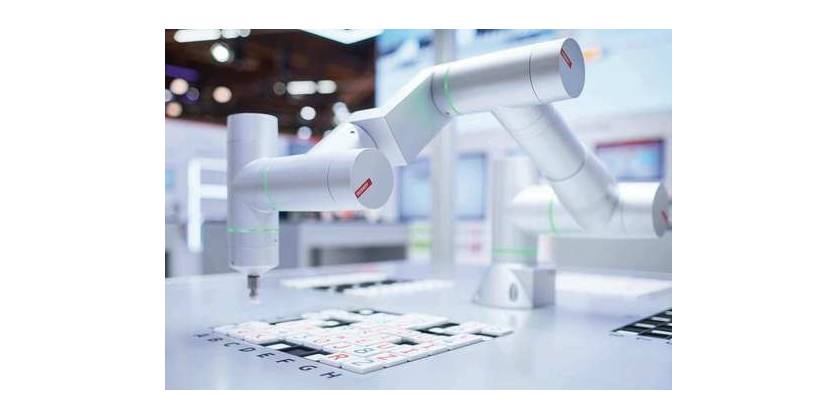
This scenario will be shown as a fully integrated industrial application at Hannover Messe. The ATRO modular industrial robot system, which is programmed and controlled using TwinCAT CoAgent for Operations using voice commands, will take center stage here. Based on the Model Context Protocol (MCP), the control system acts as an intelligent agent that translates human speech into machine commands, orchestrates path planning, and performs diagnostic tasks. The physical AI application will be showcased using a fun approach: the exhibit will play chess against visitors.
With tools such as TwinCAT CoAgent and TwinCAT Machine Learning Creator, Beckhoff already offers an ecosystem that facilitates this new era of automation. The tools support machine builders throughout the entire life cycle – from code generation in engineering through to error analysis during operation.
“We are moving AI away from chat windows and directly into machines and enabling language models to access the real world of controls through new standards such as MCP,” says Hans Beckhoff, Managing Director and owner of Beckhoff, describing this new development. “Technical inventions have always influenced the way that society as a whole evolves. Artificial intelligence and physical AI have significant implications, on the same level as the steam engine and electricity.”
More Information
Related Story
30 Years of TwinCAT by Beckhoff
The introduction of TwinCAT in 1996 marked a decisive evolutionary step for the model for success that is PC-based control. With the switch from DOS to Windows, programming in accordance with IEC 61131-3, and integrated engineering, Beckhoff created a future-proof solution based on the principle of separating hardware and software. Today, the TwinCAT platform combines all automation functions in a strictly deterministic real- time environment – from PLC and motion control through CNC and measurement technology and beyond to vision, robotics, and pioneering AI tools.