ITC 101: NEMA vs. IP Ratings: What’s the Difference?
January 23, 2026
NEMA vs. IP Ratings: What’s the Difference?
ITC Electrical has already explored NEMA and IP ratings individually, each vital for understanding how electrical enclosures and components are protected. Now, they take it a step further by comparing these two systems side by side.
What Do They Measure?
- NEMA ratings define enclosure protection against dust, water, corrosion, and more. They are mostly used in North America and often include mechanical integrity and environmental resistance.
- IP ratings, set by the IEC (International Electrotechnical Commission), use a two-digit code to specify protection against solid objects (first digit) and water (second digit).
Key Differences
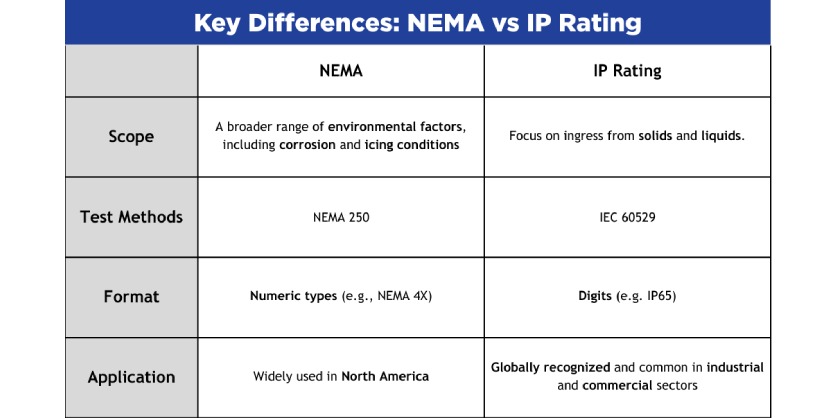
- Scope: NEMA covers a broader range of environmental factors, including corrosion and icing conditions. IP ratings focus only on ingress from solids and liquids.
- Format: NEMA uses numeric types (e.g., NEMA 4X), while IP uses digits (e.g., IP65).
- Application: NEMA is widely used in North America; IP ratings are globally recognized and common in industrial and commercial sectors.
Common Ground
While the two systems are developed by different organizations and use different formats, many NEMA types have approximate IP equivalents. For example, NEMA 4X is often considered similar to IP66, as both offer protection against water jets and dust. However, only NEMA includes corrosion resistance and additional mechanical durability.
Utilizing both systems
Both systems ensure your equipment stays protected. Understanding their differences and overlaps helps you choose the right rating for your environment.
References:
International Electrotechnical Commission (IEC), 2021. IEC 60529: Degrees of protection provided by enclosures (IP Code). Geneva: IEC. Available at: https://webstore.iec.ch/en/publication/2452
National Electrical Manufacturers Association (NEMA), 2024. NEMA BI 50055-2024: NEMA 10250 Enclosure Types. Rosslyn, VA: NEMA. Available at: https://www.nema.org
National Electrical Manufacturers Association (NEMA), n.d. How NEMA Standards Are Developed. [online] Available at: https://www.nema.org/standards/about-standards/how-nema-standards-are-developed
National Electrical Manufacturers Association (NEMA), n.d. How to Read a NEMA Standard. [online] Available at: https://www.nema.org/standards/about-standards/how-to-read-a-nema-standard
Allied Electronics & Automation, 2020. NEMA vs IP Ratings Explained. [online] Available at: https://www.alliedelec.com/blog/nema-vs-ip-ratings-explained
Related Topics in the ITC 101 Series
Check out other articles of ITC 101 Series :
- What is IP Rating? — Click here to learn more
- What is Nema Rating? — Click here to learn more
- What is IK Rating? — Click here to learn more
Stay tuned for more from the ITC 101 Series.
Related Story
2025 Year in Review – ITC Electrical Components
As ITC Electrical Components wrap up another successful year, they are proud to share the highlights, milestones, and meaningful moments that shaped them throughout 2025. This year brought industry-wide challenges, new opportunities for innovation, and continued growth across their product offerings. Through it all, they remained focused on supporting our customers with reliable solutions, strong technical expertise, and dedicated service.