Smart Homes in Canada: How Schneider Supports the Next Generation of Residential Buildings
January 14, 2026

By Krystie Johnston
For almost two centuries, Schneider Electric has been empowering everyone to make the most of their resources. Continuing their mission, they are advancing energy technology to support the needs of future generations. With a complete portfolio of electrical and automation products and solutions, Schneider is making homes in Canada smarter and more sustainable today, and into the future.
Smart home infrastructure in Canada
Smart home infrastructure in Canada is a huge topic: adoption of smart home technologies like smart appliances, solar panels, EV chargers, and energy monitoring are ramping up across provinces and territories. Across the country – and around the world – is a backdrop of an all-electric society that is net-zero and sustainable for future generations. Reaching these goals has its challenges – and opportunities. As a leader in energy technology, Schneider Electric can help.
“As we are accelerating towards what has been deemed to be a low-carbon economy, the demand for electricity is actually rising,” says David O’Reilly, VP of Schneider Electric Canada’s Home and Commercial Solutions Division. In homes and businesses, people are eager to find ways to become greener and more sustainable by adding technology. “All of these things are adding to the critical electricity load that we have to manage. Many homes and buildings were built years ago or decades ago and were not really designed to support this kind of new energy reality. To manage this transition, Schneider has focused on providing smart devices, smart technology, and intelligent infrastructure.”
The balance between green tech and costs
In Canada, the main drivers of adopting smart home infrastructure are a sense of moral responsibility and saving time and money. When these are balanced, it is a win-win for the end user and the environment.
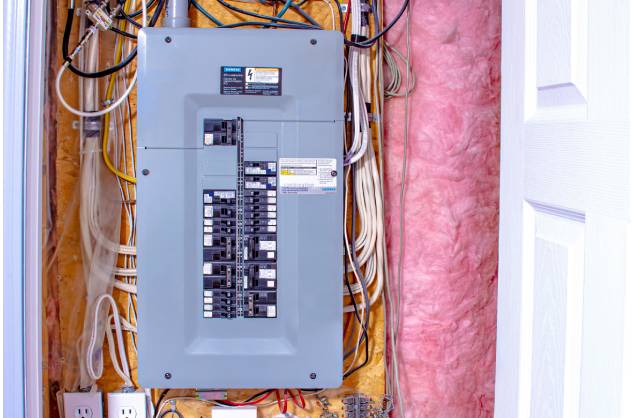
For example, someone might want to integrate a heat pump or an EV charger to their home; if they have a 100 amp panel, they need to look at the cost of going to a higher-amp panel, and their return on their investment is going to be seen in energy savings. But there is another alternative. O’Reilly says that what Schneider Electric Canada is focused on is what he calls “service upgrade avoidance.”
“With our products and solutions, you can add technology to an existing panel, 100 amps or 200 amps. And what that will allow you to do, in many cases, is add the necessary things onto your home, like heat pumps, other electrical appliances, and EV chargers, without [emphasis added] having to go through the expense and the time (which is also expensive) of significant upgrades to the electrical infrastructure in your home or building,” he says. O’Reilly says that adding relays and Schneider Energy Monitor to an existing panel will show the end user how much energy is being consumed and help them manage the loads associated with it more efficiently.
Peak management
“Peak management is a big focus, and with our Schneider Energy Monitor solution, what it allows you to do is not just save, but actually be aware of how much energy you are using,” he says. “By adding this monitoring system to an existing panel, what you can do is see – down to a receptacle level in your home – what is plugged in and how much energy is being used during various parts of the day. And you can program the system in conjunction with our QO smart panel solution to allow you to manage those loads throughout the day.”
O’Reilly says that peak management makes it easier to distribute the energy available to a home or a building the way you want. But the real power of a monitoring system like this is that it allows you to see how much energy you are using, and fine-tune consumption. He says that in his own home, he was able to reduce electricity consumption by around 20% by adding a Schneider Energy Monitor (formerly Wiser Home Power Monitor).
“It really allowed us to become what we call a ‘prosumer’ now, in the management of energy in our home. A ‘prosumer’ is defined as somebody that is not just consuming energy – we are actually proactively involved in the management of it in our home.”
Schneider’s products and solutions (from the panel to the receptacle to the app)
So, how does it all work? O’Reilly starts with their smart panel solution. “A smart panel provides the homeowner the ability to monitor how much energy they are using down to a receptacle level and control the on/off functions. Our product, called the Square D’s QO smart panel solution, provides homeowners with the ability to close that gap between device-level smartness and fully integrated intelligent infrastructure, meaning that the breakers are integrated with smart relays.” So, the breakers are not exactly “smart”, but the panel with the relays make the system function intelligently.
This brief video gives an overview of how it all works:
They integrate the Schneider Energy Monitor into that same panel, so the homeowner can see down to a receptacle level how much electricity is being pulled. Its intelligent interface makes it easy to see what is plugged in, for example, a refrigerator, a dryer, or an EV, without pre-programming. And once everything in the circuit is confirmed, it will begin to monitor their energy usage and how much electrical load those individual receptacles are using.
“It will then begin to intuitively work with you and ask you to integrate this with time of day, peak loads,” O’Reilly says. “And then, when it is integrated with our Smart Relay and QO Smart Panel Solution, what it will do is allow you to provide on-off connectivity to certain components of your home distribution grid. So, portions of your home can then be limited in terms of how much energy they can use.” It has an easy-to-use interface and works with both Android and iOS platforms, and integrated intelligence helps the homeowner optimize their energy usage, considering things like peak times and rates.
Insights into Canada’s smart home infrastructure
Schneider Electric Canada recently conducted a survey to explore what consumers thought about home technology and connected living in Canada. What they found was that Canadians are extremely interested in home technology, that they want it to be simple, integrate seamlessly, and be functionally relevant. The survey also revealed that Canadians are more interested in, and adopting home technology faster than other developed nations compared in the study.
“Our climate here, we have warm summers and cold winters. And, depending on where you live in Canada, electricity can be inexpensive, like in Quebec, or it can be expensive, relatively speaking, from a kilowatt hour perspective, in a place like Alberta,” O’Reilly says.
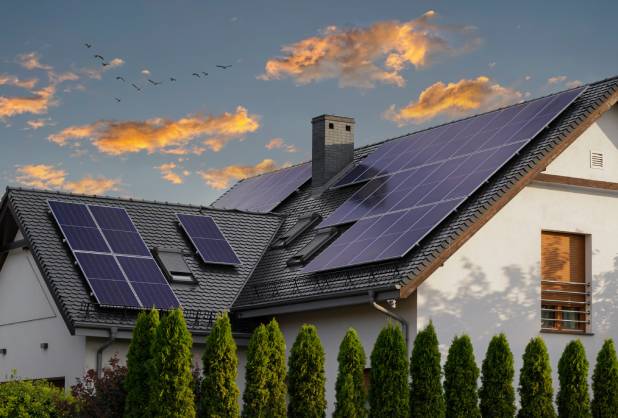
“Where we are seeing some of the highest uptake for smart technology in Canada right now is in Western Canada, in Alberta. What consumers are interested in doing is not just putting in solar, but also battery technology, and being able to manage from a prosumer perspective, how that energy is being used.”
O’Reilly says he thinks the acceleration of smart home adoption is going to continue. “We really believe that, as the adoption rate continues to increase for electrification in homes…this will become more important to Canadians across the country. It is smarter. It is functionally better and cleaner. What we see happening is that Canadians want to do this because they fundamentally want a balance between their home budgets and doing the right thing. As an organization that manages electrical distribution inside residential buildings, both single-family, multi-residential, and commercial, we have to provide solutions like this to consumers to make sure that they get what they want.”
There is another aspect to this: as customers begin to transition to this prosumer model, sustainability becomes critically important. “We recently saw last winter and in the last couple of weeks with some of the storms that have happened in Quebec, the number of customers that have been without electricity for days or sometimes a couple of weeks,” he says. “By adding prosumer technology to your home and being able to generate power, store that power, utilize it when you need to, and send it back onto the grid when you do not. This provides a more sustainable home for you so that when there are outages like this, your home continues to function.”
Schneider also heard from consumers that they love the move to all-electric, but they want to make sure that when there is an issue with the public grid, their home or their community can continue to function. “As we work with home builders, what is interesting is that home builders are starting to look at how we can provide sustainable solutions, not just at a home level, but on a community level as well. So that again, if the public grid has issues, these homes can continue to function, and they are sustainable. And that is what sustainability means to us.”
Conclusion
Consumers want technologies that help them make the most of their energy; they want to support sustainability, and they want to balance these costs. Schneider Electric Canada wants to be your trusted partner in sustainability and efficiency, and they can help with the energy transition that we will see into 2030 and beyond.
O’Reilly says, “We think that we are well positioned to help home builders, homeowners, and commercial building owners with solutions around managing sustainability. We are extremely excited about this right now because we have known this was coming for a while. Now it is happening. And we think we are super well positioned for this to help consumers with this.”
More Information
Interested in learning more? Visit Schneider Electric Canada today!
Related Story
Schneider Electric Is Named a Leader in the IDC MarketScape for Worldwide Energy Transition Professional Services
As organizations accelerate their shift toward low-carbon, resilient energy systems, IDC MarketScape has recognized Schneider Electric as a leader in Worldwide Energy Transition Professional Services 2025.
The evaluation assessed professional service providers globally on their capabilities and strategies to help energy-intensive industries achieve net-zero goals, and this recognition affirms Schneider Electric’s position as a trusted partner for organizations navigating the shift to sustainable energy systems.