| | | |

FIEPOS Field Power Supplies with IP54, IP65 and IP67 | Unlimited Opportunities for Decentralization

December 4, 2025

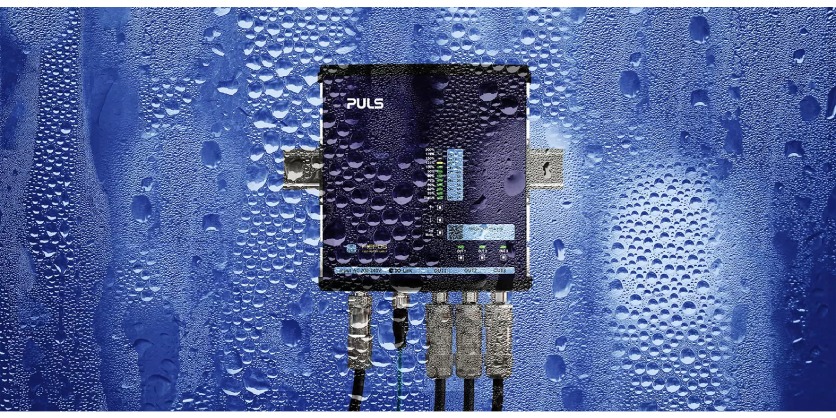
In this video PULS shows you the benefits of its FIEPOS Field Power Supplies for decentralized applications.

  • Future-proof technology
  • Space-saving design
  • Flexible mounting options
  • High protection classes
  • Eco-friendly and highly efficient design
  • Various connector options
  • Smart communication features

More Information

Learn more about FIEPOS

Related Story

What Is the Meaning of the IP Ratings for Power Supplies? PULS Explains
FIEPOS Field Power Supplies with IP54, IP65 and IP67 | Unlimited Opportunities for Decentralization

The IP rating indicates to what extent an electrical device is protected against the penetration of foreign objects and moisture. In this blog post, you can find out which IP codes there are, what the differences are between them and what you need to pay attention to when choosing a power supply.

Environmental influences such as dust or moisture can prevent the electrical components in a power supply from functioning correctly. In addition, the interior of the power supply may need to be protected from penetration by foreign objects, such as tools, screws and wires, and from accidental contact by the user. It is important to pay attention to the IP code (international protection code), particularly when power supplies are installed outside a cabinet. The power supply can only be used safely, and costly downtime can only be avoided if the IP rating is suitable for the conditions.
Related Articles


Editor’s Pick: Featured Article

Weidmüller’s u-control 2000: The Automation Controller

Weidmüller’s u-control 2000: The Automation Controller

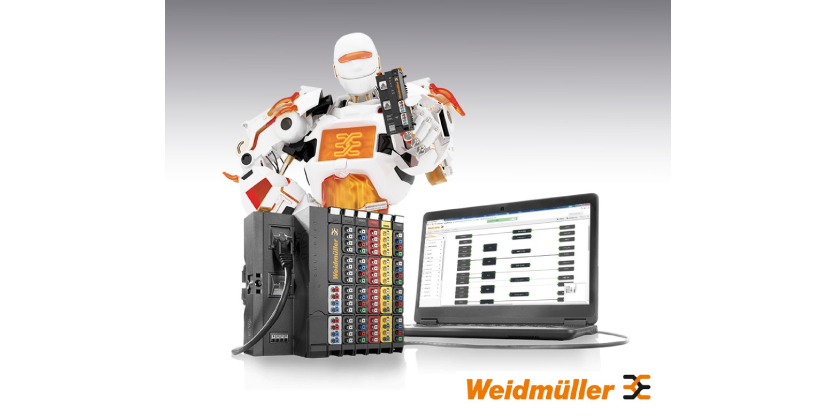
Weidmüller’s scalable engineering software, u-control 2000, adapts individually to your requirements. And, the u-control is powerful, compact and fully compatible with Weidmüller’s I/O system u-remote. This article looks at what makes u-control the heart of your automation.

Programmable logic controllers (PLCs) are one of the main components of any automated system. A typical control system has inputs, outputs, controllers (i.e., PLCs), and some type of human interaction with the system, a human machine interface (HMI), for example.

Read More


Latest Articles

  • Teaching Machines to See: Why Sensor Fusion Demands a System-Level Approach

    March 16, 2026 By David Doria, Director of Engineering, Automated Driving, Magna Electronics, March 16, 2026 For years, progress in advanced driver assistance systems (ADAS) were driven by improving individual sensors. Higher resolution cameras. Longer-range radars. More precise lidars. Each step delivered incremental gains. But optimizing sensors in isolation only goes so far. As ADAS Read More…

  • Vention Raises the Bar for Automating Automation with New Funding and Solutions

    March 9, 2026 By Krystie Johnston Vention accelerates democratization of automation with new funding and GRIIPTM, sets sites on Enterprise clients, reaches more industries and geographies Vention is on a journey to democratize automation, and they are picking up speed. Already, in Q1 of 2026, they have made two announcements that will accelerate their trajectory Read More…