Nidec Industrial Solutions’ DirectPowerPS High-Speed EV Charger Has Achieved UL Certification
December 4, 2023
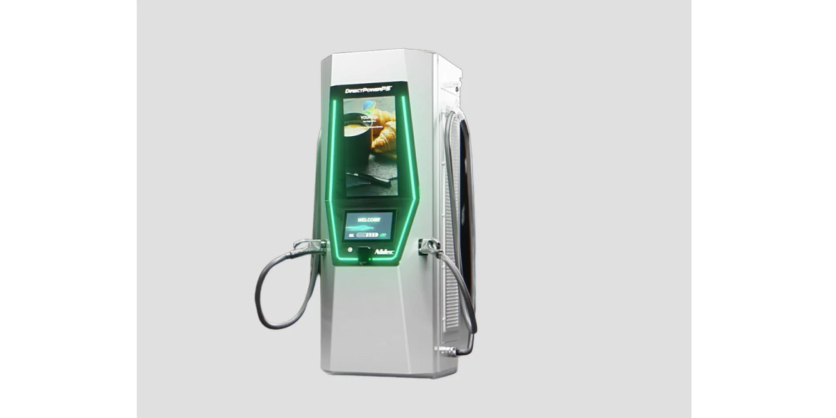
Nidec Industrial Solutions, a global leader in power management, proudly announces the successful UL certification of its cutting-edge innovation –the DirectPowerPS DC Fast EV Charger. This achievement marks a significant milestone in Nidec’s unwavering commitment to providing its customers with high-quality, reliable, and safe charging solutions while supporting the growing EV market.
Granted by CSA Group, the UL Certification stands as a testament to Nidec’s dedication and adherence to the highest industry standards for safety and performance. DirectPowerPS underwent rigorous testing and evaluation ensuring full compliance with UL 2202, UL2231-1, and UL2231-2 standards. This certification assures users that they can charge their electric vehicles with the utmost safety and confidence.
Designed with American-made steel and produced at Nidec’s North American headquarters in Cleveland, Ohio, DirectPowerPS is proudly made in the United States. In addition to its UL certification, DirectPowerPS meets both NEVI and Build America Buy America compliance standards.
Key Features of the DirectPowerPS:
- Rapid Charging Speeds
- Dynamic Power Sharing – 120kW to 360kW dynamically assigned to each connector.
- Scalable – modular design enables 120kW to 360kW in 60kW steps.
- Easy To Repair.
- Universal compatibility—charges any electric vehicle.
Nidec is thrilled to introduce its UL certified DC Fast EV Charger to the market, contributing significantly to the advancement of sustainable transportation infrastructure. As electric vehicles continue to gain popularity, Nidec remains at the forefront, consistently delivering innovative solutions to meet the evolving needs of EV drivers.
More Information
For more information, visit https://directpowerps.us/
Related Story
Nidec Instruments Launches New Semiconductor Wafer Transfer Robot
Despite a temporary slowdown in 2023, the global semiconductor market is expected to expand from 2024 after demand recovers in a wide variety of product groups such as memory logic and other IC products, and in the O-S-D (optoelectronics, sensor/actuator, and discrete semiconductor) segment. As the demand grows around the world for the construction of semiconductor factories with high production capacity, Nidec Instruments has developed the SR7163 series, a semiconductor wafer transfer robot to respond to its customers’ needs.