Functional Safety Standards: Current Transition and Harmonization Periods
sMarch 2, 2023
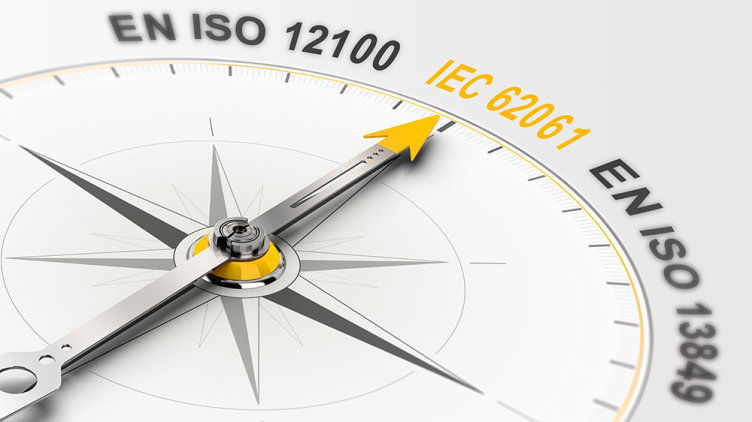
ISO 13849 and IEC 62061
Functional safety describes the part of a system’s safety that depends on the correct function of the safety-related control system.
Generally speaking safety also depends on other risk-reducing measures, which are examined in accordance with EN ISO 12100. E-STOPs, safety gates, light curtains or speed monitoring are just some of the typical safety devices used to safeguard plant and machinery. The rising level of complexity of plant and machinery means that programmable control systems are increasingly being used alongside conventional relays.
Changes to Functional Safety Standards
Both ISO 13849 and IEC 62061 ensure compliance with international legislation, e.g. the Machinery Directive. Both standards are crucially important for plant and machine builders because many B and C standards refer directly to them.

Publication of ISO 13849-1 was originally planned for 2021 and was postponed to 2022. It is far from clear when it will be harmonized into the EU standard EN ISO 13849-1, whether there will be a transition period for publication of the standard in the Official Journal and, if so, how long this might be.
The process of harmonizing IEC 62061 to EN IEC 62061 lasted a year. As soon as an international IEC or ISO standard is published as an EU standard in the Official Journal of the European Union, presumption of conformity applies. That means that a manufacturer who abides by the specifications of the standard can assume that they comply with the health and safety requirements of the Machinery Directive and so, as part of the conformity assessment with the declaration of conformity, can affix the CE mark to their machine.
The ratified, international standards can be applied as soon as they have been published on the IEC and ISO websites. However, it is advisable to deal with the expected development at an early stage.
| Schedule | Status | Schedule | Status |
| ISO 13849-1 (FDIS) | Published | IEC 62061 (FDIS) | Published |
| ISO 13849-1 | Planned for 2022 | IEC 62061 | Published |
| EN ISO 13849-1 | Open | IEC 62061 | Published |
| EN ISO 13849-1 (harmonized) | Open | EN 62061 (harmonized) | Published |
You can draw on two important standards, derived from this A-standard:
- EN ISO 13849-1: Applicable for electrical/electronic/programmable electronic/hydraulic/pneumatic/mechanical systems
- EN IEC 62061: Applicable for electrical/electronic/programmable electronic systems
Important parameters for the reliability of safety-related functions are the safety integrity level (SIL) and performance level (PL).