The New KR FORTEC Ultra Family: Ultimate Power, Compact Design
Technically Unbeatable for Manufacturing Processes That Involve Heavy and Large-Volume Components
January 17, 2023
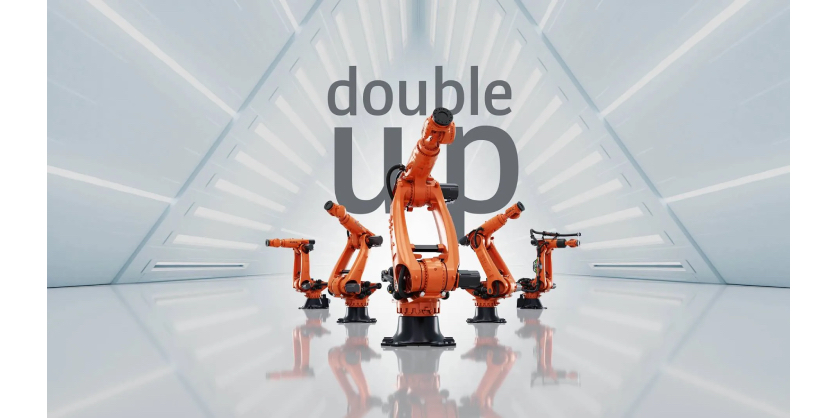
The robots of the KR FORTEC ultra family set new standards in the heavy payload range from 480 kg to 800 kg. Ideally rated for high payloads and moments of inertia, they especially meet the new requirements of the electromobility sector.
Technically unbeatable for manufacturing processes that involve heavy and large-volume components
The new KUKA KR FORTEC ultra family includes five robot variants – each ideally suited to a specific application. The KR 800, for example, impressively handles payloads up to 800 kg. The two KR 480 variants reach up to 3,700 mm. The High Inertia variants of the KR 640 and KR 560 increase the maximum permissible mass moment of inertia significantly with extended grippers.
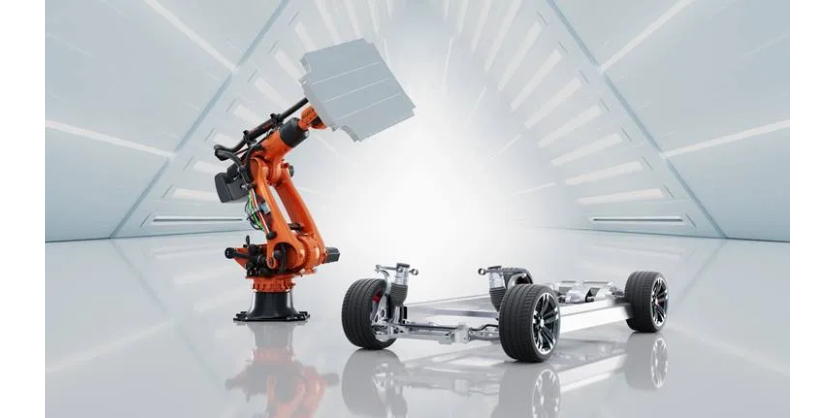
We developed the robots of the new KR FORTEC ultra family in close cooperation with our customers. They are our response to the automotive industry’s changing requirements, with bigger vehicles, heavy batteries and very large components for electric cars.
Wolfgang Bildl, Portfolio Manager at KUKA
“Double up”: Innovative double link arm design offers many essential advantages
The most striking feature of the new KR FORTEC ultra family of robots is its double link arm, an innovative design that reduces weight while it ensures high stiffness and accuracy. This reduces the use of materials, which results in higher dynamic performance, optimal cycle times, less energy consumption and a lower CO2 footprint.
Incredibly strong. Extremely compact and light
“To cover a payload range of 800 kg and high mass moments of inertia, customers of other manufacturers must settle for robots in the next payload class up, which are significantly heavier and more cost-intensive to purchase and maintain,” said Wolfgang Bildl. With a first-class power-to-weight ratio, the new KR FORTEC ultra family eliminates these drawbacks.
Best values for MTBF and energy consumption add up to significantly reduce operating costs
The very high “Mean Time Before Failure” (MTBF) of up to 400,000 hours offers customers low spare parts costs and high availability. Furthermore, the robots of the new KR FORTEC ultra family meet all customer upkeep requirements, with very good component accessibility and ease of maintenance and repair. For example, these robots need only three forms of maintenance: oil changes, visual inspection, and lubrication of the cable set and the bearings on the counterbalancing system.
Low energy consumption
Low weight and precise selection of required robot type reduce energy costs.
Second life ability
Convert and upgrade the payload capacity and mass inertia of the KR FORTEC ultra at any time.
Low spare parts inventory
The KR FORTEC ultra and the forthcoming KR FORTEC family share many parts.
Reduced space requirement
The combination of small footprint and large workspace produces flexible and compact cell design.
The KR FORTEC ultra offers the lowest total cost of ownership in its class.
Wolfgang Bildl, Portfolio Manager at KUKA.
Intelligent modular concept for optimal lifecycle performance
The KR FORTEC ultra modular system focuses on the use of as many shared parts as possible within the robot family, including castings, motors and gear units. This helps minimize the cost of stocking spare parts and standardize maintenance processes.
Higher MTBF
Mean Time Before Failure: 400,000 h.
Reduced maintenance time
Mean Time to Maintenance (MTTM): 5.75 h.
Maximum availability
Technical availability: 99.998%.
Fast repair
Mean Time to Repair (MTTR): 0.84 h.
Newly developed equipment and extensions
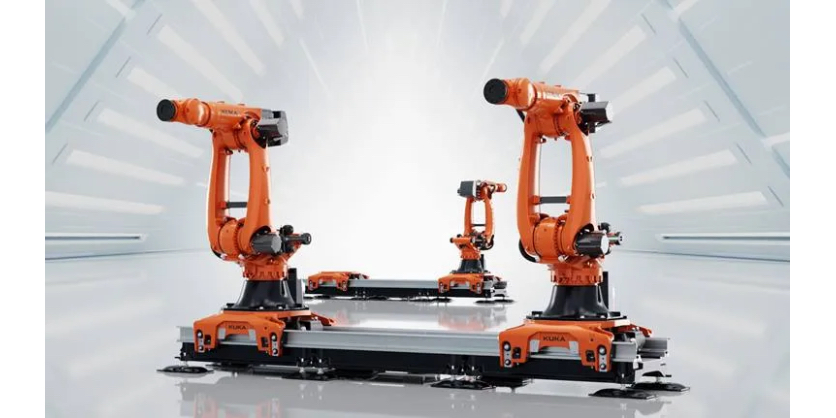
KUKA is also launching a new high-performance linear unit – the KL 5000 – to increase robot workspace. With a standard length of up to 31 m, it offers great flexibility in system design, including extensions and up to four robots per unit. Modular segments enable easy weld-free integration. The automatic lubrication system reduces maintenance work and increases availability.
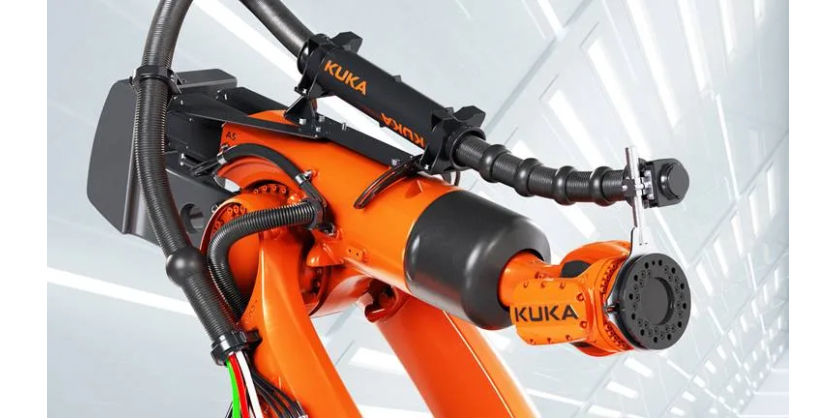
Another highlight is the new energy supply system with a new K-pipe and a modified interface on axis 2. This development offers impressive durability and minimized wear, combined with a smaller disruptive contour, simplified maintenance and exchange, and customization to meet various requirements. Coordinated equipment saves time and cost during integration.
More information about the KR FORTEC ultra family
Related Story
Programming Robots in Next to No Time: Hand Guiding With KUKA ready2_pilot
here are countless application scenarios for the use of robots in companies: welding, drilling and bonding are just three examples of tasks that machines can perform quickly, untiringly and with consistently high quality. At the same time, however, automation also entails digitalization. After all, the use of robots in industry rarely refers to just the machine itself. The robot controller and software are also included. That is precisely where the challenge lies for many companies