Pepperl+Fuchs: R1000 Distance Sensor with Pulse Ranging Technology for Positioning Accuracy Down to a Millimeter
October 27, 2021
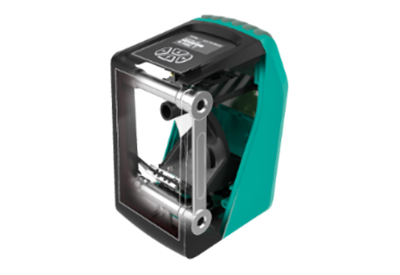
Dynamic applications such as distance measurement and positioning in storage and retrieval machines or shuttle cars require a high measuring rate. The new R1000 distance sensor with Pulse Ranging Technology (PRT) is suitable for high-precision distance measurement. For this purpose, the dimension of the light spot was designed so that the sensor can easily compensate for mechanical influences such as vibrations and shocks. Due to its compact housing, easy integration in applications with confined installation space is possible. The red transmitter light for easy alignment of the photoelectric sensor and an integrated display ensure user-friendly commissioning and diagnostics.
Precision Even at Long Distances
The R1000 offers an accuracy of < 1 mm over the entire measuring range, which guarantees optimum positioning. This is possible due to the underlying Pulse Ranging Technology (PRT). It is currently considered the most precise method for distance measurement in the industrial environment and has outstanding measuring characteristics for demanding applications: PRT enables non-contact position determination even over large distances, so that no additional measures for fine positioning are necessary. Therefore, the devices of the R1000 series are ideally suited for demanding applications that require positioning with accuracy down to a millimeter. In addition, the sensor is insensitive to ambient light, dirt or dust, which opens up a wide range of applications for users.
Especially Space-Saving and Rugged
With ranges of up to 150 m and device dimensions of 55 x 116 x 81 mm, the sensor with unique performance can be integrated even in particularly small machines or in lifting applications. Since the R1000 features metal threaded holes as standard, mounting can be carried out directly at short measuring distances. Optional mounting accessories for long-range adjustments are available.
The compact housing is based on a robust metal frame, making the series suitable for use in harsher environments. Due to the Class 1 laser, eye-safe use of the sensor is guaranteed at all times without additional protective measures.
Highlights of the R1000 Distance Sensor
- – Compact and robust housing for use in confined installation spaces
- – Metal threaded holes for direct mounting at short measuring distances, optional mounting accessories for long-range adjustments
- – Pulse Ranging Technology for high-precision distance measurement and positioning
- – Resistant to environmental influences such as ambient light, contamination or dust
- – Eye-safe Class 1 laser