Mission Until 2030 KUKA Makes Automation Available to Everyone
February 25, 2021
By Wolfgang Meisen, Head of Corporate Communication
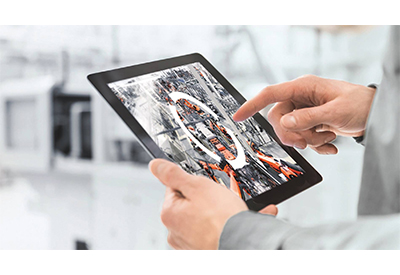
In the next ten years, more and more people around the world will be working with robots. Automation is becoming mainstream and is finding its way into more and more areas. Easy access to robotics: That’s KUKA’s ambitious goal – and therefore is presenting the first elements of a preview of an operating system of the future at the digital Hannover Messe 2021. Because therein lies the key: simple operation and intuitive handling of automation solutions, which until now have often been reserved for experts.
“Our mission by 2030 is: Automation will be simpler, more intuitive, and thus available to everyone. This will lower the entry threshold. Programming a robot will then be as easy as working on a PC today,” says Peter Mohnen, CEO KUKA Group. That is why KUKA is presenting a preview of its operating system of the future at the digital Hannover Messe 2021.
Prototypes have already been in use at various customers since the end of 2020. This is less about the product “robot” alone, but rather about its use and the possible applications. In the coming years, automation will find its way into more and more areas – all around the globe. This development is already evident from current projects of the KUKA Group. These include major orders from the battery and e-mobility sectors, as well as the establishment of additional robot types in the portfolio, such as the KR SCARA for small parts assembly, material handling and testing tasks.
Digitally connected solution systems are the future
Software is more decisive than ever: the real added value no longer lies in a single product, but in digitally connected solution systems. KUKA offers the entire range from robotic components to large, complex connected systems. This requires an operating system that offers access to an entire ecosystem of programs or apps, services and accessories.
The long-term goal is clear: every KUKA product is to be equipped with the new operating system at some point – a long-term project in which the first steps have already been taken. KUKA is also focusing on the benefits for its tens of thousands of existing customers worldwide who work with classic KUKA systems. Accompanying them all into the new world, reducing costs and increasing benefits is KUKA’s top priority. The automation group therefore not only wants to make access easier for newcomers, but also to further develop its existing customer base.
Automation as the winner of the pandemic crisis?
The coronavirus pandemic has changed supply chains, workflows and production processes. New technologies are helping the industry to adapt to this change in a sustainable way. These include automation, robotics and digitization. They are important elements for a robust and resilient industry. “Hannover Messe is a key driver for the time after the coronavirus pandemic. Robotics and automation are key here, as are digital concepts. KUKA is a pioneer in industrial automation, and Hannover Messe, as a digital format, also offers us the right platform for products, solutions and innovations related to the digitalized and sustainable production of the future,” says Wilfried Eberhardt, Chief Marketing Officer at KUKA. With this year’s partner country Indonesia, Hannover Messe is focusing on a region that is developing very dynamically, particularly in the field of automation. For example, KUKA subsidiary Swisslog has already implemented several logistics projects for the Asian e-commerce giant Lazada.