Littelfuse Pxxx0S3N SIDACtors Provide High Surge Current Overvoltage Protection in Compact Package
May 2, 2022
Littelfuse, Inc., an industrial technology manufacturing company empowering a sustainable, connected, and safer world, announced the new Pxxx0S3N SIDACtor® Protection Thyristor Series, which safeguard exposed interfaces in industrial and ICT applications, including RS-485 data interfaces and AC/DC power supplies. Providing equipment in harsh environments with increased protection from severe overvoltage transients assists designers in complying with regulatory requirements.
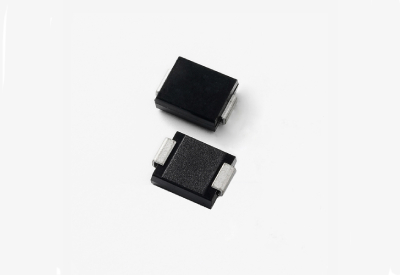
Available in a compact, DO-214AB (SMC) package, the Pxxx0S3N SIDACtor series is designed to provide 3kA (8/20) high-power surge protection with low thermal accumulation during long-term overvoltage events. A vital advantage of the Pxxx0S3N is that the switching voltage (VS) is much lower than Gas Discharge Tubes (GDT), and on-state voltage (VT) is much lower than Metal Oxide Varistors (MOV) and Transient Voltage Suppressor (TVS) Diodes.
The Pxxx0S3N is ideal for use in various applications where hazardous environments exist, including:
- •AC and DC power lines in factory automation, industrial / ICT applications,
- •Power interface of Energy Storage Systems (ESS),
- •Solar energy systems DC/AC inverters,
- •UPS/AC high-power distribution grid,
- •Electric vehicle (EV) charging systems.
“Ongoing product miniaturization requirements result in an increasing demand for compact, high-power-density solutions,” said Ben Huang, Senior Product Marketing Manager / Protection Semiconductor Business at Littelfuse. “Compared to MOVs and TVS diodes, the Pxxx0S3N SIDACtor is significantly smaller, and it is the first product of its size to provide such high surge current protection in such a small package.”
- •First DO-214AB (SMC) sized product on the market capable of withstanding 3kA (8/20) surges.
- •Provides superior lower clamping when used in conjunction with a series MOV for power line protection.
- •Low leakage extends the lifetime reliability of a series-connected MOV.
- •Unlike GDTs/arrestors, the semiconductor-based SIDACtor does not have a wear-out mechanism over multiple transient events.

For More Information
Additional information is available on the Pxxx0S3N SIDACtor Protection Thyristors product page.
For technical questions, please contact: Ben Huang, Senior Product Marketing Manager/Protection Semiconductor Business, bhuang@littelfuse.com