Siemens: Get More Out of Your Drive Systems With Digitalization
November 19, 2020

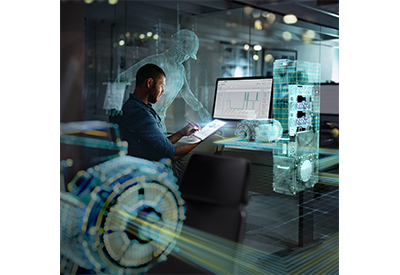
The future is digital – including in the industrial sector. Thanks to digitalization and networked processes, companies can produce more flexibly and reliably, and they can respond to events more rapidly. Digitally enhanced drive components are an important step toward digitalized automation. With SIDRIVE IQ, you can now benefit from an IoT digitalization solution for drive systems. Take advantage of digitalization to enter a new dimension of availability, serviceability, productivity, and efficiency.

SIDRIVE IQ: The next step toward the digital drive train

Drive systems play a key role in countless production processes and are ultimately what keep the entire production going. Faults or failures involving components like motors and converters have costly consequences. Avoiding these faults by taking timely and deliberate action requires intelligent transparency – which allows for measures like targeted, proactive, and well-timed maintenance.

SIDRIVE IQ now provides just that: Thanks to SIDRIVE IQ, you can monitor, analyze, and optimize drive systems digitally, which makes the operational and condition data of your drive components transparent. It also helps you identify maintenance requirements and optimization potential, so it’s the ideal choice for maximizing the availability, efficiency, performance, and serviceability of your drive train. This in turn increases your productivity and lays the foundation for your company’s success, both now and in the future.
Related Articles


Editor’s Pick: Featured Article

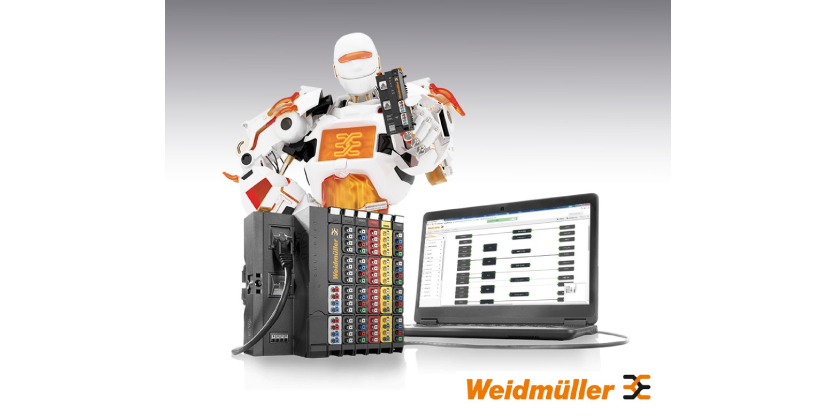
Weidmüller’s u-control 2000: The Automation Controller

Weidmüller’s u-control 2000: The Automation Controller

Weidmüller’s scalable engineering software, u-control 2000, adapts individually to your requirements. And, the u-control is powerful, compact and fully compatible with Weidmüller’s I/O system u-remote. This article looks at what makes u-control the heart of your automation.

Programmable logic controllers (PLCs) are one of the main components of any automated system. A typical control system has inputs, outputs, controllers (i.e., PLCs), and some type of human interaction with the system, a human machine interface (HMI), for example.

Read More


Latest Articles

  • Applications of Physical AI in Canadian Sectors

    June 23, 2026 Physical AI — the convergence of artificial intelligence with robotics and autonomous motion systems — is reshaping how Canadian industries operate. Across sectors from healthcare to mining, AI-enabled machines are performing tasks that were once entirely dependent on human intervention. But deploying Physical AI effectively requires more than sophisticated algorithms: it demands… Read More…

  • Case Study: Optimizing Harmonic Mitigation in Wastewater Treatment

    June 22, 2026 Segment and Application In a municipality, wastewater treatment plants typically stand out as the main consumers of electricity. The operational processes exhibit significant load variations throughout a 24-hour cycle, necessitating the use of AC drives to regulate pumps, blowers, and other motorized equipment in response to fluctuating demand. In one wastewater treatment… Read More…