B&R Automation: Cost-effective motor/valve control
January 29, 2020

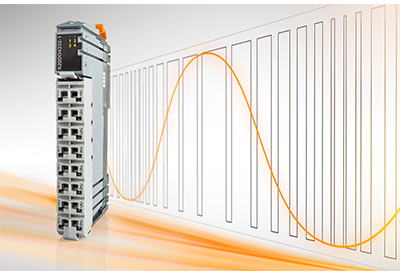
B&R’s new digital output module X20DO4332-1 has integrated pulse width modulation and is a cost-effective alternative to motor modules. In addition, the module offers a dither function that prevents valves from sticking.

Pulse width modulation (PWM) is mainly used for controlling larger loads, such as motors. Instead of using electronics to regulate a continuous input voltage down to the desired motor voltage, the motor is controlled by the width of the switching pulses. This process saves a considerable amount of energy.

With its dither function, the module also prevents valves from sticking. This is particularly common when valves are held for extended times at a constant position, especially in liquids. The dither function oscillates the valve slightly around the position setpoint to prevent it from sticking. The X20 module is equipped with four outputs with three-wire connections and offers a nominal output current of 2 A.
Source

Related Articles


Editor’s Pick: Featured Article

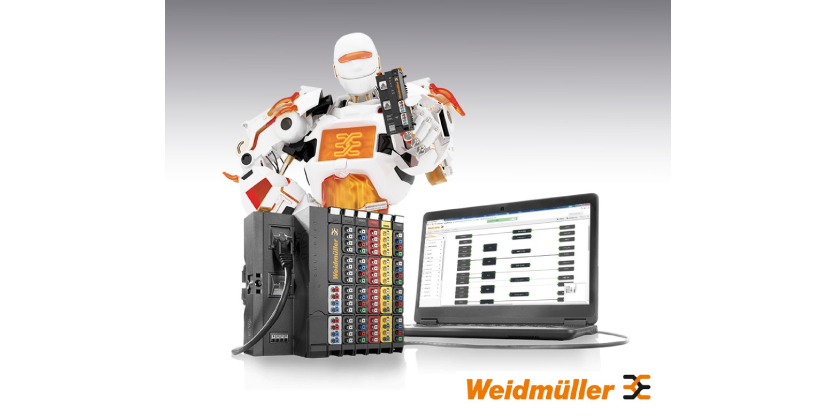
Weidmüller’s u-control 2000: The Automation Controller

Weidmüller’s u-control 2000: The Automation Controller

Weidmüller’s scalable engineering software, u-control 2000, adapts individually to your requirements. And, the u-control is powerful, compact and fully compatible with Weidmüller’s I/O system u-remote. This article looks at what makes u-control the heart of your automation.

Programmable logic controllers (PLCs) are one of the main components of any automated system. A typical control system has inputs, outputs, controllers (i.e., PLCs), and some type of human interaction with the system, a human machine interface (HMI), for example.

Read More


Latest Articles

  • Labeling Cables and Wires

    February 3, 2026 Choosing the right wire marker or cable label Cable and wire labeling is critical in the identification, assembly, and repair of electrical control panels, wire harnesses, and data/telecommunications systems. It is an upfront cost that saves time and labor expenses when changes or repairs need to occur to the systems you work Read More…

  • ITC 101: Understanding NEMA Ratings for Electrical Enclosures

    February 3, 2026 Understanding NEMA Ratings for Electrical Enclosures NEMA Ratings are an essential classification system used across North America to define the environmental and mechanical protection provided by electrical enclosures. Developed by the National Electrical Manufacturers Association (NEMA), these ratings help engineers, installers, and specifiers identify the appropriate enclosure type for industrial, commercial, and outdoor Read More…