Nexans North America now offers Industrial Ethernet solutions
December 17, 2018

Around the world, machine automation in factories is picking up steam to help lower production costs and improve manufacturing speed and quality. In fact, the rate at which manufacturers are adopting Industrial Ethernet to connect, control and monitor their factories is growing 20% annually. But machine automation is still highly dependent on cables, meaning an entire production line can shut down when a cable fails.

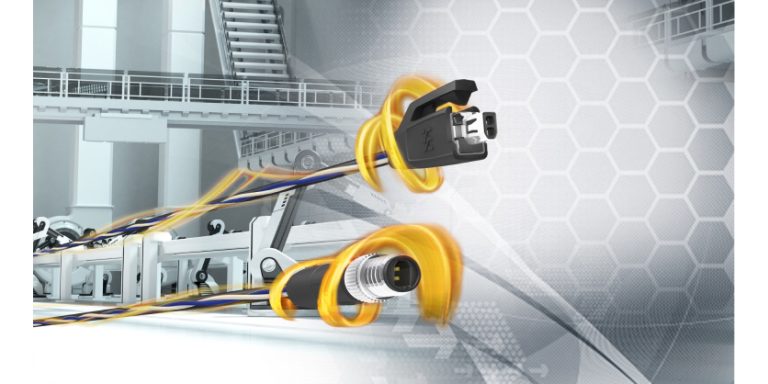
To ensure this doesn’t happen, Nexans serves up reliable products and guidance to support machine automation, and aims to help customers maintain 100% uptime of their machines. These products include Nexans copper and fiber optic cables, cordsets, cables and pre-terminated assemblies and field installable connectors that help customers save time and cut down on installation costs.

“Improving production uptime and maximizing manufacturing efficiency are of utmost importance to our customers, and our offering helps them achieve both objectives,” said Nexans’ Executive VP of North and South America, Steven Vermeulen.

Nexans’ industrial cable solutions are highly flexible and have undergone millions of test cycles to ensure optimal performance with repetitive, robotic behavior. The cables, which are resistant to water and chemicals – a must in factory environments — are also meticulously checked for damage to ensure manufacturers can depend on them 24/7.

To learn more about Nexans Industrial Solutions, visit www.nexans.us/industrial.
Related Articles


Editor’s Pick: Featured Article

Weidmüller’s u-control 2000: The Automation Controller

Weidmüller’s u-control 2000: The Automation Controller

Weidmüller’s scalable engineering software, u-control 2000, adapts individually to your requirements. And, the u-control is powerful, compact and fully compatible with Weidmüller’s I/O system u-remote. This article looks at what makes u-control the heart of your automation.

Programmable logic controllers (PLCs) are one of the main components of any automated system. A typical control system has inputs, outputs, controllers (i.e., PLCs), and some type of human interaction with the system, a human machine interface (HMI), for example.

Read More


Latest Articles

  • Applications of Physical AI in Canadian Sectors

    June 23, 2026 Physical AI — the convergence of artificial intelligence with robotics and autonomous motion systems — is reshaping how Canadian industries operate. Across sectors from healthcare to mining, AI-enabled machines are performing tasks that were once entirely dependent on human intervention. But deploying Physical AI effectively requires more than sophisticated algorithms: it demands… Read More…

  • Case Study: Optimizing Harmonic Mitigation in Wastewater Treatment

    June 22, 2026 Segment and Application In a municipality, wastewater treatment plants typically stand out as the main consumers of electricity. The operational processes exhibit significant load variations throughout a 24-hour cycle, necessitating the use of AC drives to regulate pumps, blowers, and other motorized equipment in response to fluctuating demand. In one wastewater treatment… Read More…