Servo Solution: 2 Tray-to-Track Cables That Save Time and Money
January 5, 2021

Manufacturers who require accurate position, velocity, and torque control are increasingly using servo motors in their fast-paced automated environments. 

Servo systems require fast and reliable power, data, and feedback signal.  However, harsh industrial settings create persistent challenges to connecting motors to drives, which are often some distance apart.

Running servo cables through a factory to connect the drive to the machine is material- and labor-intensive. You can run a tray-rated cable directly from the drive to the equipment, but most are not designed for continuous flexing in a cable track. Other workarounds may require multiple cables and connection points, and the installation may not meet code.

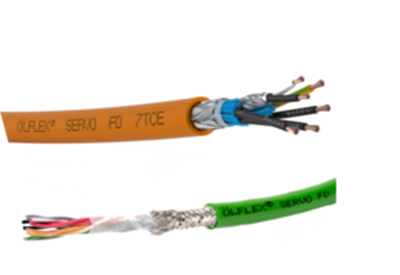
LAPP offers a Servo Solution using two new industry-leading cables robust enough to perform at optimal levels even in the harshest factory conditions.  Both cables are tray and continuous flex rated so they can run from cable tray to track – eliminating the time and expense of multiple cables and connectors.

Key factors of this Servo Solution include:

  •    –   Slim OD’s and high flexibility that ease installation.
  •    –   Low capacitance design allows for longer runs.
  •    –   High oil, flame, and mechanical stress resistance.
  •    –   Support for major power and signal conductor configurations found in leading servo motors.
  •    –   UL Continuous Flex rating
  •    –   Specific tray ratings (see catalog for details)
Source

Related Articles


Editor’s Pick: Featured Article

Weidmüller’s u-control 2000: The Automation Controller

Weidmüller’s u-control 2000: The Automation Controller

Weidmüller’s scalable engineering software, u-control 2000, adapts individually to your requirements. And, the u-control is powerful, compact and fully compatible with Weidmüller’s I/O system u-remote. This article looks at what makes u-control the heart of your automation.

Programmable logic controllers (PLCs) are one of the main components of any automated system. A typical control system has inputs, outputs, controllers (i.e., PLCs), and some type of human interaction with the system, a human machine interface (HMI), for example.

Read More


Latest Articles

  • UL Certification Requirements for OEMs: Essential Guide for Renewable Energy Projects

    May 5, 2026 In today’s fast-evolving energy and manufacturing landscapes, product safety, performance, and reliability are under greater scrutiny than ever before. For OEMs (Original Equipment Manufacturers) and players in the renewable energy sector, one certification has emerged as a gold standard—UL certification.  Although not legally mandatory in all regions of North America, UL (Underwriters Laboratories) certification is Read More…

  • Case Study: Improving Transformer Reliability for Underground Mining Power Systems

    May 5, 2026 Segment and Application The customer is a regional provider of engineered electrical solutions for mining and industrial applications in Mexico. They design and integrate customized power distribution equipment and electrical systems for harsh environments, including underground mining operations. As part of this work, they required compact power solutions for underground mining skids Read More…