Next Generation Memosens 2.0 Liquid Analysis Sensors are IIoT-Ready
January 20, 2022
Endress+Hauser’s Memosens technology revolutionized liquid analysis. It converts the measured value to a digital signal and sends it inductively to the transmitter, offering safe data transfer for increased availability of the measuring point and trouble-free processes. Now, with the introduction of Memosens 2.0 sensors for pH/ORP, conductivity and dissolved oxygen, those liquid analysis measuring points are future-proof and IIoT-ready ready, offering a range of potential additional benefits, like a data foundation for predictive maintenance. Endress+Hauser plans to extend the technology to its entire sensor portfolio for liquid analysis.
Memosens 2.0 technology, like the well-proven first generation Memosens, is suitable for all industries where liquid analysis is required. It is backwards-compatible and can easily be integrated into existing systems.
Unlocking the potential of measurement data
Memosens 2.0 sensors store numerous, relevant data such as operating hours, minimum and maximum temperatures and measured values, calibration histories and load matrices. This data can be used and processed for comprehensive analysis and more precise process management. The sensors also provide a perfect basis for predictive maintenance strategies with Endress+Hauser’s Heartbeat Technology and enhanced IIoT services via the Netilion cloud ecosystem.
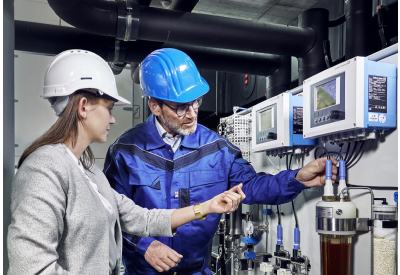
Non-contact digital data transmission eliminates the effects of moisture, corrosion and salt bridges with alert messaging if the signal transmission is disturbed. Galvanic isolation ensures interference-free measurement and EMC safety. The Memobase Plus software provides full traceability of all sensors used, supporting operations according to strict guidelines of regulated industries.
Reducing operating costs
Since Memobase 2.0 sensors are equipped with highly integrated electronics, they can be calibrated and adjusted under lab conditions favorable for the operator and stable for precise results. Field replacement is easy and quick – a labour cost saver – thanks to the lockable bayonet connector and automatic sensor identification by the transmitter. Other cost savings will continue to accrue over time. For example, using pre-calibrated sensors reduces process downtime. Regular regeneration extends sensor lifetime. Lab calibration reduces the stand-by hours for analysis experts.
Memosens 2.0 also offers error-free flexibility for measuring points in hazardous areas, since all Ex-rated sensors can be connected to all Endress+Hauser transmitters with the respective approval.
Read more about Endress+Hauser’s Memosens technology and sensors here