Electromate: AC PLANETARY GEARMOTORS

August 15, 2019

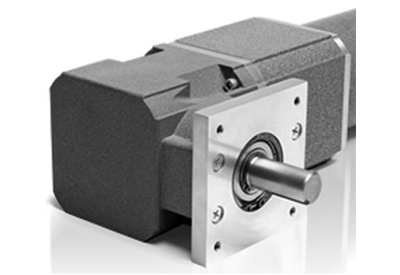
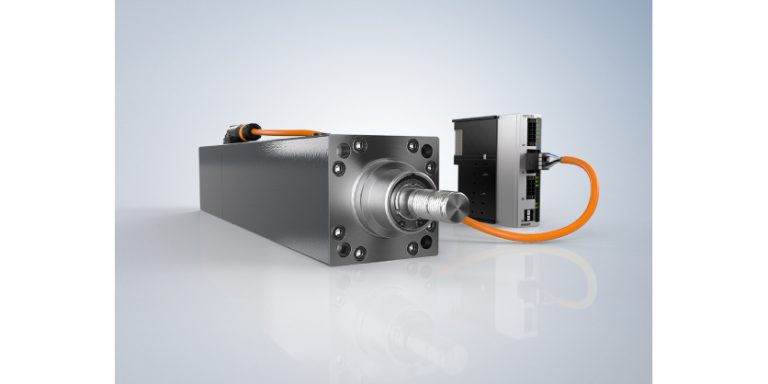
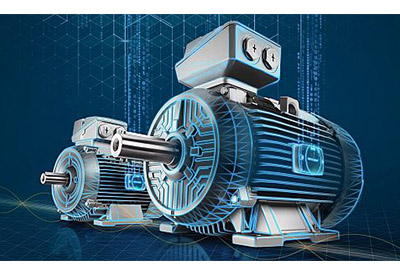
AC Gearmotors are rugged and built for demanding applications. With quiet and reliable operation, AC gearmotors combine the speed and torque of an AC motor with the benefits of parallel shaft reducers, planetary reducers, and right angle reducers, creating a compact, high torque gearmotor. This makes them a good choice for applications where high torque, continuous duty, and space are important considerations.

Characteristics of AC Gearmotors

  • Relatively fixed speed operation, 3400 RPM maximum
  • AC motors are constructed with class “H” insulation components allowing for running temperatures up to 180° C
  • Low (single phase) to medium (three phase) starting torque
  • Standard life of 20,000+ hours
  • Totally enclosed construction is typical
  • Class F insulation standards, withstands higher temperatures in intermittent applications
  • Maintains speed over a wide range of torque
  • Quiet operation
  • No control required

Groshopp AC Gearmotor Features

  • Parallel Shaft Versions  5:1-320:1
  • Planetary Gearhead Versions  5:1-1000:1
  • Right Angle Versions  5:1-100:1
  • Right Angle Planetary Gearhead Versions  5:1-377:1
  • Single or Three Phase Motors
  • Inverter duty standard

Source

Related Articles


Editor’s Pick: Featured Article

Weidmüller’s u-control 2000: The Automation Controller

Weidmüller’s u-control 2000: The Automation Controller

Weidmüller’s scalable engineering software, u-control 2000, adapts individually to your requirements. And, the u-control is powerful, compact and fully compatible with Weidmüller’s I/O system u-remote. This article looks at what makes u-control the heart of your automation.

Programmable logic controllers (PLCs) are one of the main components of any automated system. A typical control system has inputs, outputs, controllers (i.e., PLCs), and some type of human interaction with the system, a human machine interface (HMI), for example.

Read More


Latest Articles

  • Teaching Machines to See: Why Sensor Fusion Demands a System-Level Approach

    March 16, 2026 By David Doria, Director of Engineering, Automated Driving, Magna Electronics, March 16, 2026 For years, progress in advanced driver assistance systems (ADAS) were driven by improving individual sensors. Higher resolution cameras. Longer-range radars. More precise lidars. Each step delivered incremental gains. But optimizing sensors in isolation only goes so far. As ADAS Read More…

  • Vention Raises the Bar for Automating Automation with New Funding and Solutions

    March 9, 2026 By Krystie Johnston Vention accelerates democratization of automation with new funding and GRIIPTM, sets sites on Enterprise clients, reaches more industries and geographies Vention is on a journey to democratize automation, and they are picking up speed. Already, in Q1 of 2026, they have made two announcements that will accelerate their trajectory Read More…